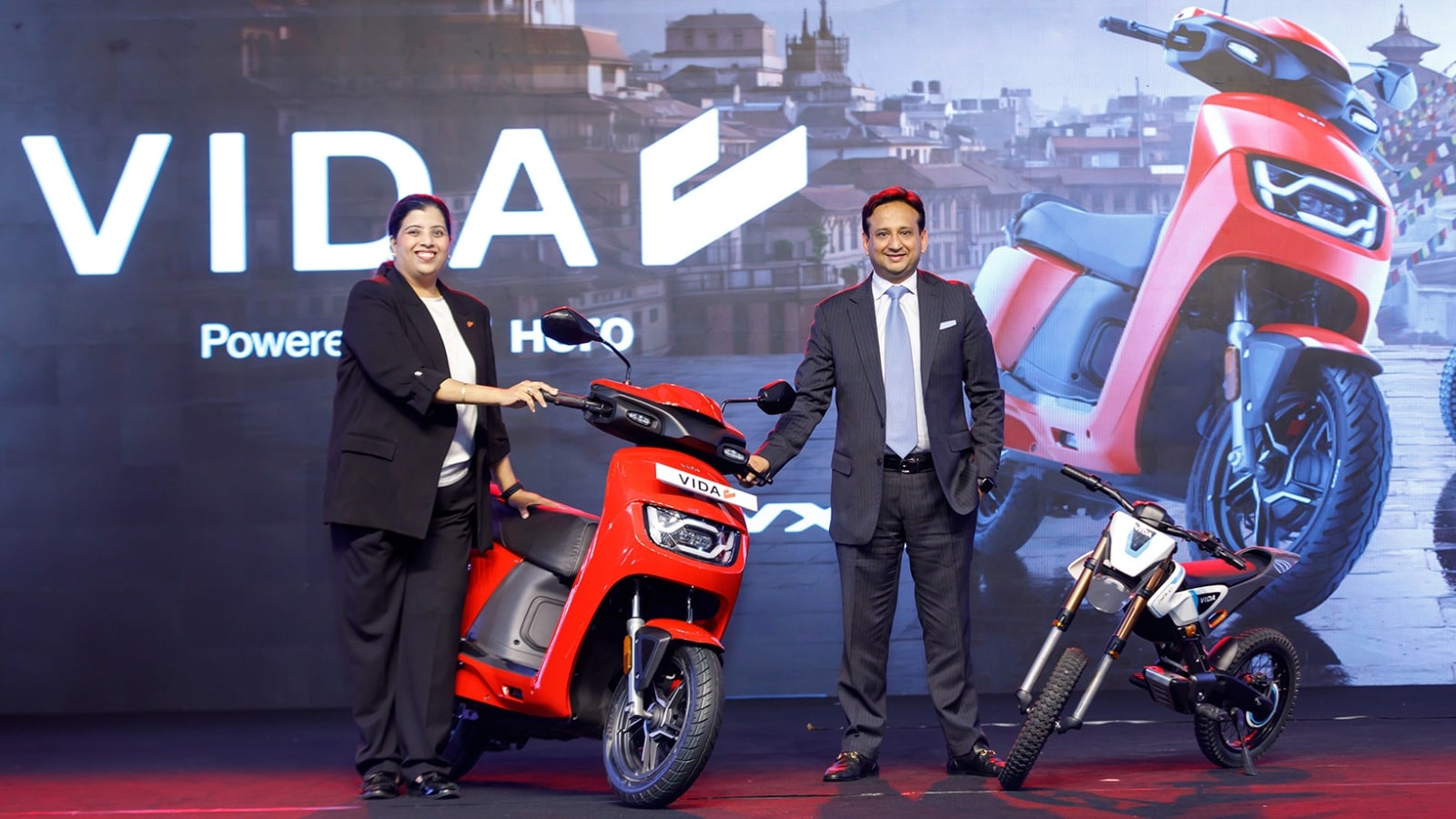
Hero MotoCorp has officially broken out of its domestic confines by planting its electric vehicle flag in Nepal through its Vida subsidiary, introducing the VX2 scooter lineup alongside the youth-focused Dirt.E K3 e-bike via a partnership with CG Motors. For a legacy manufacturer that has dominated internal combustion engines for decades, this cross-border push represents an acid test for whether Indian-engineered electric two-wheelers can survive the brutal topography and demanding consumer expectations of international markets.
The Reality of Expansion Out of Domestic Safety
Exporting vehicles from a massive home market feels straightforward on paper. Reality introduces friction. When an established player moves an urban electric scooter brand across a Himalayan border, the margin for error shrinks to zero.
Nepal is not a gentle testing ground. Steep inclines, unpredictable infrastructure, and distinct consumer habits punish poorly optimized hardware. Hero MotoCorp chose this precise terrain for its global debut because success here proves a machine can handle worse. If a powertrain overheats on a mountain pass or battery management software panics under heavy gradeability strain, the brand absorbs immediate reputational damage that echoes back to its core operations.
Manufacturing pedigree does not automatically translate to battery-electric vehicle dominance. Legacy brands often assume that scale solves everything. It does not. Scale only helps you produce a flawed product faster if the underlying architecture fails to match local usage patterns.
Dissecting the Hardware Strategy
The initial lineup consists of the VX2 Go and the VX2 Plus, powered by removable lithium-ion batteries engineered to bypass the limitations of sparse public charging networks. The VX2 Plus features a 4.4 kWh setup using dual 2.2 kWh packs, yielding a claimed real-world range of 140 kilometers and a top speed of 90 kilometers per hour. The more accessible VX2 Go carries a single 2.2 kWh battery, scaled for a 75-kilometer range and a 70 kilometer-per-hour top speed.
Both models support DC fast charging capable of an 80 percent refill in 65 minutes, alongside home charging via standard household sockets. This dual-path charging approach is a pragmatic necessity rather than a luxury feature. Public charging density remains low in developing regional corridors. Without portable, removable battery architecture, urban adoption stalls.
Then comes the outlier of the portfolio: the Dirt.E K3. Aimed at younger riders aged four to ten, this 350-watt youth off-roader features an adaptive frame that shifts across three physical configurations as the child grows. App-based parental controls dictate strict speed tiers ranging from 8 to 24 kilometers per hour.
Critics might dismiss a children's e-bike as a marketing gimmick. It serves a different purpose. It acts as an early-brand hook, embedding familiarity into a demographic long before they ever purchase a commuter vehicle.
The Distributor Matrix and Market Realities
Hero MotoCorp is not building a retail empire from scratch in Kathmandu. They are relying on CG Motors, part of the sprawling Chaudhary Group, which commands an extensive commercial footprint across the region.
Distribution partnerships dictate survival in foreign territories. A manufacturer can design the most efficient motor in the world, but without local service networks, readily available spare parts, and deep-rooted municipal relationships, the inventory sits idle on showroom floors. CG Motors provides that institutional armor.
Yet, challenges persist. Competition in the regional electric two-wheeler space is intensifying rapidly. Rivals from neighboring manufacturing hubs are fighting for the exact same demographic of urban commuters looking to escape high fossil-fuel maintenance costs. Margins are razor-thin. Brand loyalty is fragile.
The Hard Truth About EV Export Economics
Transitioning from petrol-powered motorcycles to electric platforms requires a complete re-engineering of supply chains. Hero MotoCorp has poured massive capital into its electric ecosystem, including heavy investments in associated battery and tech entities like Ather Energy.
Domestic volume cushions early losses. International expansion does not. Every unit shipped across a border carries shipping tariffs, regulatory compliance costs, and localized marketing overhead.
If the VX2 portfolio fails to capture significant market share against entrenched competitors, executive boards will reevaluate the pacing of future global rollouts. International ambitions require steady cash generation, not perpetual subsidies from legacy internal combustion sales.
The machinery is deployed. The distribution network is locked. Now the market decides whether decades of manufacturing heritage matter more than software agility and battery endurance on brutal terrain.