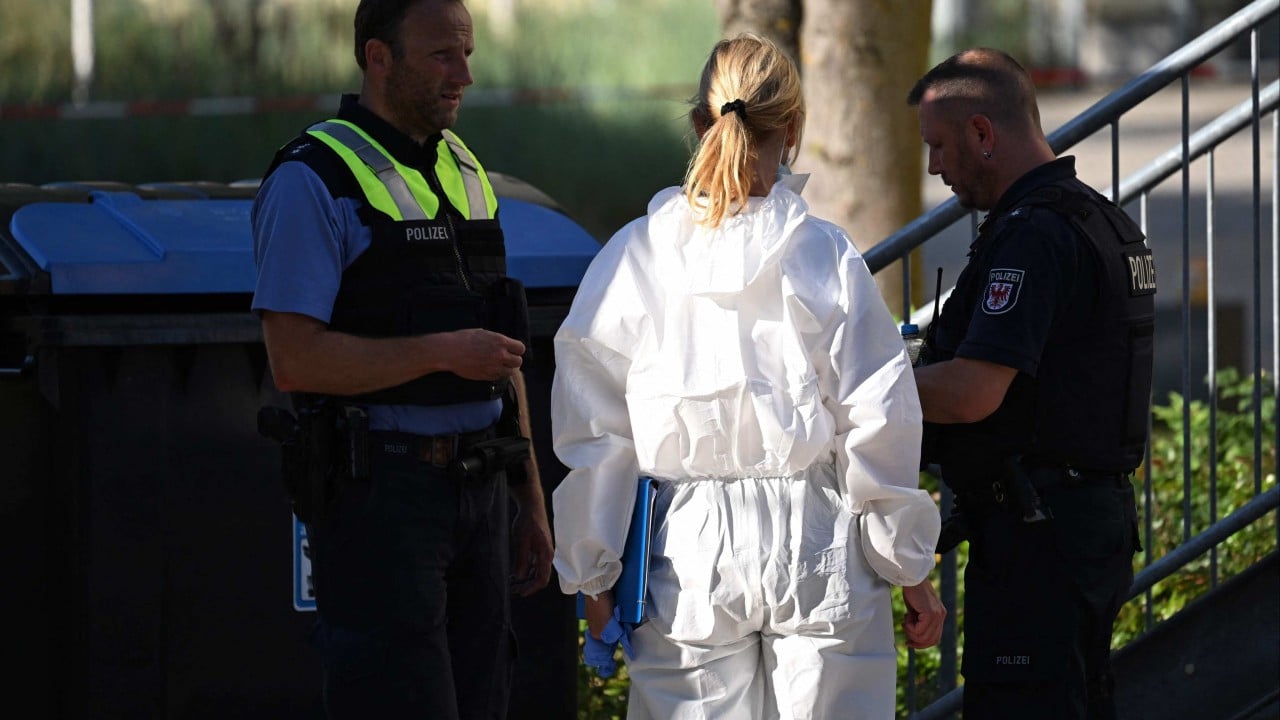
Two lives ended abruptly on a quiet Thursday at a private campus in Gosen-Neu Zittau, just outside the perimeter of Germany's bustling capital. An 18-year-old female student and a 30-year-old man who tried to intervene were left dead after a targeted violent incident executed by a 19-year-old former boyfriend. State police moved quickly, detaining the suspect within hours and confirming that the public faced no broader terror threat. Media cycles spun up their standard rotations. Breaking alerts flashed across screens. Yet beneath the immediate reports of a detained suspect and local grief lies a far more unsettling reality about how domestic violence breaches the fragile perimeter of educational institutions.
Modern security frameworks are engineered for the outside threat. They fail against the insider.
The Anatomy of a Relational Crime
Public safety discourse remains chronically obsessed with anonymous, generalized violence. Bulletins focus on random threats, heavily armed intruders, and systemic failures of public infrastructure. But the tragedy near Berlin exposes a different, more stubborn vector of destruction. Investigators quickly classified the Gosen-Neu Zittau incident as an act rooted in a personal relationship.
This was not a random rampage. It was intimate partner violence that crossed institutional boundaries.
Schools, colleges, and private academies project an aura of sanctuary. They are designed as places of learning, socialization, and protection. When an estranged partner turns that space into a hunting ground, the traditional defensive architecture collapses. Metal detectors, locked exterior gates, and visitor check-in logs do little to stop a perpetrator who understands the rhythms, schedules, and social dynamics of the victim.
Consider how stalkers and abusive partners operate. They study patterns. They monitor arrival times. If an assailant has a connection to someone inside, physical security protocols that rely on baseline exclusion crumble. The system assumes danger wears a stranger's face. When danger carries a familiar history, the warning signs are frequently misread or ignored entirely until it is too late.
The Cost of Intervention
The loss of the 30-year-old man who attempted to halt the attack highlights an uncomfortable truth about human behavior during critical incidents. Bystander intervention is romanticized in cultural narratives. People imagine decisive action, sudden bravery, and a swift neutralization of harm.
Reality is far more brutal.
Unarmed intervention against a determined, volatile attacker is a desperate gamble with horrific odds. When an individual steps into the path of domestic violence within a school corridor, they are entering a space devoid of standard tactical advantages. Educational staff and civilian bystanders are rarely trained to manage lethal interpersonal confrontations.
The bystander effect is often cited in psychology, but the inverse—fatal altruism—deserves equal scrutiny. Society expects ordinary citizens to act as emergency shields when institutional safeguards fail. When a teacher, administrator, or passerby tries to fill the security vacuum, they often pay with their lives. Relying on the spontaneous courage of bystanders is not a security policy. It is an admission of failure.
Systemic Blind Spots in European Private Schools
Private campuses like the one in Gosen-Neu Zittau operate under unique operational constraints. Unlike large public municipal school districts with dedicated municipal security resources or formalized threat assessment teams, smaller private institutions often maintain leaner administrative structures.
Privacy laws in Germany add another layer of complexity. Strict data protection regulations can prevent educational administrators from sharing behavioral red flags or history between institutions or with local authorities. If a student transitions between schools or if warning signs remain internal to a domestic relationship, information silos protect privacy at the direct expense of safety.
This creates an environment where administrators are flying blind. They see grades, attendance records, and participation metrics. They rarely see the psychological pressure cooker of a deteriorating teenage relationship unfolding on encrypted messaging apps outside of school hours.
Moving Past Reactive Shock
Every time violence pierces an educational facility, public officials rush to offer condolences and promise reviews of safety protocols. These responses offer emotional comfort while ignoring structural vulnerabilities. Locking doors does not stop relational violence. Increasing police presence after the fact does not resurrect the dead.
Protecting schools from domestic spillover requires a fundamental shift in how educational institutions identify interpersonal risk. It demands moving away from passive perimeter security and toward active behavioral intervention models. Staff must be trained to recognize the escalation markers of domestic control and stalking long before physical violence manifests on campus grounds.
Furthermore, legal frameworks must evolve to balance individual privacy with collective safety, allowing information regarding domestic threats to be shared safely among trusted institutional stakeholders. Until authorities treat intimate partner violence as a primary structural threat to educational safety, campuses will remain vulnerable to the private wars fought inside their hallways.
The suspect is behind bars. The headlines will fade. The community of Gosen-Neu Zittau will begin the long, quiet process of mourning two lives erased in a matter of minutes. But the structural blind spots that allowed a private grievance to penetrate a school sanctuary remain entirely unaddressed.