For eighty-one years, the United Nations has operated under an unbroken lineage of male leadership. That glass ceiling now faces its most serious challenge yet. As António Guterres prepares to step down from the thirty-eighth floor of the Manhattan headquarters, the quiet corridors of Turtle Bay are consumed by a high-stakes succession battle. The informal straw polls conducted by the Security Council have narrowed the field, placing prominent diplomats from Costa Rica and Guyana at the center of a historic global contest.
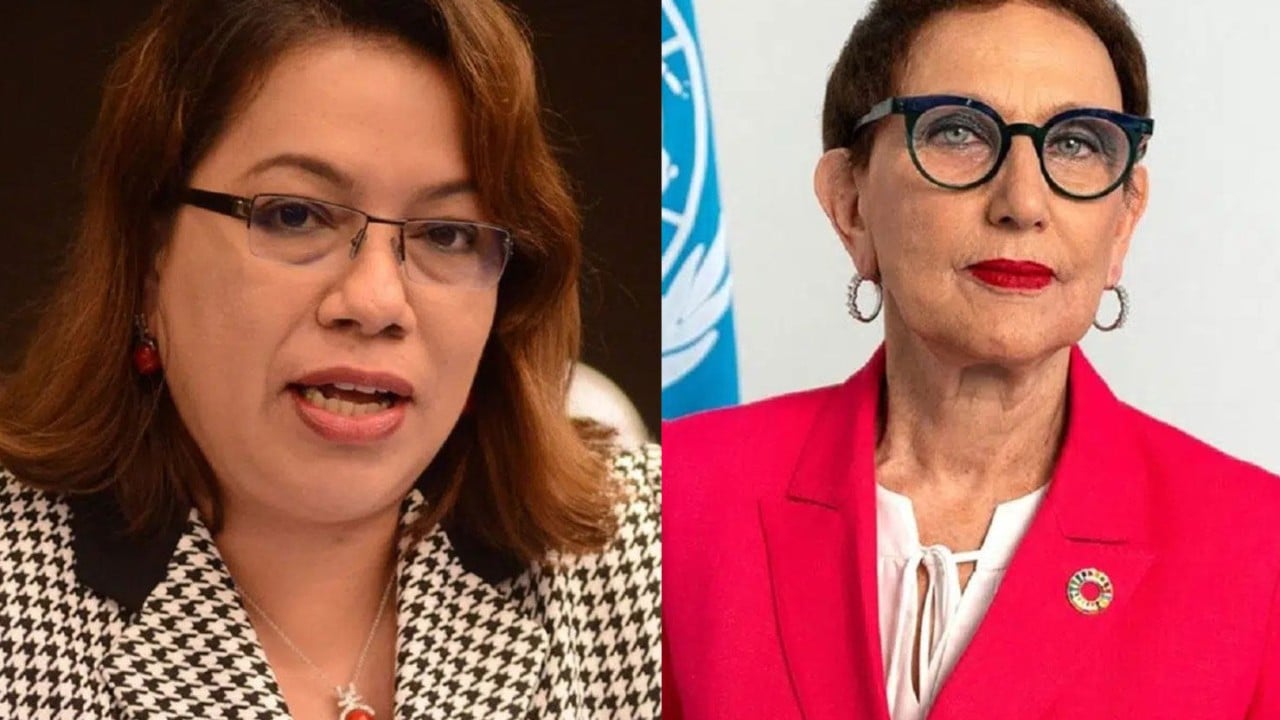
The central question is no longer simply whether a woman will finally helm the international body, but rather which diplomatic style and regional faction will capture the consensus. Rebeca Grynspan of Costa Rica and Carolyn Rodrigues-Birkett of Guyana have emerged as the frontrunners in a crowded field of contenders from Latin America and the Caribbean. This geographic group holds the traditional rotation right for the upcoming term, turning what was once a purely symbolic conversation about gender parity into a cold, calculated exercise in geopolitical positioning.
To understand the mechanics of this election, one must look past the idealistic speeches delivered during the General Assembly town halls. The selection of a secretary-general is an exercise in managing great power vetoes. The permanent five members of the Security Council—the United States, China, Russia, France, and the United Kingdom—wield absolute power over the outcome. A candidate can win overwhelming support from developing nations, yet still be torpedoed by a single anonymous ballot cast behind closed doors.
Rebeca Grynspan enters the arena with the heavy imprimatur of the institutional establishment. Having served as the head of the United Nations Conference on Trade and Development and previously as Vice President of Costa Rica, she is viewed by many capitals as a continuity candidate. Her supporters argue that her deep familiarity with the bureaucratic machinery of the UN allows her to step into the role on day one without a steep learning curve. Yet, that very insider status cuts both ways. In an era marked by intense institutional fatigue and widespread public cynicism toward multilateralism, some member states quietly question whether a career UN insider can deliver the radical reforms necessary to keep the organization relevant.
On the other side of the Latin American and Caribbean bloc stands Carolyn Rodrigues-Birkett, Guyana's permanent representative to the United Nations and a former foreign minister. Rodrigues-Birkett brings a different profile to the race, carrying the perspective of a small island and low-lying coastal developing state. Her candidacy resonates powerfully with nations on the front lines of climate change and economic inequality. While Grynspan commands broad technocratic respect, Rodrigues-Birkett has leveraged her deep engagement with the Global South to build a formidable coalition of support that caught traditional European and Western capitals by surprise during early straw polls.
The maneuvering extends far beyond these two Latin American figures. The broader candidate pool includes seasoned actors such as Argentina's Rafael Grossi, head of the International Atomic Energy Agency, alongside late-entry heavyweights like Turkey's Feridun Sinirlioğlu and the United Arab Emirates' Lana Nusseibeh. Each nomination alters the arithmetic in the Security Council. Every straw poll acts as a pressure test, exposing which candidates can weather the inevitable whispering campaigns and which ones will see their support erode under the weight of backroom compromises.
The push for a female secretary-general is driven by an organized network of civil society groups and member states operating under banners like the Campaign to Elect a Woman UN Secretary-General. Their argument is straightforward. The world faces compounding crises—from nuclear proliferation and fractured supply chains to catastrophic climate degradation—that require a distinct shift in leadership culture. Proponents argue that decades of patriarchal management have entrenched bureaucratic inertia, and that a female leader would bring a necessary pivot toward human security and conflict prevention.
Skeptics within the diplomatic corps, however, warn against viewing gender as a proxy for policy reform. A secretary-general is ultimately a servant of member states, not an independent sovereign with executive enforcement powers. History shows that even the most charismatic or reform-minded leaders find their hands tied when the major powers choose polarization over cooperation. Dag Hammarskjöld and Kofi Annan both discovered the unforgiving limits of the office when their independent initiatives clashed with the vital interests of the Security Council's veto-wielding members.
The mechanics of the final selection will intensify as the deadline approaches. The Security Council must eventually transition from informal straw polls featuring colored ballot papers to a formal recommendation vote. That transition is where dark horses often stumble and consensus candidates are forged through midnight deals. If a veto power decides that Grynspan's institutional ties or Rodrigues-Birkett's specific regional alignment crosses a red line, the entire calculus could shift toward a compromise figure from outside the current frontrunner tier.
What makes this cycle genuinely distinct is the refusal of the General Assembly to remain a passive spectator. Through mandated public hearings and interactive dialogues, member states have forced candidates to outline their visions under intense public scrutiny. This transparency has chipped away at the opaque, smoke-filled-room tradition that historically defined UN successions. Even if the final choice remains vulnerable to the geopolitical whims of the P5, the transparency of the vetting process has altered the baseline expectations for global accountability.
The choice of the next UN chief will signal whether the multilateral system can adapt to a multipolar world order defined by mistrust and transactional diplomacy. Whether the gavel ultimately passes to San José or Georgetown, the winner will inherit an institution standing on the precipice of irrelevance if it fails to broker peace where diplomacy has broken down. The race is entering its final, unforgiving phase, and the margin for error has vanished.


