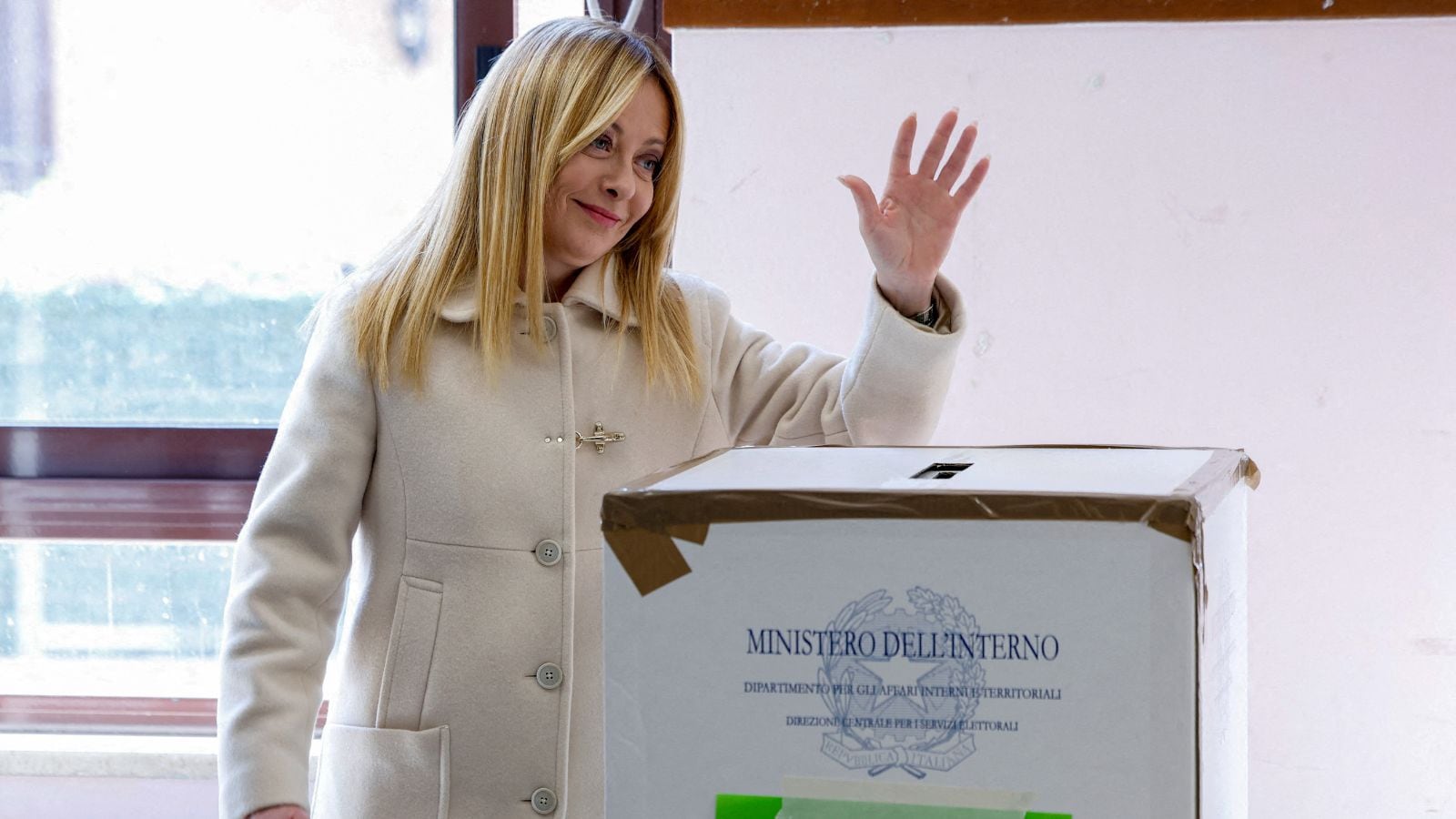
Italian Prime Minister Giorgia Meloni has applied to register her voice as an European Union trademark with the European Union Intellectual Property Office (EUIPO), a bold legal maneuver designed to stop unauthorized artificial intelligence clones and deepfake scams before they hijack her public identity. By attempting to convert the distinctive cadence and timbre of a sitting head of government into protected intellectual property, Rome is testing the absolute boundaries of European trademark law. If approved, this filing would grant Meloni sweeping commercial monopoly rights over her vocal likeness across all 27 EU member states, turning an acoustic signature into a regulated brand asset.
The move is not an academic exercise in vanity. It is an emergency brake pulled in the middle of a synthetic media crisis that has already burned high-profile leaders across the continent.
Why Traditional Privacy Laws Are Failing Politicians
For decades, public figures relied on defamation statutes, right-of-publicity laws, and data protection frameworks like the EU's General Data Protection Regulation (GDPR) to police how their likenesses were used. Those tools were built for a slower media ecosystem. They were designed to sue a tabloid editor in Milan or force a rogue broadcaster in Brussels to pull a misleading advertisement after weeks of legal wrangling.
Generative audio breaks that enforcement model entirely. Today, an open-source voice cloning algorithm needs less than fifteen seconds of clean broadcast audio to synthesize a convincing replica of a world leader. For a sitting prime minister who gives daily press briefings, parliamentary speeches, and television interviews, training data is abundant, free, and sitting in public archives.
Once a synthetic audio file is generated, the damage occurs in minutes, not weeks. In recent election cycles across Europe and North America, synthetic robocalls and fabricated audio clips have been weaponized to suppress voter turnout, fabricate diplomatic incidents, and endorse fraudulent cryptocurrency schemes. When a victim discovers the fake, the clip has already been mirrored across encrypted messaging apps and decentralized social platforms.
Filing a GDPR complaint or initiating a civil defamation suit against an anonymous server farm takes months. Intellectual property enforcement, by contrast, operates with industrial speed.
The Speed of Trademark Takedowns
Major digital platforms—from YouTube and Meta to TikTok and X—have spent billions building automated content-identification systems to appease corporate rights holders. When a record label or a luxury fashion house flags an unauthorized use of a registered trademark, automated takedown pipelines kick in almost immediately. Platforms do not debate free speech or political satire when a valid trademark registration number is attached to a notice-and-takedown request; they strip the content down first and ask questions later to avoid statutory liability.
Meloni’s legal team understands this asymmetry. By seeking an EU-wide sound mark through the EUIPO, she is attempting to bypass the sluggish machinery of political defamation courts and plug her vocal identity directly into the automated enforcement engines built for multinational corporations.
How an EU Sound Mark Actually Works
Registering a sound as a trademark is not new, though it remains rare compared to traditional word marks and visual logos. Under EU trademark regulations, a sign can consist of sounds, provided it can be represented clearly and precisely—typically through an audio file submitted directly to the registry—and serves to distinguish the goods or services of one undertaking from those of another.
Corporate giants have used this mechanism for years. Metro-Goldwyn-Mayer protected the roar of its lion. Intel locked down its five-note chime. Netflix secured its signature "ta-dum" audio cue. In each of those cases, the sound functions as a commercial source identifier. When a consumer hears the chime, they immediately associate the product with a specific corporate entity.
Applying that exact legal architecture to the natural speaking voice of a politician introduces profound friction.
The Distinctiveness Hurdle at the EUIPO
To clear examination at the EUIPO in Alicante, Spain, an applicant must prove that the mark possesses distinctive character. A generic sound—like the standard ringing of a telephone or a monotone reading of a weather report—will be rejected immediately.
Meloni’s voice certainly carries unmistakable phonetic traits. Her sharp Roman inflection, raspy lower register, and theatrical pacing are instantly recognizable to millions of Europeans, reinforced by years of viral remixes and political speeches. Yet recognition is not the same thing as trademark distinctiveness.
Trademark examiners must ask a fundamental question. Does Giorgia Meloni’s voice function as a badge of commercial origin in the marketplace, or is it simply the biological instrument through which a public official communicates with citizens?
| Legal Mechanism | Primary Purpose | Enforcement Speed | Key Vulnerability in AI Era |
|---|---|---|---|
| EU Sound Trademark | Protects commercial brand identity across 27 states | Fast (automated platform IP takedowns) | Requires proof of commercial use; vulnerable to non-commercial satire exemptions |
| GDPR (Biometric Data) | Protects personal privacy and sensitive data | Slow (regulatory investigations take months or years) | Hard to enforce against anonymous offshore actors; broad journalism exemptions |
| National Right of Publicity | Prevents unauthorized commercial exploitation of likeness | Moderate (requires national court injunctions) | Fragmented across 27 different EU legal systems; inconsistent remedies |
| Criminal Defamation | Punishes false statements that harm reputation | Very Slow (high burden of proof, lengthy trials) | Requires proving malicious intent; ineffective against automated bot networks |
If Meloni’s application lists specific commercial classes under the Nice Classification system—such as downloadable media, entertainment services, or political merchandising—she must eventually prove genuine commercial use of the voice in those sectors. Under EU law, a trademark that sits idle without genuine commercial exploitation becomes vulnerable to revocation after five years. A prime minister cannot easily run a side hustle licensing her vocal cords for commercial endorsements without triggering severe conflict-of-interest alarms in Rome.
The Collision With Political Satire and Free Expression
Even if the EUIPO grants the registration, the real battle will play out in courtrooms and regulatory hearings over the limits of non-commercial expression.
Trademark law is explicitly designed to regulate commerce, not political discourse. In the European Union, a trademark owner can prevent third parties from using an identical or confusingly similar sign in the course of trade. That phrase is the bedrock limitation of intellectual property rights.
If a scammer uses an AI clone of Meloni’s voice to sell fake financial investments on social media, that is commercial activity. A registered sound mark would give her lawyers a devastatingly effective weapon to shut down the fraud and pursue damages.
What happens when an opposition party, a late-night comedian, or an anonymous activist uses an AI voice generator to create a biting political parody?
Political speech sits at the very top of the hierarchy of protected expression under Article 10 of the European Convention on Human Rights and the EU Charter of Fundamental Rights. Satire, caricature, and parody are explicitly shielded across European jurisdictions, provided they do not confuse the public into believing the parody is an official commercial endorsement.
The Chilling Effect of Automated Filters
The danger lies in the gap between legal theory and platform reality. Social media companies rely on blunt algorithmic moderation to process millions of IP complaints daily. Automated audio-fingerprinting tools cannot distinguish between a fraudulent investment ad and a sharp piece of political satire.
If Meloni’s vocal signature is uploaded into automated rights-management databases, algorithms will flag and mute every synthetic clip matching her vocal frequency. Creators, journalists, and satirists would be forced to file counter-notifications and fight uphill battles to prove their speech is non-commercial parody. By the time a human moderator reviews the appeal, the news cycle has moved on and the political moment is dead.
Critics argue that allowing heads of state to privatize their voices through trademark registries creates a backdoor censorship tool. It converts a public official's persona into proprietary corporate property, shifting the burden of proof onto citizens who wish to critique or lampoon those in power.
A Pattern of Aggressive Digital Defense in Rome
Meloni’s trademark filing does not exist in a vacuum. It follows a string of aggressive legal actions she has taken to police digital manipulation and online abuse since taking office.
In 2024, Meloni took the rare step of testifying in person in a Sardinian court as the plaintiff in a criminal defamation trial against two men accused of superimposing her face onto pornographic videos—deepfakes that were uploaded to a US-based website years before she became prime minister. She demanded €100,000 in symbolic damages, vowing to donate every euro to a state fund supporting female victims of domestic violence. That case underscored her willingness to use every available lever of the justice system to establish personal accountability for synthetic media abuse.
Simultaneously, her government has pushed for stricter national penalties targeting the malicious deployment of artificial intelligence. Italy was the first Western nation to temporarily block ChatGPT over privacy concerns in 2023, signaling early on that Rome intended to take an interventionist stance on generative AI governance.
The EU Artificial Intelligence Act, which sets strict transparency obligations requiring synthetic audio and deepfakes to be clearly labeled, provides a regulatory floor across Europe. Yet legislative mandates take years to fully phase in and rely heavily on compliance from AI developers. A trademark registration is immediate, offensive, and enforceable directly by the rights holder without waiting for a national regulator to open an investigation.
The Global Precedent for Synthetic Likeness Rights
Rome is watching a broader global scramble as actors, musicians, and politicians try to lock down their biological identities against generative AI scraping.
In the United States, Tennessee enacted the Ensuring Likeness Voice and Image Security (ELVIS) Act in 2024, updating its right-of-publicity statutes to explicitly protect vocal likenesses from unauthorized AI cloning. At the federal level in Washington, lawmakers have debated the NO FAKES Act, which would establish a national property right in an individual's voice and visual likeness, holding platforms liable if they knowingly host unauthorized digital replicas.
Europe lacks a unified, harmonized right-of-publicity statute. Personality rights in the EU are a patchwork of national civil codes. What is protected under German personality law differs from French droit à l'image or Italian civil code provisions on name and likeness.
That fragmentation is precisely why the EUIPO is so attractive. A single successful application in Alicante delivers uniform protection across 450 million consumers in 27 countries overnight.
When Other Leaders Follow Suit
Consider what happens if the EUIPO approves Meloni’s filing. Within weeks, trademark registries in Brussels, Madrid, Paris, and Berlin would be flooded with applications from presidents, prime ministers, opposition leaders, and royal families seeking identical vocal monopolies.
Every press conference would become a protected intellectual property broadcast. Every parliamentary debate would generate proprietary audio assets. News organizations, documentary filmmakers, and podcast producers would suddenly face a minefield of potential IP claims whenever they excerpted, remixed, or analyzed the spoken words of elected officials.
To prevent that chaos, trademark examiners have historically resisted attempts by celebrities and public figures to trademark their own faces or signatures unless those elements are strictly tied to commercial product lines—such as a signature stamped onto a bottle of perfume or a face printed on a line of food products. A raw voice, divorced from a specific commercial good, tests the foundational doctrine that trademarks exist to protect consumers from marketplace confusion, not to grant individuals ownership over their own anatomy.
The Technical Limits of Vocal Trademarks
Even if Meloni wins every legal argument in Alicante and survives inevitable challenges in the General Court of the European Union, a trademark certificate cannot solve the underlying technical problem.
Modern voice synthesis does not require an exact acoustic match to deceive a listener. An AI model can generate a voice that is 85 percent similar to Meloni’s—capturing her cadence, breath patterns, and emotional tone while subtly altering the pitch or harmonic overtones. To the human ear listening on a smartphone speaker, the deception is total. To an automated trademark comparison algorithm, the acoustic fingerprint might fall just outside the threshold of infringement.
Furthermore, bad actors operating outside the European Union care very little about EUIPO registration certificates. Disinformation networks running servers in jurisdictions beyond Western legal reach will continue to generate and distribute synthetic audio regardless of whether a voice is registered in Class 9 or Class 41.
A trademark is a shield that only works inside regulated marketplaces where platforms respect the rule of law and respond to legal process. Against state-sponsored disinformation or anonymous dark-web extortionists, an IP registration is merely a piece of paper.
By attempting to turn her voice into an EU trademark, Giorgia Meloni has forced European regulators to confront an uncomfortable reality. Existing privacy and defamation laws are too slow to stop the weaponization of synthetic media, yet stretching commercial trademark law to cover the human voice threatens to privatize public discourse itself. Until lawmakers build a dedicated legal framework specifically engineered for biometric likeness in the era of generative AI, leaders will keep reaching for whatever blunt corporate weapons are already lying on the table.