Europe faces a quiet structural hollowing out if its industrial competitiveness continues to erode while foreign rivals capture high-margin manufacturing and strategic technologies. The warning from Warsaw that the continent risks becoming a mere tourist attraction captures a blunt economic reality: picturesque cathedrals, alpine villages, and artisanal hospitality cannot pay for modern defense systems, welfare states, or geopolitical sovereignty when the factories and laboratories that generate export wealth pack up and move abroad.
Anyone who has covered European boardrooms and factory floors over the last twenty years recognizes the rhythm of this slow slide. First came the offshoring of basic textiles and consumer electronics. Then came the gradual migration of chemical plants, battery precursors, and solar panel assembly lines. What once looked like a tidy division of labor—Europe keeps the high-value engineering and brand equity while others handle dirty or low-margin assembly—has turned into a trap. When you give up the physical manufacturing base, you eventually lose the process know-how required to invent the next generation of hardware.
The Anatomy of a Slow Industrial Hollowing
Economists and industrial executives often argue over charts and quarterly output numbers. Spend enough time walking plant floors from the Ruhr Valley to northern Italy, and the mechanism becomes unmistakable. A factory does not close overnight in a single dramatic explosion. It bleeds out through a sequence of compounding pressures that make staying put feel like an act of charity toward shareholders.
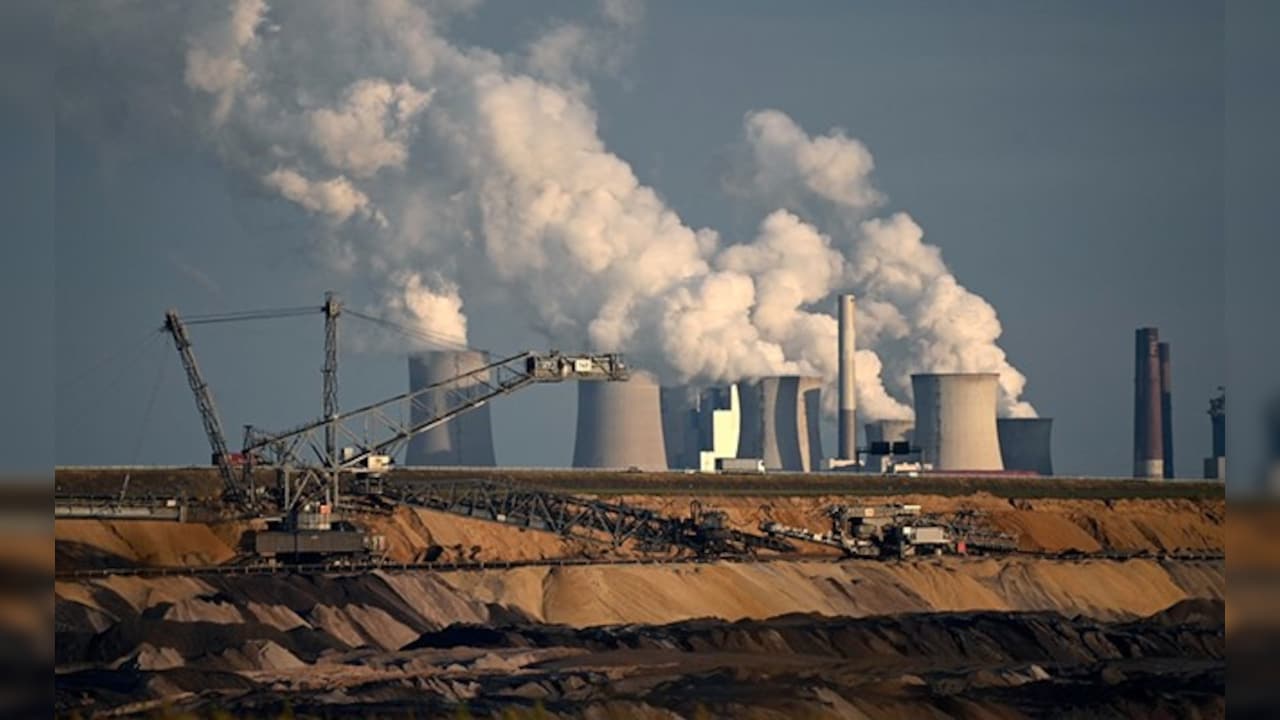
Energy costs sit near the top of the list. After losing cheap pipeline gas from Russia and watching domestic power generation wrestle with intermittent supply, grid bottlenecks, and permitting delays, heavy industry in parts of Europe faced electricity and gas prices that looked punitive compared with North America and parts of Asia. Chemicals, steel, glass, and fertilizers do not run on polite rhetoric. They run on continuous, energy-intensive thermal and electrochemical reactions where a sustained cost gap of thirty or fifty percent destroys margins.
Regulation adds another layer of friction. Brussels and national capitals have built a dense architecture of compliance rules, sustainability reporting mandates, and product standards. Many of those rules stem from genuine concerns about climate change, worker safety, or consumer protection. Yet when a mid-sized German machinery maker or French specialty manufacturer spends more engineering hours documenting supply-chain disclosures than redesigning assembly lines, capital allocation shifts.
A continent can regulate its way to cleaner air and safer workplaces, yet still lose the industrial muscle required to defend its own borders and fund its own social model.
Consider a hypothetical example to see how these forces interact on a single balance sheet. Imagine a mid-sized European precision-valve manufacturer employing four hundred people. Its power bill jumps sharply, local environmental permitting for a plant upgrade drags past three years, and a competing producer in East Asia offers automated components at twenty percent lower unit cost. Even if the European firm holds a slight edge in metallurgy, its next expansion budget quietly goes to a greenfield site outside the European Union—or gets canceled altogether.
Why Services and Tourism Cannot Carry the Weight
A common counter-argument claims that advanced economies naturally evolve from manufacturing into services, design, finance, and tourism. That transition worked well enough for a stretch when global trade was expanding smoothly and Western firms dominated intellectual property. It breaks down when the physical production of strategic goods—batteries, semiconductors, pharmaceuticals, grid equipment, and munitions—concentrates in rival blocs.
Tourism is particularly fragile as a pillar of continental prosperity. It is seasonal, sensitive to weather and global travel shocks, and heavily weighted toward lower-wage, lower-productivity jobs compared with advanced manufacturing or software engineering. A café in Lisbon or a guided walk in Prague brings real foreign currency into local neighborhoods, and nobody with a lick of sense wants fewer visitors enjoying European culture. Still, espresso bars and museum tickets do not build sovereign cloud capacity or fund high-tech research clusters at scale.
Geopolitics Turned Trade Into a Lever
For decades, European policymakers treated trade as a technical exercise governed by rules, tariffs, and mutually beneficial specialization. That assumption belonged to a calmer era. Today, supply chains are instruments of statecraft, and geopolitical leverage sits right inside everyday commercial contracts.
When one country or bloc controls critical raw materials, refining capacity, or dominant industrial scale, dependency stops being harmless efficiency. It becomes a vulnerability that can be squeezed during a diplomatic dispute or security crisis. Warsaw's alarm reflects a frontline perspective shaped by proximity to war in Eastern Europe and decades of watching how economic weakness invites political pressure.
- Critical mineral bottlenecks expose European automakers and grid builders to sudden supply shocks or price spikes.
- Subsidy races in major competing economies pull capital and talent toward markets offering faster permits and cheaper power.
- Defense industrial capacity requires steel, explosives, microelectronics, and heavy machining that cannot be improvised from service-sector balance sheets.
- Demographic headwinds shrink the domestic working-age pool, forcing firms either to automate aggressively or lose output.
Notice how industrial competitiveness ties directly into national security. A country without domestic steel mills, chemical precursors, or precision machining struggles to scale artillery shells, armored vehicles, or drones quickly when a crisis hits. Relying on distant allies or uncertain supply lines leaves capitals exposed at the exact moment independence matters most.
The Green Transition Paradox
Europe's climate ambitions carry a sharp internal tension that rarely gets an honest airing in policy debates. Decarbonizing industry is essential over the long haul, and European firms have built real strengths in wind turbines, heat pumps, grid engineering, and clean technologies. Yet pushing aggressive green mandates faster than affordable clean power, transmission lines, and permitting allow can backfire in the short term.
If strict rules raise domestic production costs while cheaper, higher-emission imports from abroad still enter the market—or while companies simply move production outside Europe's regulatory perimeter—global emissions may barely budge while European jobs vanish. That is carbon leakage in plain sight. Good intentions do not protect domestic industrial base if the economics push the factory gates shut.
There is also a gray area around subsidies. Many industry veterans view massive state handouts with healthy skepticism. Subsidies often distort competition, reward lobbying over efficiency, and prop up zombie projects that cannot survive on their own. At the same time, standing on principles of pure free-market purity while foreign competitors deploy heavy industrial policy is a fast way to end up with no market left to govern.
Where Warsaw's Warning Hits Nerve Ends
Poland's vantage point gives its warnings a distinct edge. Having spent decades catching up to Western European living standards after the end of Soviet domination, Polish policymakers see economic growth not as an abstract statistic, but as hard-won security. Rapid industrial expansion in Central Europe turned the region into a vital manufacturing hub, especially in automotive parts, appliances, logistics, and light industry.
Now that same hub faces turbulence. Shifts toward electric vehicles, fierce Asian competition in autos and industrial components, and sluggish demand in core European export markets test how resilient that growth model really is. When major industrial economies sneeze, Central European supply chains catch a cold quickly.
What It Takes to Reverse the Drift
Fixing industrial competitiveness will not happen through speeches at summits or another stack of white papers. It requires unglamorous, stubborn execution across energy, regulation, capital markets, and skills. None of those levers is easy to pull in fragmented political systems where every national capital guards its own turf.
First comes affordable, reliable power. Industry needs baseload and firm clean electricity alongside expanded cross-border grids, faster permitting for generation and transmission, and realistic timelines. Without competitive energy prices, energy-intensive sectors will keep shrinking regardless of how many innovation funds politicians announce.
Second comes regulatory triage. Europe does not need to abandon environmental or consumer standards, but it desperately needs speed, predictability, and fewer overlapping reporting burdens. A permitting process that takes years for a factory expansion or a grid line kills investment momentum before a shovel ever hits dirt.
Third comes deep capital and technical talent. Too many promising European deep-tech and industrial startups still look to American venture funds or foreign buyers when they need large-scale growth capital. Meanwhile, vocational training and engineering pipelines must keep pace with robotics, industrial AI, and advanced materials so factories can raise productivity per worker rather than competing on low wages.
The Uncomfortable Choice Ahead
No single policy will magically restore Europe's industrial dominance overnight, and protectionism alone is a blunt instrument that can raise prices for consumers and invite retaliation. Still, pretending that a continent can stay wealthy, secure, and influential while its physical production base steadily shrinks is wishful thinking.
European capitals have to decide whether they want to act as a rule-making museum admired from afar for its heritage and lifestyle, or as a dynamic industrial power willing to build, permit, and compete on cost and speed. Every delayed grid line, stalled factory permit, and exported engineering team answers that question one quiet decision at a time.