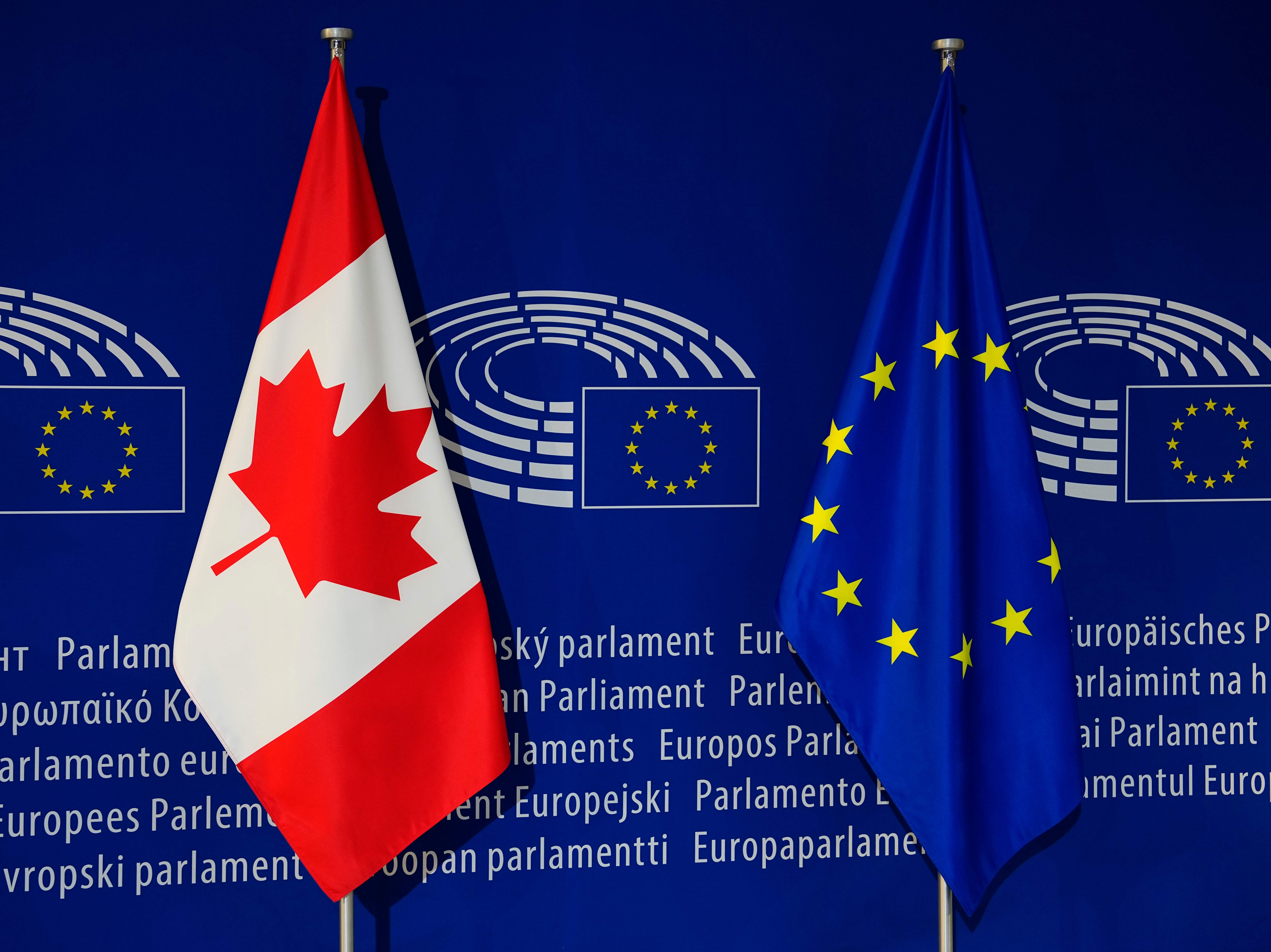
Export Development Canada is officially pushing deeper into the European market, establishing new hubs in Paris and Stockholm while setting the stage for a third in Warsaw. The federal export credit agency is reacting to a stark operational shift. Almost a third of domestic
Inside Export Development Canada Quiet European Expansion
business, news
Export Development Canada is expanding its footprint on the continent with three new outposts across Europe, targeting trade corridors that traditional commercial lenders frequently bypass. This development marks a calculated maneuver by Ottawa's export credit agency to position itself closer to regional supply chain choke points, industrial hubs, and sovereign procurement desks.
State-backed financial institutions rarely move without a specific macroeconomic trigger. When an agency like Export Development Canada plants flags in new European territories, it usually signals that domestic companies are facing severe friction in foreign markets or that geopolitical realations have shifted transaction risk past the comfort threshold of private commercial banks.
Trade finance is undergoing a quiet reckoning. Private lenders are retreating from riskier cross-border debt syndications, leaving a vacuum that state-backed export credit agencies are expected to fill.
The Mechanics Behind the European Push
The official rationale centers on facilitating Canadian access to European markets, but the operational reality involves much tighter margins and higher stakes. European industrial policy has shifted dramatically under the weight of supply chain localization mandates, defense spending surges, and the green transition.
Canadian firms operating in sectors like critical minerals, advanced manufacturing, clean technology, and aerospace find themselves locked out of lucrative European procurement contracts unless they maintain local operational proximity. Private banks look at the regulatory overhead, cross-border compliance costs, and geopolitical volatility in Eastern and Central Europe and tighten their lending criteria.
Export Development Canada steps in where commercial institutions fear to tread. By providing direct financing, lines of credit, and political risk insurance, the agency acts as a financial shock absorber.
A hypothetical example illustrates the mechanism. A mid-sized Ontario manufacturer specializing in hydrogen fuel cell components wins a preliminary supply contract with a German automotive conglomerate. The German buyer demands proof of financial backing and localized delivery capability before signing a multi-year deal. Traditional commercial banks offer prohibitive rates due to the perceived execution risk of overseas deployment. Export Development Canada intervenes by underwriting the performance bond and extending working capital lines directly tied to the European fulfillment center, allowing the transaction to proceed without draining the Canadian company's domestic liquidity reserves.
This is not altruism. It is a calculated state investment designed to secure supply chain footholds for domestic enterprises before competitors from Asia or Europe lock down those verticals entirely.
Where the Money Goes and Why It Matters
Geographic placement matters in international trade. The choice of where these new offices are situated reveals the true priorities of the agency's strategic planners.
European markets are not monolithic. Western European financial centers operate under different risk profiles compared to the industrial corridors shifting eastward. When an agency expands its physical infrastructure, it establishes direct communication channels with local ministries, central banks, and regional project developers long before public tenders are announced.
The primary driver is speed. In international project finance, the lender that arrives first often dictates the terms of the deal. By embedding personnel locally, Export Development Canada cuts through the bureaucratic latency that plagues long-distance correspondence banking.
Consider the raw materials sector. Europe needs stable, diversified access to processed metals, aerospace alloys, and clean energy inputs. Canada possesses these resources, but extracting and processing them requires massive capital expenditure up front. European buyers want long-term offtake agreements backed by financial guarantees that ensure delivery even if geopolitical disruptions flare up along traditional maritime or overland transit routes.
The new offices function as intelligence-gathering posts as much as financing windows. They monitor regulatory shifts, identify impending compliance hurdles under European Union directives, and brief Canadian executives on local procurement quirks before millions of dollars are committed to exploratory bids.
The Counter-Perspective and Hidden Risks
State-backed expansion into foreign markets carries inherent hazards that rarely make it into press releases.
Critics argue that when government-backed agencies aggressively underwrite foreign operations, they distort the true cost of capital. Private lenders complain that they are being crowded out of viable deals by an entity with an unlimited sovereign balance sheet and a lower threshold for risk acceptance.
There is also the question of taxpayer exposure. When an export credit agency scales up its international presence, its contingent liabilities grow exponentially. If a major European infrastructure project financed through these new channels hits a wall due to regulatory changes, labor strikes, or sudden trade barriers, the financial fallout lands squarely back on the domestic balance sheet.
Furthermore, managing foreign operations introduces administrative bloat and complex regulatory compliance burdens under foreign jurisdictions. Maintaining physical offices in multiple European cities requires continuous oversight, expensive legal counsel, and specialized staff who understand the nuances of local insolvency laws, tax regimes, and labor regulations.
The leadership at Export Development Canada must prove that the volume of secured trade deals generated by these offices justifies the permanent overhead cost. If the new European branches merely duplicate services that could have been managed remotely from Ottawa or through existing continental partnerships, the expansion will be viewed as an expensive bureaucratic miscalculation.
International trade is a contact sport. Sitting in a domestic headquarters reviewing balance sheets from afar no longer suffices when competitors have boots on the ground in every major industrial capital. Export Development Canada has made its bet. The success or failure of these three European offices will be measured not by the press releases announcing their opening, but by the volume of resilient, high-value trade corridors they manage to lock down over the next fiscal cycle.