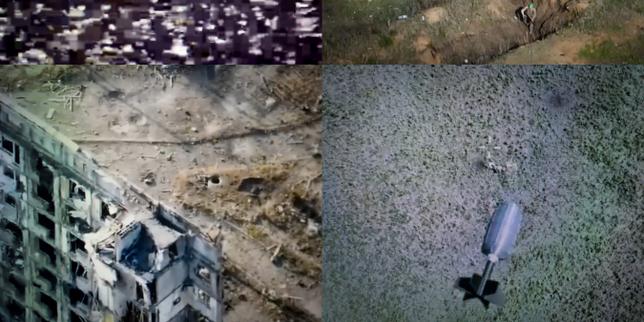
Ethiopia's federal government appointed a six-month caretaker administration in Tigray in October 2026 after reclaiming Mekelle and major regional towns following renewed fighting that broke out in September. The five-member executive body—tasked with restoring basic services, stabilizing security, and preparing the region for elections by April 2027—is not a clean restart. It is a high-stakes federal intervention built on the wreckage of an earlier interim arrangement that collapsed into factional warfare and rival claims to sovereignty.
Headlines often treat a federal appointment in Mekelle as a routine administrative fix. That reading misses the mechanics of power in northern Ethiopia. When Addis Ababa names a caretaker cabinet for Tigray, it is trying to impose order on a territory where military authority, party legitimacy, and local identity disputes are all contested at once.
Why the First Interim Experiment Cracked
To understand why a second interim administration was needed in October 2026, look at what happened to the first one. Created in March 2023 under the framework of the November 2022 Pretoria peace agreement, the initial Tigray Interim Regional Administration began under Getachew Reda with a mandate to wind down war footing, restore public institutions, and guide the region back into constitutional life.
It never enjoyed quiet consensus. Political divisions inside the Tigray People's Liberation Front widened into an open rift between factions aligned with federal engagement and those loyal to chairman Debretsion Gebremichael. Disputes over party registration with the National Election Board of Ethiopia, control over security forces, and the pace of implementing the Pretoria terms turned administrative routines into proxy battles.
By April 2025, military commander Tadesse Werede took over the interim presidency after Getachew Reda moved into a federal advisory role. Even that shift could not hold the lid down. In spring 2026, TPLF leaders moved to reinstate the pre-war regional council elected in 2020, installing Debretsion as regional president and declaring the federally extended interim body illegitimate. What began as a transitional bridge turned into two competing versions of regional authority.
What the October Caretaker Cabinet Actually Controls
The October 2026 caretaker lineup signals how Addis Ababa plans to govern this round. Rather than negotiating a broad power-sharing pact with the TPLF leadership, the federal government named five senior officials to run core portfolios under federal direction and oversight.
- Assefa Abraha Hagos took charge of administration and public services, bringing experience from the Pretoria peace talks and earlier advisory work with the interim administration.
- Dr. Tewodros Aregay Woldeselassie was named chief executive for economy and reconstruction.
- Brigadier General Gebre-Egziabher Beyene Hailu stepped into peace and security as a commander associated with the Tigray Peace Forces.
- Redae Halefom Woldeselassie assumed responsibility for political affairs and public mobilization.
- Dr. Shishay Amare was designated mayor of Mekelle.
On paper, the mandate is narrow. Caretaker administrations are meant to keep clinics, schools, courts, and municipal offices running while preparing voters for polls, not lock in permanent political arrangements.
In practice, six months is a razor-thin window. Tigray missed Ethiopia's June 2026 general elections amid security turmoil. Organizers now face the logistical weight of voter registration, displaced populations, damaged infrastructure, and deep public skepticism in roughly half a year.
| Core Mandate Area | Stated Caretaker Goal | Hardest Practical Obstacle |
|---|---|---|
| Security and Order | Stabilize towns and restore law enforcement after renewed fighting | Armed factions and regional militias retain weapons and distrust federal forces |
| Public Services | Restart routine administration, basic services, and reconstruction | Wartime damage, budget strain, and contested local authority |
| Electoral Readiness | Prepare conditions for credible elections by April 2027 | Displacement, security gaps, and rival political claims to legitimacy |
The Overlooked Fault Lines Beneath the Mandate
A purely institutional reading of the appointment misses two pressures that can derail a caretaker schedule faster than bureaucratic delays.
The first is local boundary and identity politics. In districts like Raya Alamata, local interim structures backed by federally vetted delegates have clashed with identity advocates who reject Tigrayan administration and demand separate federal oversight. Disputed territories have remained one of northern Ethiopia's most explosive flashpoints since the war began. You cannot run calm municipal or regional elections when residents in border woredas dispute which regional council even has legal standing over them.
The second is political plurality inside Tigray. Years of single-party dominance left deep scars, yet many Tigrayans also resent heavy-handed federal intervention. Emerging parties—including Salsay Weyane Tigray, Arena Tigray for Democracy and Sovereignty, Tigray Democratic Solidarity, and the National Congress of Great Tigray—represent real currents of opinion that do not neatly map onto a binary fight between Addis Ababa and the TPLF.
A caretaker administration can print ballots and reopen offices, yet elections only cure conflict if voters believe the outcome will not be overturned by force or political fiat.
Consider a hypothetical scenario to see how fragile that balance is. Suppose the caretaker cabinet repairs roads and resumes civil service pay in Mekelle by February, yet armed clashes continue in outlying zones and displaced families cannot return home. Voters might still turn out, or stay away in large numbers, leaving the winning side with a fragile mandate that rivals dismiss as unrepresentative. That risk is why credibility matters just as much as administrative speed.
What Federal Oversight Solves and What It Breaks
Federal backing gives a caretaker team immediate access to budget lines, communications links, and national security coordination. After months of fighting and disruption, getting basic administrative machinery moving again is no small thing.
There is a catch. The closer an interim administration looks like a creature of Addis Ababa, the harder it becomes to convince skeptical Tigrayans that it acts for the region rather than as a federal instrument. Analysts who have watched Ethiopia's federal system strain over decades know that top-down fixes often buy short-term quiet while storing up long-term resentment.
For the April 2027 target to mean more than a calendar date, the caretaker leadership has to prove two things quickly: that routine governance works fairly without partisan score-settling, and that space exists for genuine Tigrayan competition without guns deciding who stands. If either pillar fails, six months will vanish into another extension or another confrontation.