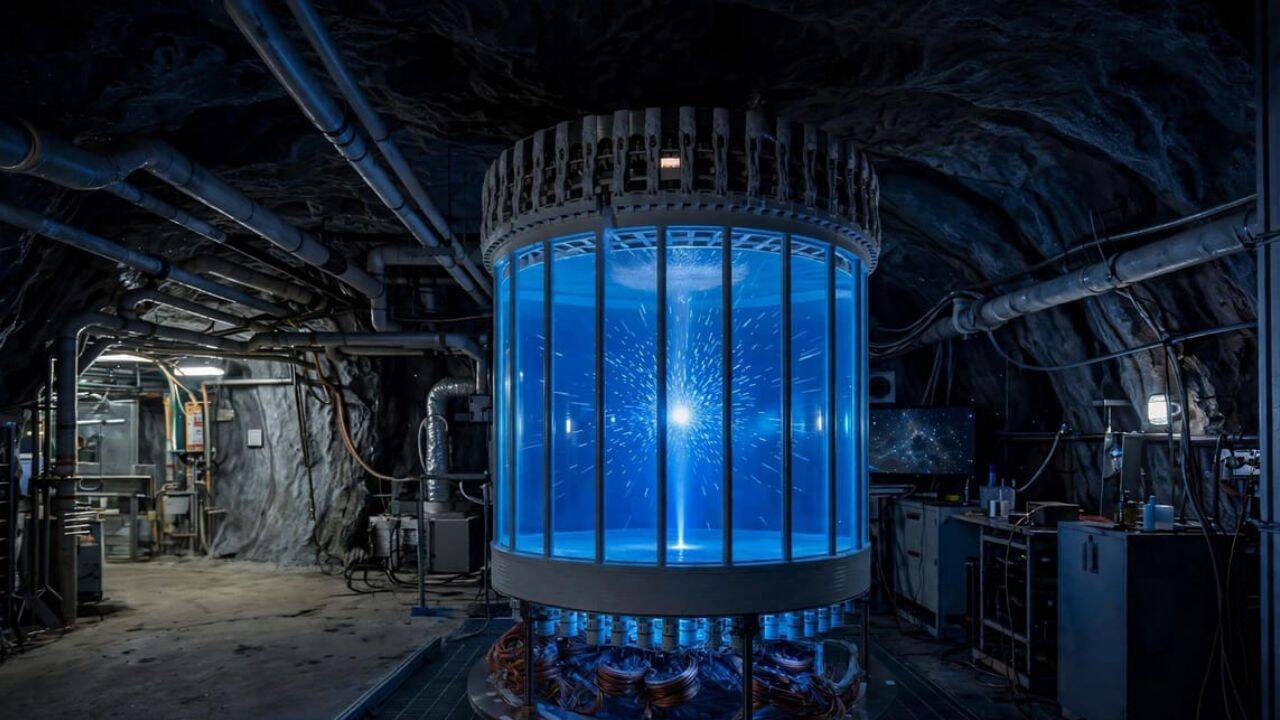
Drone strikes targeting major Russian data center infrastructure strike directly at the physical chokepoints of artificial intelligence development, exposing how fragile and exposed heavy compute clusters remain under modern warfare conditions. Long-range unmanned aerial systems have shifted from hitting oil refineries and substations to threatening high-density server halls, cooling plants, and power feeds that underpin sovereign AI ambitions.
For years, technology executives and defense planners talked about artificial intelligence as if it existed in the clouds. Literally and figuratively. They treated large language models, military simulation engines, and automated intelligence pipelines as weightless software running on infinitely scalable virtual machines. Reality hits harder when a composite airframe packed with explosives flies toward a physical building drawing dozens or hundreds of megawatts from a regional grid.
There is no URL to inspect in the reference note, only the headline pointing to a strike on Russia's top data center infrastructure and its AI ambitions. Even without a specific incident report linked in the prompt, the strategic mechanics behind this kind of attack are straightforward and sobering. Compute is steel, copper, silicon, concrete, and water. Hit any one of those links hard enough, and the math behind training or serving frontier models changes overnight.
Why High Density Compute Is a Tempting Target
Modern AI data centers do not look like ordinary enterprise server rooms. They look like industrial chemical plants or heavy manufacturing halls wired into high-voltage transmission lines.
A traditional commercial hosting facility might pack a few kilowatts into each rack and rely on standard air conditioning plus backup diesel generators for short outages. An AI training cluster pushes tens of kilowatts or more per rack, running liquid cooling loops, chillers, substations, and fiber trunks at near-continuous load. Stopping a single training run on thousands of specialized accelerators wastes months of schedule, millions of dollars in sunk capital, and irreplaceable time.
From a military planner's perspective, a top-tier data center sits at the intersection of dual-use infrastructure. The same GPU clusters or high-performance servers that train commercial language models or state enterprise tools can support battlefield command-and-control software, electronic warfare signal processing, satellite imagery analysis, or autonomous navigation systems. Warfare rarely respects clean distinctions between civilian innovation and military utility once a state treats AI as strategic power.
Physical attacks also offer something cyber operations often struggle to guarantee. Irreversibility. A clever intrusion might corrupt weights, steal datasets, or knock a cluster offline for days until engineers rebuild from backups. A kinetic hit on switchgear, rooftop chillers, or transformer yards destroys hardware that sits behind export controls, supply bottlenecks, and long procurement queues.
The Physics and Economics of Sovereign AI Under Fire
Building sovereign AI capacity inside a sanctioned or contested market already carries steep friction. Adding drone threats multiplies every cost in the stack.
Consider a hypothetical example to see how the numbers bend. Suppose an operator builds a flagship facility designed for one hundred megawatts of IT load, backed by redundant substations, chillers, and backup generation. Even if a drone strike leaves the main server hall standing, shrapnel in an outdoor transformer yard, ruptured coolant lines, or damaged high-voltage breakers can force a shutdown of half the hall for weeks while specialized replacement parts are sourced and tested.
That downtime is brutal because AI hardware depreciates fast and schedules matter intensely. Every week a flagship cluster sits idle or throttled, competing research teams move forward, defense applications wait on updates, and financing costs keep ticking. Insurance becomes harder to obtain or prohibitively expensive, forcing state budgets or domestic conglomerates to absorb losses directly.
Power Grids and Cooling Loops Are Soft Spots
People love talking about accelerator chips when they discuss AI power. Chips get the headlines, the export restrictions, and the valuation multiples.
Yet cooling plants and electrical substations are often the real soft spots. A server rack can survive a lot if power stays clean and heat gets carried away. Shut down chilled water circulation or knock out step-down transformers, and thermal protection shuts the hardware down automatically to prevent permanent damage.
Open-air cooling towers, dry coolers, and electrical switchyards are visible from above and difficult to harden completely without hurting thermal efficiency. Pushing hot air out and pulling cool air in requires airflow and space. Encasing everything inside thick reinforced concrete can trap heat, add massive structural weight, and drive construction timelines from years into even longer spans.
Supply Chains Turn Minor Damage Into Major Delays
In an unrestricted global market, replacing damaged networking gear, power distribution units, or liquid-cooling manifolds is mostly a matter of vendor lead times and freight logistics. Under sanctions and wartime trade friction, every replacement part carries extra steps.
Even when domestic alternatives or gray-market channels exist, specialized industrial components are rarely plug-and-play. A mismatched power supply unit, a lower-grade capacitor bank, or a delayed optical transceiver shipment can bottleneck an entire pod of servers. What looks like localized physical damage on a satellite photo can turn into a multi-month recovery slog inside the facility.
Counter-Arguments and Overlooked Realities
It is tempting to conclude that drone strikes on data centers mean centralized AI clusters are obsolete overnight. That conclusion goes too far.
First, large-scale training still benefits heavily from tight physical proximity among thousands of accelerators linked by high-bandwidth interconnects. Splitting a frontier training job across dozens of small, dispersed sites introduces latency and communication overhead that slow down model convergence. Distributed inference and resilient backup sites help keep services running, but training massive foundation models remains stubbornly concentrated.
Second, states adapt quickly once a new threat vector proves effective. After early strikes on energy assets, defenders layered point air defenses, electronic jamming, acoustic sensors, netting, decoy structures, and geographic dispersion across regions. Data center operators already know how to build redundant power feeds and split workloads across multiple availability zones for reliability reasons; war simply turns reliability engineering into survivability engineering.
Third, intelligence value often matters as much as physical destruction. A strike near or on a major compute hub tests air-defense coverage, forces scarce interceptor missiles to be spent, signals surveillance reach, and disrupts operations even if structural damage is partial. Measuring success purely by square meters of damaged roof misses the broader campaign logic.
What This Means for AI Strategy Everywhere
Any country or enterprise treating AI infrastructure as an untouchable peacetime asset is reading an outdated playbook. Modern conflict reaches deep into the domestic rear, targeting the industrial backbone that turns raw electricity and silicon into strategic capability.
Here is where the practical lessons land for executives, infrastructure builders, and policymakers:
- Treat compute hubs as critical infrastructure: Site selection must weigh air-defense corridors, grid resilience, and industrial hazard proximity alongside cheap power and fiber routes.
- Design for graceful degradation: Architect workloads so training checkpoints save frequently and inference traffic fails over cleanly when a zone or cooling loop drops offline.
- Stockpile long-lead spares: Keep critical electrical, thermal, and networking spares on site rather than relying on just-in-time delivery across contested supply chains.
- Harden the perimeter beyond firewalls: Combine physical access controls, rooftop and yard protection, decoys, and rapid-repair crews with traditional cybersecurity teams.
Software can move at the speed of light, but every model still lives inside a building that needs power, cooling, and protection from the sky.