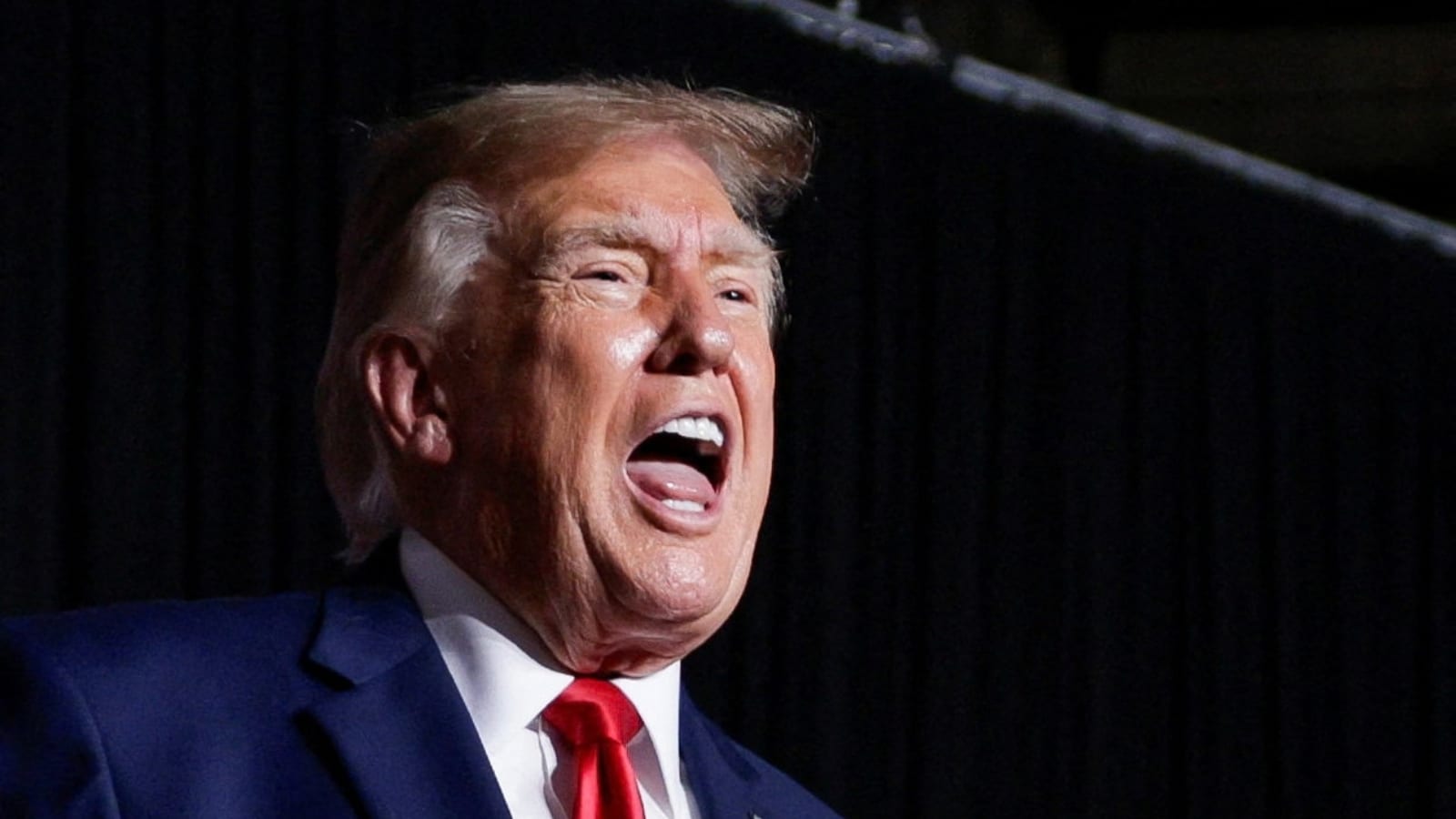
President Donald Trump did not win the 2026 Nobel Peace Prize, and his furious reaction reveals a fundamental clash between transactional American diplomacy and the Scandinavian institution that judges global peacemaking. Following the Norwegian Nobel Committee's October 9, 2026 decision to award the prize to South African jurist and former United Nations High Commissioner for Human Rights Navanethem "Navi" Pillay, Trump attacked both the committee and the nation of Norway, insisting he deserved eight separate awards for eight global conflicts he claims to have resolved.
The outburst was predictable. Trump has campaigned openly for the medal since returning to the White House in January 2025, even accepting the physical 2025 Nobel Peace Prize medal handed to him by Venezuelan opposition leader María Corina Machado during a January 2026 visit. Yet behind the Truth Social tirades and rally speeches in Syracuse, New York, lies a much larger story about how modern diplomatic credit is claimed, contested, and institutionalized.
Auditing the Eight Wars on Trump's Ledger
To understand why Oslo passed over the American president—despite formal nominations from governments including Pakistan, Israel, and Cambodia—you have to examine the specific conflicts on his list. Trump has named eight disputes he says his administration settled: Cambodia and Thailand, Kosovo and Serbia, the Democratic Republic of the Congo and Rwanda, Pakistan and India, Israel and Iran, Egypt and Ethiopia, Armenia and Azerbaijan, and Israel and Hamas.
On paper, that roster spans four continents and decades of entrenched hostility. In practice, diplomatic historians and regional ministries describe a far messier reality.
Take the India and Pakistan claim. During a rally in Syracuse, Trump asserted he saved 50 million lives by halting a conflict between the two nuclear-armed neighbors. New Delhi flatly rejected that narrative. India's Ministry of External Affairs maintained that there was zero third-party mediation during Operation Sindoor and that the decision to halt military action was reached directly through bilateral channels between New Delhi and Islamabad. In South Asian diplomacy, acknowledging American brokerage is politically toxic for Indian leadership, meaning Washington's behind-the-scenes phone calls—whatever weight they carried—will never be validated by one of the two primary belligerents.
The Egypt and Ethiopia dispute over the Grand Ethiopian Renaissance Dam presents a different problem. Economic normalization talks and technical water-sharing frameworks are not the same thing as ending a shooting war. Similarly, the Kosovo and Serbia economic normalization agreements, first brokered during Trump's earlier term and revisited in his second, addressed trade corridors and diplomatic recognition rather than active battlefield combat.
Even where active fighting stopped or paused—such as the fragile ceasefires involving Israel and Hamas or the de-escalation between Israel and Iran—the agreements remain precarious tactical pauses rather than permanent structural treaties. A ceasefire stops bullets on a Tuesday. A peace settlement removes the reason to reload on Wednesday.
The Architecture of Transactional Peacemaking
Trump's diplomatic method relies heavily on bilateral pressure, tariff threats, security guarantees, and rapid, high-visibility handshakes. Foreign leaders understand the currency. When Cambodia, Israel, or Pakistan publicly announce they have nominated Trump for the Nobel Peace Prize, they are executing a low-cost, high-return diplomatic maneuver designed to secure favorable trade terms, weapons sales, or political backing from the Oval Office.
Why the Norwegian Nobel Committee Chose Navi Pillay Instead
If Trump's complaint was simply about losing, the identity of the 2026 laureate made the snub doubly pointed. At his Syracuse rally, Trump dismissed Navanethem Pillay as a "mystery person" nobody had ever heard of.
In international legal circles, Pillay is anything but obscure. Over a career spanning three decades, she served as president of the International Criminal Tribunal for Rwanda, a judge on the International Criminal Court, and the United Nations High Commissioner for Human Rights from 2008 to 2014. More recently, she chaired the UN commission of inquiry that concluded Israel committed genocide in Gaza—a finding the Israeli government rejected and Washington fiercely criticized.
By selecting Pillay, committee chair Jørgen Watne Frydnes and his four colleagues sent an unmistakable institutional message. The committee's citation emphasized her central role in prosecuting war crimes, crimes against humanity, and genocide.
- Multilateral Courts Over Strongman Deals. The committee rewarded slow, rules-based international jurisprudence rather than executive dealmaking.
- Accountability Over Immunity. Pillay's career represents the principle that heads of state and military commanders answer to international tribunals, a doctrine that runs counter to Trump's "America First" skepticism of global bodies.
- Institutional Independence. Public pressure campaigns historically backfire in Oslo. The five members of the Norwegian Nobel Committee are appointed by the Norwegian Parliament, the Storting, not the Norwegian government, though Trump repeatedly blamed Norway itself and called the decision an "indelible stain" on the country.
Pillay handled the political crossfire with dry understatement, joking to reporters that she might share the prize with Trump while emphasizing that judicial work relies on impartial interpretation of facts and law.
The Shadow of 2009 and the Precedent Problem
You cannot separate Trump's fixation on Oslo from Barack Obama. In almost every speech where Trump demands the prize, he circles back to October 2009, when the committee awarded the medal to Obama less than nine months into his presidency.
"Obama got it, and he didn't do anything," Trump told reporters in the Oval Office ahead of the 2026 announcement. "He still doesn't know what he got it for."
On that specific point, even many European observers quietly agree. The 2009 award—given for Obama's rhetorical commitment to nuclear nonproliferation and climate diplomacy before he had a legislative or treaty record to show for it—is widely viewed in Oslo as one of the committee's most premature choices. Four American presidents have won the Nobel Peace Prize: Theodore Roosevelt in 1906 for mediating the Russo-Japanese War, Woodrow Wilson in 1919 for the League of Nations, Jimmy Carter in 2002 for decades of post-presidential mediation and the Camp David Accords, and Obama in 2009.
Trump measures his record against Roosevelt and Carter, arguing that halting active hostilities—or preventing them through deterrence—counts for far more than aspirational speeches. Yet the Nobel committee rarely awards sitting leaders during an active term unless a formal, ratified treaty has already been signed and verified over time.
The Structural Friction Between Washington and Oslo
Alfred Nobel's 1895 will stipulates that the peace prize should go to the person who has done the most or the best work for fraternity between nations, the abolition or reduction of standing armies, and the holding and promotion of peace congresses.
That nineteenth-century language creates a permanent disconnect with twenty-first-century American statecraft. Washington maintains global stability largely through military deterrence, economic sanctions, and alliance networks—tools that clash directly with Nobel's vision of disarmament. When Trump boasts of rebuilding the American military, striking Iranian nuclear infrastructure, and imposing punitive tariffs to force adversaries to the negotiating table, he is operating within a realist framework of coercive diplomacy.
Coercive diplomacy can freeze a border skirmish between Armenia and Azerbaijan or force factions in the Democratic Republic of the Congo and Rwanda into a temporary corridor agreement. What it rarely produces is the kind of demilitarized, institutional reconciliation that five Norwegian committee members recognize as lasting peace.
There is also the domestic political calendar to consider. Trump's sharpest attacks on the committee landed in early October 2026, barely three weeks before the November 3 midterm elections. Framing himself as a global peacemaker robbed of recognition by "Radical Ideologues" in Europe serves a clear domestic function. It reinforces his core narrative to voters that international elites despise him precisely because he puts American leverage ahead of global consensus.
Meanwhile, the physical medal María Corina Machado handed him in January sits in Washington as a curious diplomatic artifact. Under Nobel Foundation rules, a laureate can give away the gold disc, but the title itself cannot be transferred. Until a ceasefire holds for years rather than months—and until the combatants themselves stop disputing who brokered the peace—Oslo's ledger and Trump's scorecard will remain permanently out of balance.