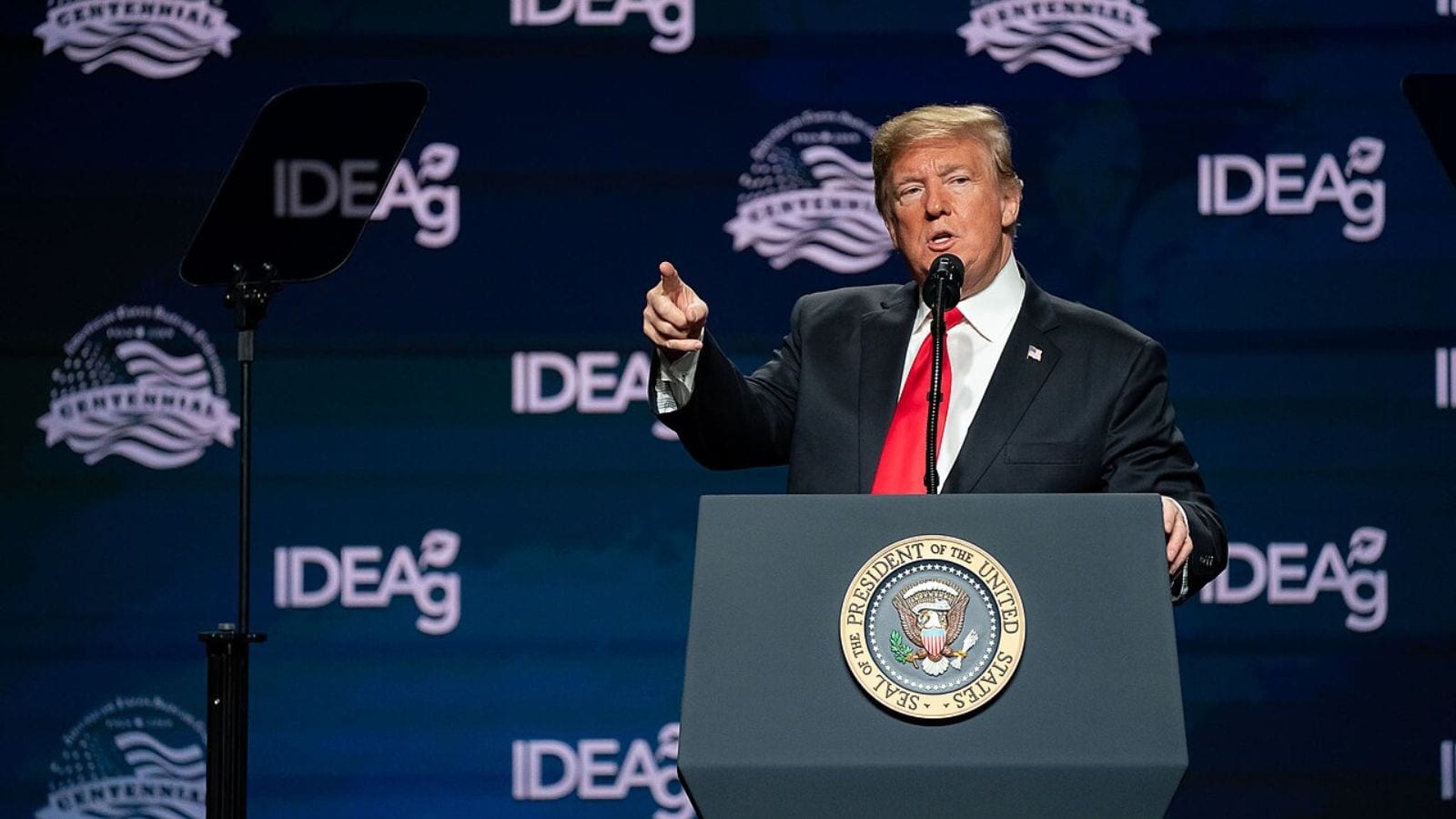
The relationship between Washington and Muscat is currently facing its most severe stress test in over two centuries. President Donald Trump has issued blunt threats to "blow up" Oman should the Sultanate continue to facilitate negotiations with Iran regarding the administration of the Strait of Hormuz. This escalation, while jarring, is not an isolated outburst. It represents a fundamental shift in how the current administration views traditional intermediaries. Oman has served as a quiet, effective bridge between the West and Tehran for generations, but that utility is now being eclipsed by a demand for total alignment with American policy.
The core of this friction lies in the strategic geography of the Strait of Hormuz. Roughly thirty percent of the world’s maritime oil shipments pass through this chokepoint. The White House views any collaborative management arrangement between Muscat and Tehran—specifically those involving tolling systems—as a direct threat to the principle of free navigation. By branding these discussions as unacceptable, the administration has effectively signaled that Oman’s historic role as a neutral mediator is no longer compatible with the current United States objective of maximum pressure on Iran.
Oman’s diplomatic strategy has long been defined by its pragmatism. Since the 1833 Treaty of Amity and Commerce, the Sultanate has maintained a unique position, balancing deep security ties with the United States while cultivating communication channels that other regional powers could not or would not establish. This approach allowed Oman to host delicate talks on prisoner exchanges and nuclear agreements. To Muscat, these actions were never about favoring Tehran over Washington. They were about maintaining regional stability, a necessity for a country located on the southern flank of the world's most volatile waterway.
The administration’s shift suggests a belief that diplomacy with Iran has reached a point where mediation is a hindrance rather than a help. When the President threatens an ally with military force, he is not merely negotiating a maritime policy; he is attempting to forcibly reshape the regional order. This tactic creates an uncomfortable ultimatum for Muscat. If they prioritize their geographic reality—the need to maintain a functioning relationship with their neighbor, Iran—they risk direct retaliation from the United States. If they capitulate, they lose the singular diplomatic leverage that has made them an indispensable partner for the past half-century.
Observers might view this as a simple display of power, but the risks are profound. By pressuring an intermediary, the United States closes one of the few remaining windows for backchannel communication during high-stakes conflict. While the current blockade of the strait remains in force, the lack of a diplomatic path forward leaves both sides with fewer options for de-escalation. The administration assumes that threats will force behavioral change, yet history in the Gulf demonstrates that such pressure often hardens resolve rather than encouraging compliance.
The irony of the current situation is that both the United States and Oman have a mutual interest in the flow of global energy. However, they have reached a profound disagreement on the definition of sovereignty within the strait. Washington views it as international waters immune to local management, whereas Tehran and Muscat view it through the lens of coastal administration. This is not a dispute that can be settled by military posturing alone. It is a fundamental clash over maritime governance that threatens to leave the world’s most vital oil transit route in a state of permanent instability.
Should the administration continue to ignore the nuances of Omani foreign policy, the cost will extend beyond this single partnership. Other nations in the region are watching closely to see how a long-standing ally is treated when its interests diverge from those of Washington. The perception of the United States as a reliable security partner is contingent upon mutual respect, not just transactional dominance. When that balance is discarded, the very influence the administration seeks to project begins to diminish.
The path forward requires a recognition that some countries cannot simply ignore their neighbors. Oman will always reside on the Strait of Hormuz, and it will always need to manage that proximity through diplomacy. Treating this necessity as an act of defiance does not solve the underlying maritime tensions; it only ensures that when a crisis eventually demands a mediator, there will be no one left with the credibility to step into the role.
This video provides context regarding the President's public remarks and the geopolitical tensions surrounding the Strait of Hormuz.
http://googleusercontent.com/youtube_content/1