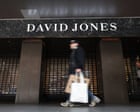
David Jones is preparing to shut down roughly half of its brick-and-mortar store footprint across Australia and New Zealand, triggering widespread job losses in an urgent operational restructure aimed at halting years of financial hemorrhage. While headlines focus on the immediate shock of shuttered suburban flagships and displaced retail workers, the real story lies beneath the surface of corporate press releases. This contraction is not merely a reaction to sluggish consumer spending or inflation. It is the inevitable reckoning for a 188-year-old retail model trapped by suffocating commercial leases, fragmented supply chains, and an inability to compete with direct-to-consumer luxury brands.
Retail executives love to blame macroeconomic headwinds when things go south. Inflation is high, interest rates have squeezed household budgets, and shoppers are keeping their wallets closed. All of that is true, yet it misses the structural rot that has been eating away at traditional department stores for two decades.
The Illusion of the Suburban Anchor
For generations, major shopping center landlords treated department stores as untouchable royalty. Developers built massive multi-level boxes at either end of suburban malls, offering cut-rate rents to brands like David Jones and Myer because those names guaranteed foot traffic. Shoppers came for the prestige department store and stayed to buy groceries, shoes, and coffee from smaller specialty tenants paying exorbitant square-meter rates.
That dynamic flipped completely over the last ten years.
Today, foot traffic in major Australian malls is driven by experiential dining, entertainment precincts, fast-fashion giants, and major supermarkets. The traditional department store no longer pulls people through the doors; instead, it relies on the mall to bring customers to its doorstep. When landlords realized they no longer needed to subsidize giant anchors, lease renewals became brutal battlegrounds.
David Jones found itself stuck with cavernous, multi-story footprints in middle-ring suburbs where demographics had shifted and online shopping had hollowed out mid-tier apparel margins. Heating, cooling, lighting, and staffing a 15,000-square-meter store when sales per square meter are falling is financial suicide. By slashing its store count in half, management is essentially admitting that the suburban department store is dead as a viable asset class.
Private Equity Reality Check
To understand why this restructure is happening with such ruthless speed, you have to follow the ownership trail. In late 2022, South African retail group Woolworths Holdings finally offloaded David Jones to Anchorage Capital Partners, a Sydney-based private equity firm. Woolworths had spent nearly a decade pouring billions into the Australian retailer, only to write down the vast majority of its investment in humiliation.
Private equity firms do not buy distressed heritage brands out of nostalgia. They buy them to strip out dead weight, isolate profitable cash flows, and prepare the business for an eventual exit or breakup.
When Anchorage Capital took the keys, the writing was on the wall for underperforming leases. Private equity operators look at retail through a cold, unit-economics lens:
- Store-level EBITDA: If a specific location does not generate positive cash flow after accounting for direct labor, occupancy costs, and inventory shrinkage, it goes on the chopping block.
- Working capital traps: Holding millions of dollars in slow-moving seasonal apparel ties up cash that could be used to pay down debt or fund high-margin digital infrastructure.
- Real estate separation: Separating the valuable flagship properties in Sydney and Melbourne from the liabilities of loss-making suburban leases makes the remaining business far easier to sell or refinance.
Consider a hypothetical example of how this math plays out on a single floor. Imagine a suburban store paying $4 million annually in base rent and outgoings, generating $25 million in gross revenue. At a 38 percent gross margin, that store brings in $9.5 million before expenses. Once you subtract $4 million for rent, $4.5 million for floor staff and management, and $1.5 million for utilities, security, and local logistics, the store loses $500,000 a year. Multiply that across twenty underperforming locations, and you have a $10 million annual cash burn that drags down the entire enterprise. Closing those doors stops the bleeding overnight, even if total top-line revenue shrinks dramatically.
The Concession Trap and Margin Erosion
Walk through the ground floor of any major department store today, and you are not actually looking at a retailer. You are looking at a landlord subletting tiny patches of carpet to third-party brands.
Over the past fifteen years, David Jones leaned heavily into the concession model. Instead of buying wholesale inventory from fashion houses and taking the risk of unsold stock, the department store allowed brands like Chanel, Louis Vuitton, or high-end Australian designers to run their own branded boutiques inside the store. David Jones took a percentage of every sale—typically between 15 and 25 percent—while the brand paid for its own staff and carried the inventory risk.
On paper, this looked brilliant. It lowered working capital requirements and brought world-class luxury labels onto the floor. In practice, it hollowed out the retailer's core merchandising muscle and capped its upside.
Why Luxury Brands No Longer Need the Middleman
The biggest flaw in the concession strategy became obvious once luxury conglomerates realized they could capture 100 percent of the retail margin by opening their own standalone boutiques right next door.
If a shopper wants a $5,000 handbag, they do not want to buy it in a crowded department store with inconsistent service and tired carpets. They want champagne in a private salon at a standalone flagship on Castlereagh Street or Collins Street. Global luxury giants have spent the last five years aggressively pulling back from wholesale and department store partnerships worldwide to protect brand exclusivity and control customer data.
When those top-tier brands pull out or refuse to expand into secondary locations, the department store is left selling mid-market clothing and homewares. Those exact categories are where margins are thinnest and competition from online pure-plays like The Iconic, ASOS, and Amazon is most ferocious.
The Human Cost of Decades of Delay
Behind every corporate restructuring announcement are thousands of retail workers who end up paying the price for executive miscalculations made years earlier. Retail staff are rarely the ones who signed twenty-year leases on oversized suburban malls, nor were they the ones who failed to build a functioning e-commerce platform until the mid-2010s.
When a retailer announces the closure of half its network, the job losses ripple far beyond the checkout counters. Visual merchandisers, warehouse pickers, regional managers, cleaners, and third-party logistics contractors all take a direct hit. Many long-serving department store employees are older workers who built entire careers around the stability of retail awards and predictable rosters. Reabsorbing thousands of displaced retail workers into an economy already cooling under high interest rates will not happen smoothly.
Unions will rightly fight for full redundancy payouts and redeployment opportunities, yet the brutal truth remains that a smaller store network simply requires fewer human beings to operate.
Can a Shrunken David Jones Actually Survive?
Cutting half the store fleet is an amputation meant to save the patient, not a cure for the underlying disease. Once the dust settles and the unprofitable leases are terminated, David Jones will be left with a tight core of flagship stores in major capital cities—such as Elizabeth Street in Sydney and Bourke Street in Melbourne—alongside a handful of high-performing affluent suburban hubs like Bondi Junction and Chadstone.
That leaner footprint gives the company a fighting chance, provided management avoids repeating old mistakes.
First, the remaining flagships must justify their existence as physical destinations. Nobody drives into a central business district and pays $40 for parking just to browse racks of folded sweaters they could order online in thirty seconds. Surviving department stores globally—places like Selfridges in London or Le Bon Marché in Paris—succeed because they operate as cultural theaters. They invest relentlessly in hospitality, rotating art installations, exclusive product drops, and personal styling services that cannot be replicated on a smartphone screen.
Second, private equity owners must resist the temptation to starve the remaining stores of capital expenditure just to juice short-term cash flow. Shoppers can smell deferred maintenance from fifty paces. Flickering fluorescent lights, scuffed floorboards, and unstaffed fitting rooms destroy the illusion of luxury faster than any economic downturn. If David Jones wants to command premium prices, every square meter of its surviving stores must look and feel immaculate.
Third, the integration between digital inventory and physical floor stock has to work without friction. For years, department stores operated their websites as separate silos from their physical warehouses, leading to cancelled orders, delayed shipping, and frustrated customers. Turning surviving flagships into hyper-efficient local fulfillment hubs for same-day delivery is basic table stakes in modern retail, yet legacy IT systems have historically made this a nightmare to execute.
The Counter-Argument Nobody Wants to Hear
There is a vocal camp of retail analysts who argue that shrinking to greatness is a myth in the department store sector. History offers plenty of sobering warnings. Look at Debenhams in the United Kingdom, or Sears and Barney’s in the United States. Every single one of those retailers went through multiple rounds of "urgent restructures," closing dozens of stores to focus on their "core profitable flagships" before eventually collapsing into liquidation anyway.
When you cut half your stores, you lose massive economies of scale.
Suppliers suddenly have less incentive to give you preferential wholesale pricing or exclusive product runs when your distribution footprint drops by 50 percent. Marketing budgets—whether for national television campaigns, glossy catalogues, or digital customer acquisition—must now be amortized across half as many cash registers. Corporate head office overhead rarely shrinks at the exact same pace as store closures, leaving a top-heavy administrative structure sitting on top of a much smaller revenue base.
If Anchorage Capital simply shrinks the store count without fundamentally reinventing what happens inside the remaining buildings, this restructure will only buy another three to five years of breathing room before the next crisis hits.
The collapse of the traditional suburban department store is not an anomaly isolated to Australia; it is the final stage of a global retail correction that began the moment high-speed internet entered the living room. Consumers no longer need a single giant building to aggregate thousands of unrelated products under one roof when their phones do it faster, cheaper, and with infinitely more selection. David Jones is tearing down half its empire because the math finally ran out of road, leaving the survivors to prove whether heritage luxury still has a pulse in a market that has already moved on.