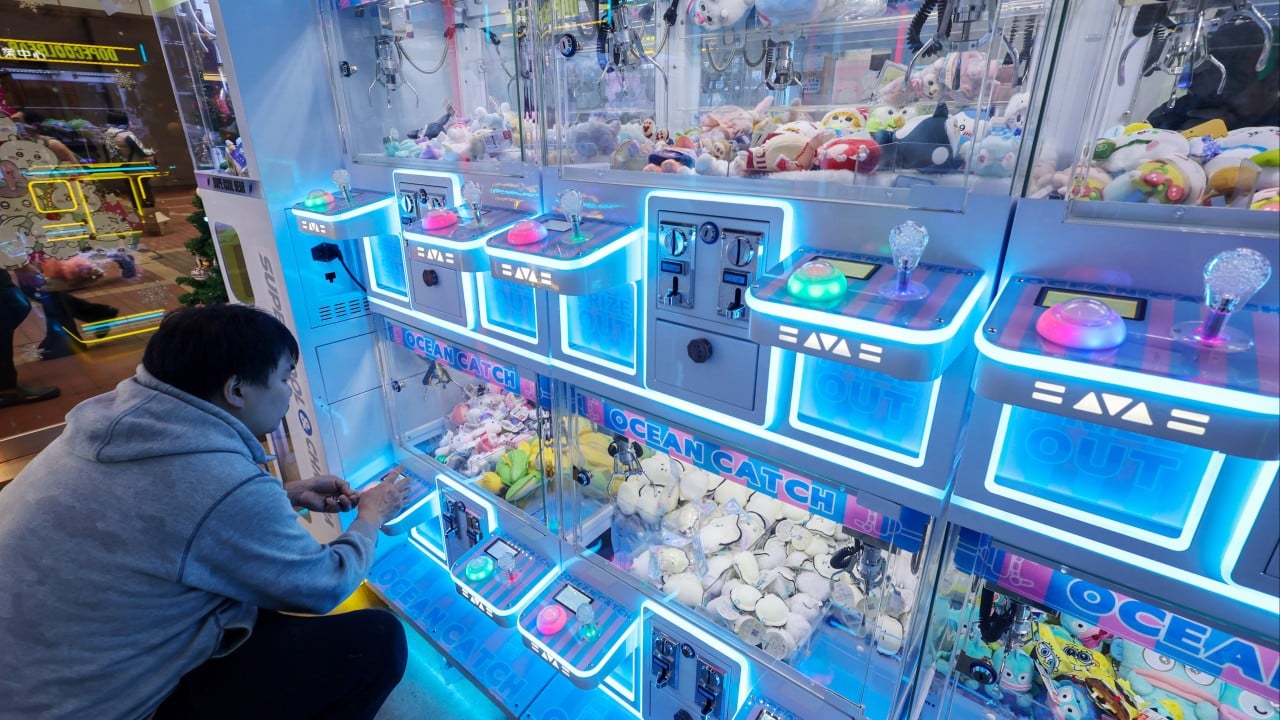
The neon-lit claw machine arcades packed into Hong Kong’s retail districts are not just innocent hubs for capturing plush toys; they are a direct symptom of a broken retail economy and a massive regulatory blind spot. While the Consumer Council recently flagged a staggering 760 percent spike in customer complaints over three years, looking only at angry consumers misses the broader crisis. The sudden explosion of these unstaffed gaming dens is the result of a legal loophole, plunging commercial rents, and calculated psychological exploitation that targets vulnerable minors.
The Legal Loophole That Sparked a Retail Contagion
To understand why claw machines have colonized prime storefronts from Mong Kok to Causeway Bay, one must look back to a quiet but consequential High Court battle during the pandemic. In the case of Secretary for Justice v Claw Boss Limited, the court ruled that typical claw machine venues do not constitute places of public entertainment. You might also find this connected coverage interesting: Why Local Ties Are the New Focus of India-France Diplomacy.
This single legal decision changed everything.
Suddenly, operators no longer required a Places of Public Entertainment Licence from the government. Because the existing regime required a public entertainment license as a prerequisite to obtaining an Amusements with Prizes Licence, the entire regulatory framework collapsed. As reported in recent reports by Bloomberg, the results are notable.
For nearly four years, operators have set up shop with almost zero government oversight.
[Traditional Arcade Requirement]
Entertainment Licence ➔ Amusements with Prizes Licence (AWPL) ➔ Strict Oversight

[Post-2022 Legal Loophole]
Court Rules No Entertainment Licence Needed ➔ AWPL Blocked ➔ Zero Oversight
At the exact same time, Hong Kong's retail sector faced severe headwinds. High vacancy rates left landlords desperate. Instead of leaving storefronts completely dark, property owners turned to claw machine vendors who were eager to rent spaces on the cheap. These operations require no full-time staff, minimal electricity, and can run 24 hours a day, turning a previously tightly controlled gaming sector into a low-overhead wild west.
The Illusion of Skill and Rigged Mechanics
The primary driver behind the 760 percent spike in Consumer Council complaints is a fundamental misunderstanding of how modern claw machines operate. Consumers view them as a test of coordination and skill. In reality, they are revenue-generating machines managed entirely by digital logic boards.
The core mechanism relies on a variable voltage system fed directly to the claw's electromagnet. Operators can program the precise holding power of the claw based on mathematical revenue targets.
For example, a machine might be set to provide full gripping strength only once every twenty or thirty attempts. During the intervening turns, the logic board intentionally drops the voltage once the claw reaches the top of its ascent, causing the prize to slip away. This is not a mechanical malfunction; it is the machine functioning exactly as it was programmed.
The Problem with Forced Consumption
A major point of contention involves the "guaranteed grab" or minimum spend mechanism. Operators frequently use this feature to justify incredibly weak claw settings on standard turns. If a plush toy costs $30 wholesale, the operator might set the guaranteed win threshold at $200. Until a player drops forty $5 coins into the slot, winning is mathematically improbable for anyone but an expert capable of exploiting physics anomalies.
Furthermore, the consumer watchdog highlighted predatory practices regarding coin exchange machines. When these machines run out of change, or when players attempt to break large bills, some venues refuse cash refunds. Instead, they issue compensation exclusively in the form of digital play rounds. This forces immediate consumption, trapping the consumer inside a cycle of spending they never intended to commit to.
The Influx of Counterfeits and Intellectual Property Theft
The lack of oversight extends far beyond unfair game settings. Without a licensing authority conducting regular physical inspections, these unstaffed shops have become major hubs for counterfeit goods and intellectual property infringement.
Customs and Excise data reveals a steady climb in raids targeting these establishments. Between 2021 and 2025, authorities repeatedly seized machines packed with unauthorized anime figurines, forged trademark designer goods, and pirated plush toys.
Because many arcades operate entirely unmanned, finding the actual business owner or the individual licensee during a snap inspection is incredibly difficult. Law enforcement frequently finds itself seizing physical property while the actual operators behind the shell companies remain insulated from real legal consequences.
Exploitation of Minors and the Addiction Loop
The most alarming aspect of this unregulated boom is its impact on children. Lawmakers have recently raised urgent flags regarding gaming addiction among minors who frequent these establishments after school.
Because claw machines are not legally classified as gambling under current interpretations, children of any age can walk into an unstaffed venue at 9:00 PM and spend thousands of dollars trying to win trending blind boxes or electronic gadgets. The psychological loop is identical to a slot machine: the near-miss where the claw lifts the toy halfway up before dropping it triggers a powerful dopamine hit that compels the user to try just one more time.
[The Claw Machine Addiction Loop]
Insert Coin ➔ Near Miss (Claw Drops Toy) ➔ Dopamine Spike ➔ "Just One More Try"
The Government Regulates Back
The free ride for claw machine operators is rapidly drawing to a close. Realizing that consumer protection and youth mental health are at stake, the government has proposed sweeping amendments to the Gambling Ordinance to close the legal gap permanently.
Under the proposed framework, the Home Affairs Department will be empowered to issue the Amusements with Prizes Licence directly to claw machine venues, bypassing the need for a public entertainment license entirely.
The upcoming regulatory shift will fundamentally change how these businesses operate.
- Strict Financial Caps: Maximum game fees will be locked at $5 per play, and individual prize values cannot exceed a wholesale cost of $300, effectively eliminating high-value electronics that mimic high-stakes gambling.
- Mandatory Transparency: Operators will likely be legally required to explicitly state the winning odds and minimum spend thresholds directly on the glass of each machine.
- Anti-Addiction Warnings: Venues must prominently display anti-addiction slogans, clear contact details for the licensee, and official channels for consumer disputes.
Whether the low-margin, high-volume claw machine industry can survive when forced to operate honestly remains to be seen. What is certain is that the era of treating Hong Kong’s empty retail spaces as unregulated, automated casinos is over. The state is stepping back into the arcade, and operators will either have to calibrate their claws to a standard of verifiable fairness or pull the plug entirely.