The math of California’s "top-two" primary system is currently threatening to hand a deep-blue state its first Republican governor in two decades. While the headlines focus on the surprising surge of Republican candidates in recent polling, they miss the systemic fracture that has turned the 2026 race into a high-stakes gambling hall. In a field this crowded, a candidate can theoretically "win" a spot on the November ballot with as little as 15% of the vote, effectively disenfranchising the other 85% of the electorate before the general election even begins.
Recent data from Emerson College and the Public Policy Institute of California (PPIC) reveals a confounding reality: Republicans Steve Hilton and Chad Bianco are consistently hovering near the top of the pack, not because California is suddenly a GOP stronghold, but because the Democratic vote is being cannibalized by five major contenders.
The Mathematical Trap of the Top Two
California’s nonpartisan primary system, established in 2010, was sold as a way to moderate politics. The two candidates with the most votes advance to November, regardless of party. However, in 2026, this "open" system is functioning more like a closed door for the Democratic majority.
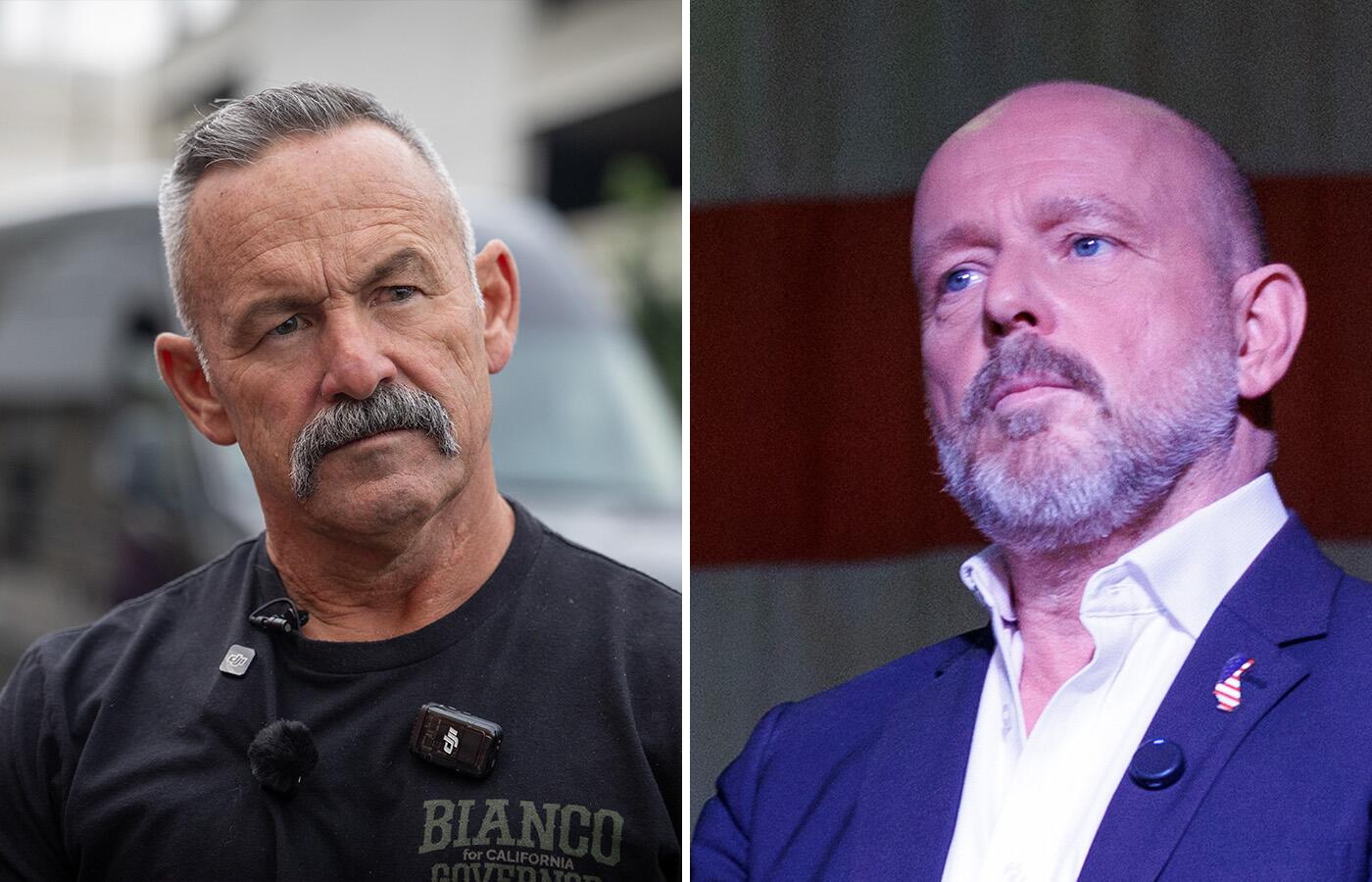
As of March 2026, the Republican electorate has effectively consolidated around two primary figures: Steve Hilton, the former Fox News commentator (13% to 17% in recent polls), and Riverside County Sheriff Chad Bianco (11% to 14%). Together, they command roughly 25% to 30% of the likely voters. On the other side of the aisle, the Democratic field is a sea of viable but competing options, including Congressman Eric Swalwell (17%), billionaire Tom Steyer (11%), and former Rep. Katie Porter (8% to 10%).
If the Democratic candidates continue to split their 45% plurality of registered voters into fragments smaller than 13%, the state could see an "all-Republican" general election in November. This isn't just a theoretical glitch; it is the "math breakdown" that election observers have feared for years.
The Fundraising Arms Race
Money is the fuel keeping this crowded field from narrowing. In previous cycles, a candidate trailing in the polls would see their coffers dry up, forcing a graceful exit. That is not happening here.
- Tom Steyer has already injected over $28 million of his own wealth into the race, primarily focused on an aggressive air war to build name recognition.
- Steve Hilton surprised the establishment by raising $4.1 million in the latter half of 2025, outperforming several tenured Democratic politicians.
- Eric Swalwell has tapped into a celebrity donor base, bringing in $3.1 million, while Katie Porter remains a grassroots powerhouse with 12,000 individual donors.
Because these candidates are well-funded, they have no incentive to drop out. This creates a "spoiler effect" on a massive scale. When five Democrats each spend millions to hold onto their 10% of the vote, they collectively ensure that none of them reach the 20% threshold needed to safely distance themselves from the Republican pack.
Voter Apathy and the Undecided Block
Despite the millions spent on television ads and digital campaigns, the California voter remains remarkably unengaged. According to PPIC, nearly 48% of likely voters say they are "not too closely" following the news about the governor's race.
This apathy is the secret weapon for candidates with high name recognition or niche appeal. When half the state isn't paying attention, a candidate doesn't need a broad mandate; they only need a loyal, motivated base. For Sheriff Chad Bianco, that base is the "law and order" contingent. For Steve Hilton, it is the viewers who spent years watching him on cable news.
| Candidate | Party | Support (Emerson Mar '26) | Primary Strategy |
|---|---|---|---|
| Eric Swalwell | Dem | 17% | Anti-Trump Vanguard |
| Steve Hilton | GOP | 13% | Populist Reformer |
| Tom Steyer | Dem | 11% | Climate & Economy |
| Chad Bianco | GOP | 11% | Public Safety |
| Katie Porter | Dem | 8% | Grassroots Accountability |
| Undecided | N/A | 25% | The Sleeping Giant |
The 25% of voters who remain "undecided" represent a demographic that is disproportionately younger, lower-income, and more likely to be renters. While the top-tier candidates debate high-level policy, these voters are focused on one thing: The Cost of Living.
The Affordability Crisis is the Real Primary
While candidates spar over the Trump administration—with 64% of Californians wanting a governor who "stands up" to Washington—the underlying anxiety is economic. Over 53% of voters have considered leaving the state due to costs.
Housing affordability (22%) and the general economy (37%) are the twin engines driving voter sentiment. The candidate who can convincingly articulate a plan for the 41% of Californians who had to make financial tradeoffs just to pay for groceries will likely capture the "undecided" block.
However, the Democratic candidates are currently stuck in a cycle of "progressive signaling," competing to see who can be the most vocal opponent of federal policies. This creates an opening for the Republican candidates to pivot toward "kitchen table" issues like utility costs and gas prices—issues that resonate even in blue strongholds like the Inland Empire and the Central Valley.
Why the Top Two System is Failing
The original intent of the top-two primary was to produce moderate winners who appeal to the "median voter." In practice, with a field this large, it does the opposite. It rewards candidates who can hold onto a rigid, partisan base while their opponents' support dissolves into a dozen different buckets.
We are witnessing a scenario where the "most preferred" party (Democrats, who hold a 20-point registration advantage) could be locked out of the governor's office because their voters had too many choices. Conversely, the Republican Party, which represents only about 25% of registered voters, is positioned to dominate the general election through sheer consolidation.
This isn't a shift in the California "political landscape." It is a structural failure of a voting system that wasn't designed to handle a six-way split among the majority party. If the primary were held today, the 45% of Democratic voters would see their influence evaporated, replaced by a choice between two versions of Republicanism in November.
The Looming Deadline
The June primary is less than three months away. For the Democratic field, the "why" of their struggle is simple: a refusal to consolidate. For the Republicans, the "how" of their success is equally clear: staying unified while the opposition burns through cash and voters.
If a Democrat does not break away from the 10-15% pack soon, the state's highest office will be decided by a mathematical fluke rather than a popular mandate. The "confounding" nature of the race is not a mystery of voter psychology; it is the predictable outcome of a system that prioritizes the "top two" over the will of the many.
The next few weeks will determine if the Democratic establishment can force a consolidation or if they will continue to watch their majority-stake disappear into the spreadsheets of a flawed electoral system.
Would you like me to analyze the specific policy platforms of Hilton and Swalwell to see where they overlap on economic issues?