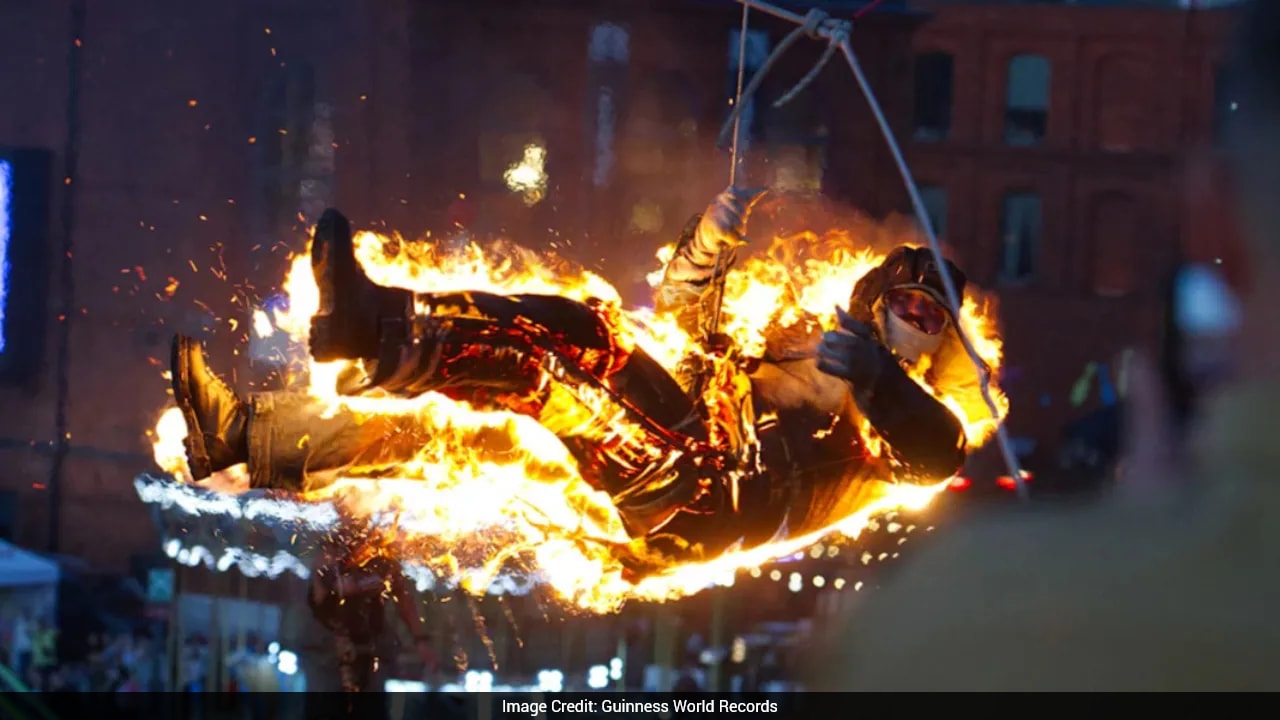
A Polish stunt performer claimed a world record by riding a zip wire for 173 metres while engulfed in flames, turning a high-speed cable descent into a viral spectacle. When a stunt combines a 173-metre span with active combustion, the real story is not the applause at the landing platform. It is the collision of thermal physics, cable tension, and record-keeping loopholes that turns a stunt into a headline.
I have spent decades covering extreme sports, stunt rigging, and record claims across Europe and North America. Most coverage of a burning zip wire stunt reads like a press release from a promotional team. A performer lights up, rockets across a gorge or an arena, stops at the far end, and gets extinguished while cameras roll. That surface reading misses almost everything that makes a stunt survive or fail.
Why Flame and Speed Break Standard Stunt Math
Fire behaves differently in motion. A flame that looks harmless in a static studio test changes shape the moment a rider accelerates down a tensioned steel cable.
Wind speed rises with velocity. Even a moderate descent pushes fresh oxygen across burning fuel, lengthening the flame envelope and shifting heat away from insulated zones toward exposed edges. A performer leaning slightly forward or twisting to check alignment can expose a wrist, neck, or harness strap to convective heat that static tests never replicated.
Fuel choice creates a second trap. Liquid fuels and gels have narrow windows between too little coverage for dramatic visuals and too much saturation for safe duration. Thicker gels cling better under acceleration, yet they can pool in folds of protective undergarments or run toward seams where heat concentrates. Lighter fuels flash faster and burn cleaner on camera, but they can flare unpredictably if wind eddies form behind the rider.
Heat transfer does not wait for a stopwatch. Protective layers designed for brief fire stunts work by buying seconds before thermal energy reaches skin. A 173-metre run sounds short on paper, yet distance means very little without knowing the gradient, cable sag, trolley friction, and braking system at the end. A shallow slope with heavy wind resistance stretches exposure time. A steep drop pushes speed up while increasing braking forces at the arrival point.
What Happens to Rigging Under Thermal Stress
Cable stunts rely on predictable load paths. When fire enters the picture, secondary risks appear around hardware that nobody notices in a highlight clip.
- Harness webbing and covers: Nylon and polyester lose strength at high temperatures, so fire performers rely on aramid fibers or multi-layer protective suits with flame-resistant outer shells. Even then, repeated heat exposure degrades materials over time if teams treat gear as reusable without strict inspection logs.
- Trolley bearings and lanyards: A metal trolley rolling along a steel line conducts heat and handles high dynamic loads, while tethers and attachment points must stay clear of direct flame contact so heat does not weaken secondary safety lines.
- Landing and arrest zones: Stopping a moving rider who is still burning requires a clear sequence. Ground crews cannot improvise when a rider hits a braking block or catch net; extinguishment has to happen fast without causing a slip or trip on wet foam or powder.
The Gray Zone Around World Record Claims
Every time a stunt headline mentions a world record, readers assume there is a single global referee with a rulebook and a laser rangefinder. There is not.
In extreme stunts and niche physical feats, multiple organizations track records under different criteria, and plenty of promotional stunts never undergo third-party verification at all. One group might measure straight-line horizontal distance between anchor points. Another might count total cable length or require strict rules on fuel type, suit construction, and continuous flame visibility from start to finish.
Distance alone is a blunt metric. A 173-metre zip wire ride says nothing about vertical drop, starting elevation, wind direction, or whether the rider coasted to a halt or used an active brake. Without standardized measurement and clear definitions of when a run begins and ends, record claims easily blur into marketing.
Consider a hypothetical example to see how easily numbers can mislead. Suppose Rider A travels 173 metres on a steep line with a 45-metre vertical drop in calm air and finishes in twelve seconds. Suppose Rider B travels 140 metres on a nearly flat line with headwinds, taking twenty-two seconds under active flame. Both stunts look dramatic in a thirty-second clip, yet the thermal load and physical control required are not identical.
Insurance, Liability, and Who Pays When Something Goes Wrong
Stunt performers often carry an aura of effortless bravado. Behind the scenes, production insurance is one of the toughest hurdles in live entertainment and promotional events.
Standard general liability policies routinely exclude stunts involving fire, explosives, heights, or unapproved record attempts. Getting coverage usually requires documented safety plans, certified rigging checks, spotters with extinguishers, and a clear medical response plan on site. When an event runs without formal oversight, the financial and legal fallout falls hard on organizers and performers if an injury occurs.
Even when proper safety crews stand by, extinguishment carries its own hazards. Dry chemical powders reduce visibility and create slick surfaces on platforms and ramps. Carbon dioxide displaces oxygen in tight spaces and can cause cold burns if discharged too close to bare skin. Water mists cool surfaces effectively, but they can soak gear, affect footing, and complicate electrical or camera setups nearby.
Why Audiences Reward Escalation
Spectacle has a ratchet effect. Once a stunt becomes familiar, ordinary versions stop stopping people mid-scroll.
Adding fire to a zip wire is a classic escalation move. A zip wire by itself is recreation for tourists and training for technicians. Adding fire turns a familiar motion into high-stakes theater. Pushing the span to 173 metres adds scale and duration, giving the viewer a longer arc of suspense before the stop.
There is a real tension here between entertainment value and repeatable safety. A stunt built for a one-off viral moment can tempt copycats who have neither the fire-safety crew nor the rigging experience of a seasoned team. Casual observers see a man riding a burning cable and assume it is just a matter of grit and a fireproof suit. In practice, controlled fire stunts depend on rehearsals, wind checks, fuel discipline, and disciplined crew roles that rarely make the final cut.
Practical Questions Before Any High-Risk Stunt
Anyone evaluating a stunt claim—whether as an event producer, safety reviewer, or skeptical reader—can look past the camera angle and ask a few direct questions.
- How was the distance measured? Check whether the figure reflects exact anchor-to-anchor cable length, horizontal span, or an estimate from promotional copy.
- What was the thermal profile? Look for details on fuel type, burn duration, wind conditions, and how heat was kept away from high-load rigging and airways.
- Who verified the feat? Distinguish between an independent adjudicator with clear rules and an informal celebration at the finish line.
- What was the arrest and extinguishment plan? A safe stop matters just as much as the launch; rushing to put out flames on a moving or stopping rider creates secondary fall and impact risks.
Extreme stunts test human nerve, yet the real discipline happens before the lighter ever touches the suit. Strip away the flames, the slow-motion replays, and the 173-metre badge, and what remains is a straightforward engineering and safety problem that leaves zero room for guesswork.