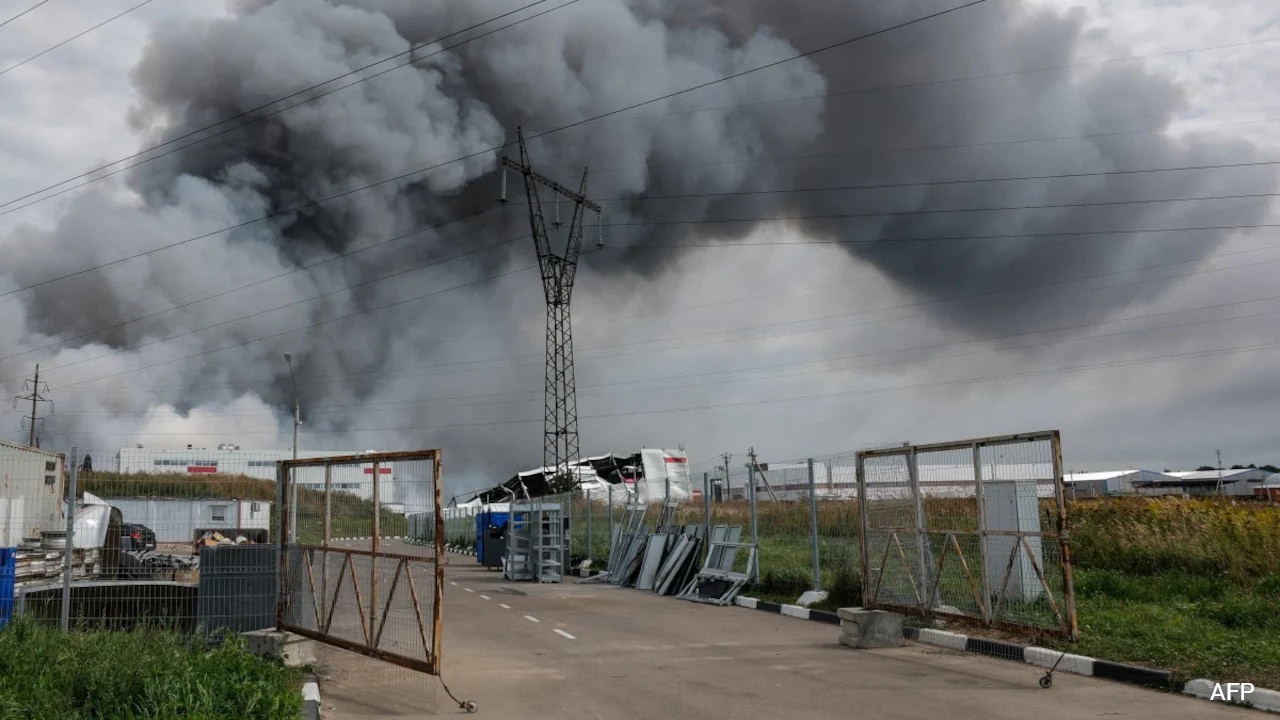
Moscow has officially accused London of direct complicity in deep-strike operations after reports surfaced that British-made unmanned aerial systems struck military and industrial targets inside Russian territory. The diplomatic fallout centers on disclosures published by The Sunday Times, which identified that autonomous platforms produced by two British defense firms—including a subsidiary tied to BAE Systems—were deployed by Kyiv in a coordinated long-range assault.
The Russian Embassy in London did not mince words, releasing a formal statement branding Britain an "accomplice and co-perpetrator" of what it defined as terrorist attacks. This escalation marks a dangerous shift in the four-year conflict, moving the operational theater firmly onto the Russian mainland and forcing Western capitals to confront the escalating risks of proxy warfare. If you liked this article, you should look at: this related article.
The Anatomy of the Deep Strike Campaign
The friction points trace back to a massive surge in long-range aerial incursions orchestrated by Kyiv. Recent waves have integrated hundreds of autonomous systems, targeting critical logistics hubs, military infrastructure, and commercial giants like Wildberries, Russia's primary e-commerce distributor. These operations have systematically bypassed traditional air defenses, devastating massive supply depots and burning billions of pounds worth of inventory.
For months, Russian state media downplayed the efficacy of domestic Ukrainian manufacturing. However, the identification of Western hardware components and specialized British airframes operating hundreds of miles inside the border shattered that narrative. For another angle on this story, see the recent update from The New York Times.
London's Ministry of Defence met Moscow's threats with defiance, maintaining that Britain stands shoulder to shoulder with Ukraine and remains fully committed to supplying the equipment necessary to counter ongoing military aggression. Yet behind the steadfast diplomatic rhetoric lies a profound strategic dilemma. Every time Western-supplied hardware penetrates Russian airspace, the invisible line separating material support from direct belligerency grows thinner.
The Escalation Calculus
Moscow's warnings carry a specific structural threat. The Kremlin argues that by providing long-range strike capabilities, the United Kingdom has opted for deliberate escalation.
The core mechanics of this dynamic involve several factors:
- Attribution and Accountability: Tracing supply chains of commercial-off-the-shelf and military-grade drone components has proven exceptionally difficult for export control agencies.
- Industrial Targeting: Kyiv's strategy focuses explicitly on domestic logistics and energy infrastructure to fracture the economic foundation supporting the invasion.
- Retaliatory Asymmetry: Moscow frequently responds to long-range drone barrages by intensifying ballistic and cruise missile attacks against civilian and cultural centers in Kyiv and other major urban areas.
This tit-for-tat cycle creates a self-sustaining momentum. As long as Kyiv possesses the technological means to strike deep into the Russian interior, Moscow will increase pressure on Western capitals, threatening direct retaliation or hybrid operations targeting European supply lines.
The Industrial Reality Behind the Hardware
Modern drone warfare relies heavily on dual-use technology, blurring the line between commercial manufacturing and military application. The firms implicated in the recent reports operate within a sprawling global supply chain where specialized microchips, guidance systems, and propulsion units are easily procured or adapted.
When a British-engineered airframe strikes a warehouse in the Moscow region, it exposes the vulnerabilities of export enforcement. Governments can place strict embargoes on finished military goods, but controlling autonomous hobbyist or industrial drone components is practically impossible without entirely crippling civilian tech sectors.
Britain has pledged roughly £25 billion in total assistance since the full-scale invasion began, with approximately £16 billion allocated directly to military aid. That massive financial and material pipeline makes London a primary target for Russian diplomatic and intelligence retaliation. Whether that retaliation manifests as cyber assaults, maritime sabotage, or further diplomatic expulsions remains to be seen, but the baseline of security across Europe has permanently shifted.
The threshold of acceptable risk in modern proxy conflicts continues to drop, leaving both London and Moscow navigating an unmapped territory where a single autonomous strike can trigger cascading geopolitical consequences.