Canada’s decision to prolong its emergency border restrictions for travellers and visa applicants linked to the ongoing Ebola outbreak in Central Africa has exposed a deep structural friction between sovereign risk mitigation and humanitarian reality. Ottawa announced that temporary entry bans and strict twenty-one-day quarantine mandates targeting individuals from the Democratic Republic of the Congo, Uganda, and South Sudan will remain active through late November. For thousands of families, students, and permanent residency applicants whose paperwork has been frozen mid-stream, these rolling extensions represent an indefinite state of administrative purgatory.
The policy, originally introduced in May to counter a rapidly escalating viral wave, suspends the immigration documents of foreign nationals residing in affected zones and bars entry to non-citizens who have visited the Democratic Republic of the Congo within a twenty-one-day window. While public health officials defend the measures as a necessary firewall against high-consequence pathogens, international aid organizations and affected communities argue that the restrictions rely on blunt instruments that overlook ground-level realities. The World Health Organization has repeatedly emphasized that managing outbreaks requires the fluid movement of specialized medical personnel and logistical support, yet rigid border controls often strand vital relief workers or force them into prolonged isolation upon return.
The Mechanism of Exclusion
At the core of the controversy is the mechanical nature of immigration document suspensions. When Ottawa freezes applications from designated regions, it halts the final processing steps for thousands of temporary and permanent resident candidates overseas. These individuals often possess approved clearances or valid electronic travel authorizations that are rendered temporarily void overnight.
Consider a hypothetical family living in an unaffected urban center hundreds of miles away from an active transmission zone in Central Africa. Under blanket national decrees, their residency finalization is halted simply because of their geographic nationality, despite having no recent exposure history or epidemiological risk. This administrative dragnet treats entire national populations as vectors, substituting nuanced risk assessment with blanket exclusion.
Public health analysts point out that modern containment strategies rely on active surveillance, contact tracing, and targeted screening rather than nineteenth-century-style cordons. Yet federal policymakers frequently default to border closures because visible travel bans offer a tangible metric of government action. This disconnect creates a profound policy paradox. By locking out foreign nationals and complicating travel for returning citizens, the state attempts to insulate itself from global health shocks while simultaneously fracturing transnational support systems that rely on open channels of communication and aid.
The Human Cost of Bureaucratic Inertia
Beyond the epidemiological debates, the human toll of these rolling extensions is accumulating quietly. Families separated by suspended visas face months of uncertainty with no clear timeline for resolution. Students holding university admissions in Canadian institutions watch semesters slip away while their passport submissions sit unprocessed in regional visa application centres that are barred from finalizing documents.
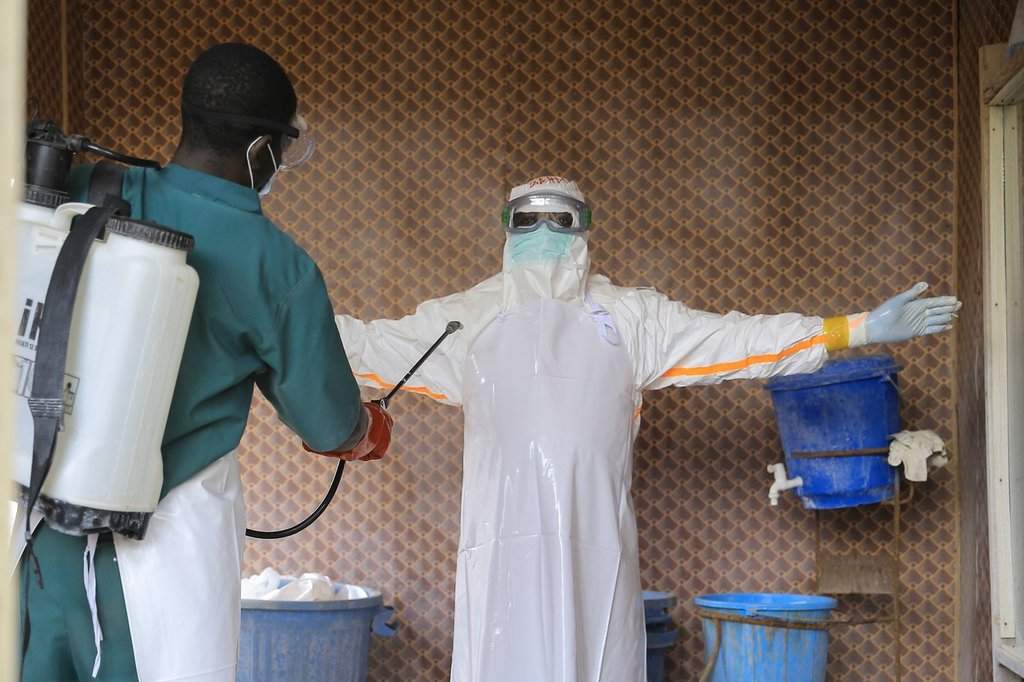
Aid agencies operating in the field report that mandatory twenty-one-day quarantines for returning health workers severely strain their staffing rosters. Deploying a specialist for an intervention requires factoring in nearly a month of post-assignment isolation before they can resume domestic duties or redeploy. This friction dampens the willingness of independent specialists to volunteer for international health deployments, indirectly weakening the global response at the epicentre of the crisis.
Governments inevitably face a profound dilemma during severe international outbreaks. Protecting domestic populations is the foundational mandate of any public health authority, but policy choices do not exist in a vacuum. When border measures outlast their acute utility or calcify into permanent bureaucratic hurdles, they cease to be tactical defenses and instead become institutional barriers that punish the vulnerable while offering diminishing returns on actual safety. As these restrictions push past their initial timelines, the question facing Ottawa is no longer whether caution is warranted, but whether the current framework mistakes administrative walls for genuine security.