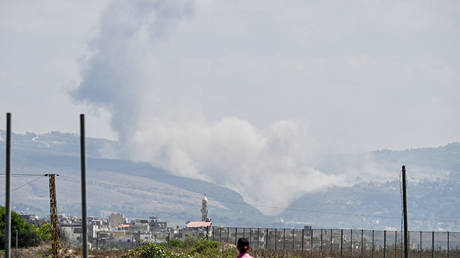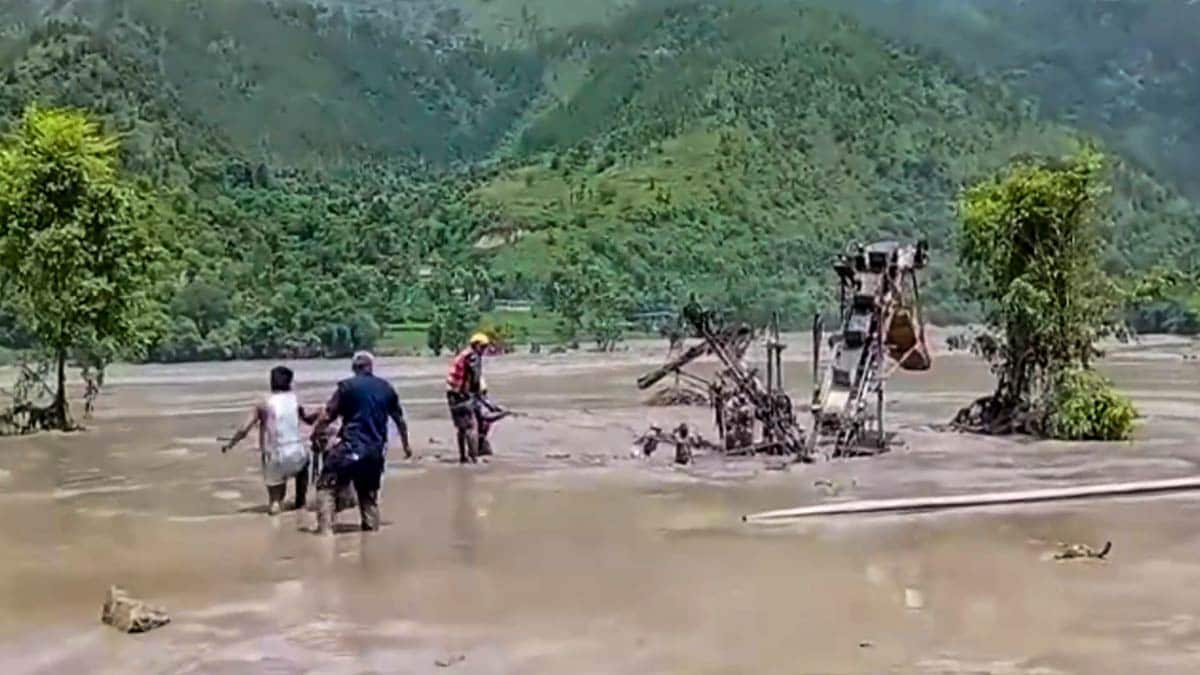
The confirmed death toll along the Bhote Koshi and Trishuli river corridors has climbed to 734, with more than 2,400 individuals still unaccounted for following a catastrophic high-altitude glacial collapse near the Nepal-Tibet border. Water levels in the Bhote Koshi surged anew, forcing the National Disaster Risk Reduction and Management Authority to issue urgent fresh alerts across Rasuwa, Nuwakot, Dhading, and Chitwan. Rescue operations remain severely compromised as specialized teams struggle to reach more than one hundred workers trapped inside pitch-black hydropower tunnels, while downstream communities in India brace for secondary inundation waves.
Initial reports pointed toward conventional monsoon intensification or a localized seismic jolt. Satellite analysis and sensor data from the United States Geological Survey confirmed a far more volatile mechanical reality. A massive 0.2 square kilometer block of ice detached from an elevation of roughly 5,200 meters, plummeting 1,200 meters onto the valley floor below. This ice-rock avalanche slammed directly into the narrow Lhende Khola catchment, a precipitous tributary feeding the Bhote Koshi.
The physics of high-altitude collapses dictate extreme outcomes. When millions of tons of glacial mass fail, the immediate kinetic impact liquefies snow packs and pulverizes local rock into a dense, viscous slurry. This mixture bulks up rapidly as it tears through restricted mountain gorges, transforming a standard mountain stream into an aggressive debris flow capable of carrying entire boulders, bridges, and concrete infrastructure down valley walls like matchsticks.
Hydrologists and geomorphologists have long warned that the Hindu Kush Himalayan region is warming at roughly twice the global average. Decades of accelerated thermal stress have left high-altitude ice sheets structurally compromised. Steep vertical gradients and narrow, V-shaped river valleys act as natural hydraulic accelerators, maximizing the destructive momentum of any sudden water release before it ever reaches lower elevations.
The Hydropower Trap
The human and economic toll of this disaster exposes severe vulnerabilities in regional infrastructure planning. Numerous run-of-the-river hydroelectric projects line these steep Himalayan gorges, prized for their clean energy output but dangerously exposed to mountain instability. When the glacial avalanche hit, several multi-megawatt facilities were instantaneously overwhelmed.
Workers stationed inside underground tunneling networks suddenly found themselves cut off as heavy sediment and torrential muddy discharge blocked portal exits. International assistance, including specialized tunneling and rescue contingents dispatched from India and China, faces severe logistical bottlenecks. Heavy equipment cannot easily traverse wiped-out highway networks, and continuous rainfall combined with secondary river surges turns rescue lanes into active hazard zones.
Transboundary Emergency Management
Disasters of this magnitude do not respect international borders. The Lhende Khola and Bhote Koshi systems feed directly into major transboundary basins that flow southward into the densely populated plains of Indian states like Bihar and Uttar Pradesh. Early warning communication between high-altitude stations and downstream emergency cells remains uneven, leaving millions of residents in the lower riparian zones with dangerously narrow windows for evacuation when sudden upstream blockages rupture.
Emergency management agencies face an impossible balancing act. Search personnel are operating in unstable terrain where secondary debris dams can form and burst without warning, sending fresh torrents down valleys where rescue crews are actively searching for survivors. The accumulation of millions of tons of silt and displaced earth along the riverbeds has permanently altered local topography, complicating future monsoon management and threatening long-term agricultural stability across the entire basin.
The physical reality of the third pole cannot be managed with standard disaster response playbooks. As mountain glaciers continue to retreat under relentless atmospheric warming, the frequency of catastrophic glacial lake outbursts and mass ice collapses will test the limits of regional resilience.
Search crews continue working against the clock in the mud-choked valleys of Rasuwa as the river level hovers dangerously above normal baseline parameters.