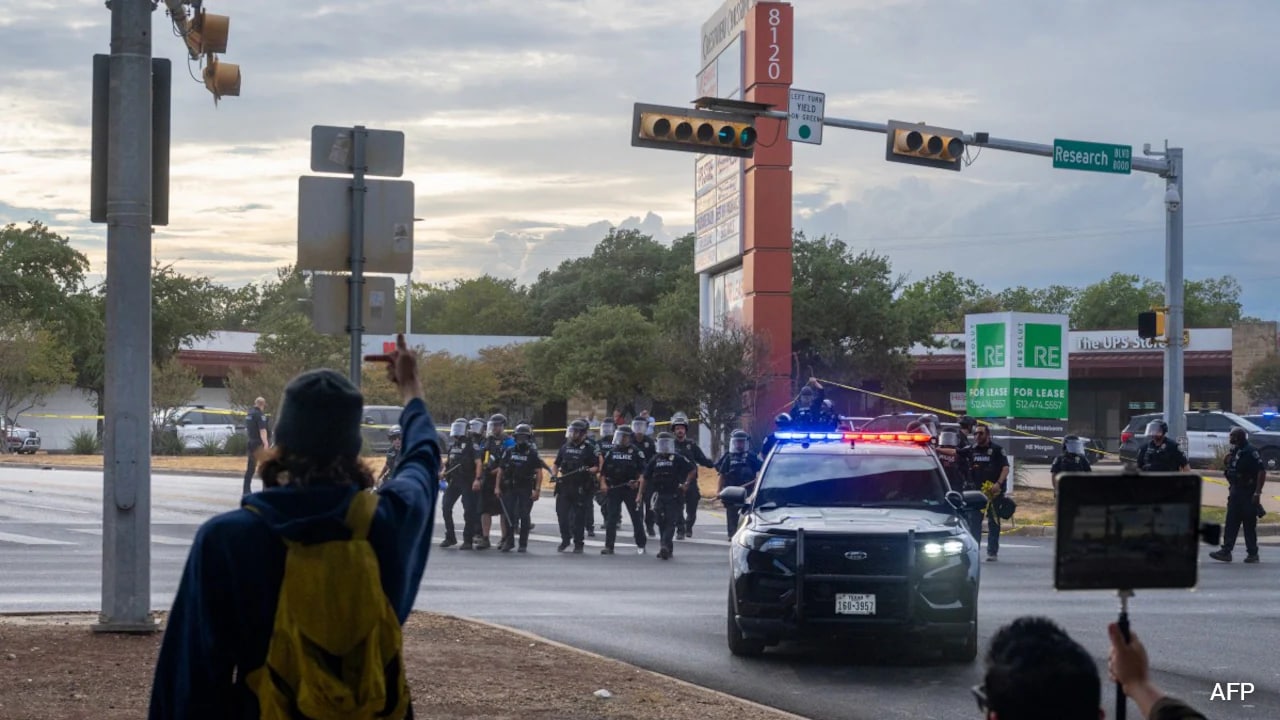
A routine delivery run across Austin, Texas, unraveled into a federal investigation on a Sunday afternoon. Wilber Rafael Garces Perez, a 28-year-old Venezuelan asylum seeker working for DoorDash, found his car boxed in by federal immigration agents. Seconds later, an Immigration and Customs Enforcement officer fired his weapon, striking Garces Perez in the torso. What followed was an immediate flashpoint of local protests, competing legal narratives, and a federal courtroom battle that exposed the raw friction of an aggressive domestic enforcement surge.
The incident highlights deep procedural gaps in how federal task forces execute arrests on American streets. According to federal court filings, agents pulled over Garces Perez on the city's north side because he was the subject of a final removal order. That order, his defense attorneys later explained, was issued in absentia after a notice of hearing was mailed to an outdated address. Garces Perez possessed a valid work permit and had been attempting to build a life in Texas.
Dashcam and business security footage presented during subsequent court hearings captured the initial moments of the stop. Garces Perez handed his driver's license through a cracked car window and asked in Spanish if he could park his vehicle so a relative could retrieve it. Officers repeatedly commanded him to step out. Instead, after a brief exchange, Garces Perez abruptly drove off.
Federal prosecutors claimed the vehicle struck an officer's torso with the driver's side mirror, justifying the use of lethal force during the ensuing chase. Defense attorneys disputed that characterization, pointing out a critical evidentiary void. The federal agent who fired the weapon was not wearing an active body-worn camera at the time of the shooting. Another accompanying officer had a camera running in a separate vehicle, but it was turned off during the pursuit.
The lack of continuous video documentation immediately drew sharp rebukes from local lawmakers and civil rights advocates. Department of Homeland Security leadership had previously asserted that body cameras would be standard issue across all ICE personnel, raising serious questions about accountability and compliance within the agency.
Garces Perez's medical ordeal compounded the legal controversy. Following the shooting, he was hospitalized with a bullet lodged near his spine and a fractured clavicle. Despite requiring ongoing medical intervention, he was discharged into federal custody. He subsequently appeared in a federal courtroom in a wheelchair, wearing an arm sling and needing translation assistance to follow the proceedings.
Federal prosecutors formally charged Garces Perez with assaulting a federal officer, a felony carrying a potential sentence of up to 20 years. U.S. District Judge Orlando Garcia ordered him to remain in custody while denying immediate removal. Meanwhile, local authorities, including the Travis County District Attorney's office, initiated an independent inquiry into the use of force, demanding that federal partners preserve evidence and jurisdiction.
The episode mirrors a broader pattern of scrutiny surrounding vehicular enforcement tactics. Across multiple high-profile encounters nationwide, immigration agents have faced intense oversight regarding protocols for stopping moving vehicles and the frequency with which confrontations escalate into shootings. When documentation relies on partial snippets rather than full, unedited operational footage, public trust fractures instantly.
As the legal proceedings grind forward, the case remains a stark reminder of the human and institutional costs colliding on municipal streets. The courtroom will ultimately decide the validity of the assault charges and the legality of the detention, but the deeper questions surrounding operational transparency and the management of high-stakes enforcement surges remain entirely unresolved.