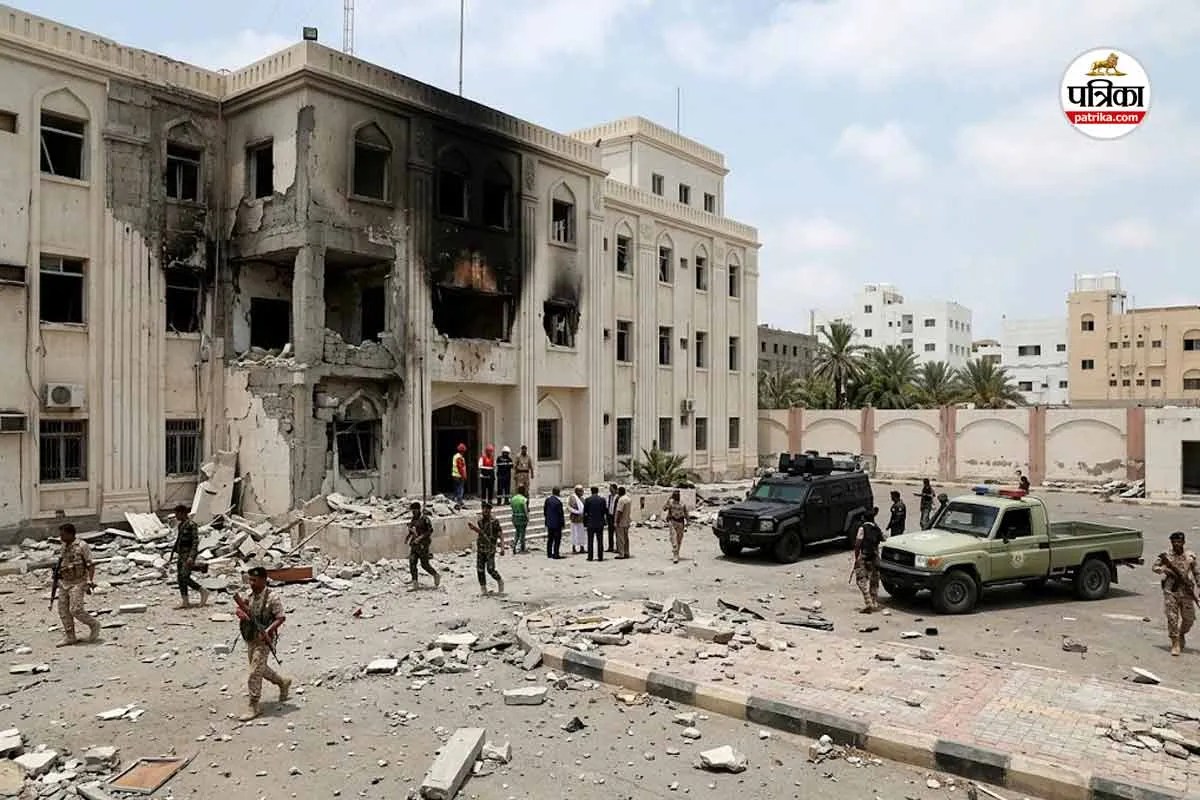
Houthi forces have repeatedly struck targets inside Aden, including sites the group claims served as a Saudi war room and military command hub, while threatening further operations against military bases as the conflict closes in on Yemen's temporary capital. Strip away the wartime propaganda and routine press releases, and you see something far more consequential than another missile headline. This is a deliberate campaign to sever command-and-control links, rattle coalition morale, and turn Aden from a viable seat of government into a contested perimeter.
For years, coverage of Yemen settled into a predictable rhythm. Missiles flew, spokesmen traded threats, diplomats held quiet meetings, and neither side seemed able to deliver a decisive knockout. That rhythm broke. After the collapse of the 2022 truce amid the wider regional escalation in 2026, Houthi forces pushed south along the Red Sea coast toward Bab el-Mandab and pressed deeper into Lahij province, bringing the front uncomfortably close to Aden.
Why the Saudi War Room Claim Matters
Calling a facility inside Aden a "Saudi war room" is not a throwaway phrase. It is psychological warfare paired with targeting logic.
When Houthi military spokesmen announce strikes against command centers, assembly areas, or operations rooms coordinating fronts such as Lahj, Al-Dhalea, and Taiz, they are trying to project precision rather than random bombardment. Even when independent verification of every strike's exact damage remains difficult in an active war zone, the narrative itself does real work. It tells local commanders that their coordination nodes are exposed. It tells Saudi officers and Yemeni partners that distance from northern front lines no longer guarantees safety.
A command post does not have to be completely destroyed to fail. It only has to lose trust, speed, or cover.
In modern irregular and hybrid warfare, perception management runs alongside kinetic strikes. By framing Aden's security and military installations as foreign-run nerve centers, Houthi messaging seeks to delegitimize the internationally recognized government and cast its backers as occupiers directing local proxy fronts. Yemeni officials push back hard against that framing, warning that repeated strikes endanger densely populated neighborhoods, civilian aviation, and critical infrastructure. Both sides know the stakes of controlling the story around Aden.
Military Bases in the Crosshairs
Threatening military bases in and around Aden points to a broader operational playbook. Aden is not just any port city. Hemmed between its harbor and the Gulf of Aden, its geography funnels movement through narrow corridors. Hit the staging grounds, airfields, logistics hubs, and coastal installations, and you slow down reinforcements before they ever reach contested districts.
Consider what happens when a base comes under repeated missile or drone threat. Crews spend more time dispersing equipment and taking shelter. Supply convoys reroute or wait. Commanders hesitate to mass troops or sensitive hardware in one compound. Even a partial disruption compounds across a stretched defensive line.
The Strain on Fragmented Forces
Military bases only function as well as the chain of command behind them. In southern Yemen, anti-Houthi forces have long wrestled with political fragmentation and competing loyalties among local factions, government units, and regional backers.
A hypothetical example illustrates the friction. Suppose a logistics depot outside Aden holds fuel, ammunition, and communications gear meant for brigades operating in different sectors. If two local units dispute priority during an emergency—or if a strike knocks out local power and coordination links—the bottleneck becomes a crisis within hours. Even the sharpest tactical fighters struggle when resupply is erratic and command authority is contested.
Riyadh has faced its own strategic squeeze, juggling regional security pressures, air and missile defense demands at home, and shifting dynamics across the wider Middle East. Command reshuffles and diplomatic maneuvers cannot substitute for cohesive ground defense if the underlying alliances remain brittle.
What Most Coverage Misses About Aden
Too many reports treat Aden as a static backdrop where dramatic explosions happen every few days. That misses the daily grind inside the city.
First, civilian life absorbs the shock. Port workers, hospital staff, shopkeepers, and displaced families live with the constant hum of uncertainty. Every warning about military bases or transport hubs ripples into flight cancellations, price spikes, and fear that front-line clashes could spill directly into residential districts.
Second, naval and maritime chokepoints sit right next door to this story. Control over the southern coast, the Bab el-Mandab approach, and surrounding islands shapes both local supply lines and international shipping security. Ground advances toward Aden cannot be separated from the coastal and maritime contest unfolding across the region.
| Dimension | Surface Headline View | Deeper Operational Reality |
|---|---|---|
| Target Framing | Houthis claim a strike on a "Saudi war room" | Aims to degrade command confidence, shape legitimacy, and signal deep reach |
| Base Threats | Warnings against military camps and facilities | Seeks to disrupt logistics, troop staging, and reinforcement tempo |
| Coalition Response | Statements, air defenses, and command changes | Constrained by fragmented ground forces and wider regional crises |
| Local Impact | Clashes reported miles away or near key sites | Erodes civic stability, commercial confidence, and humanitarian access |
Third, intelligence and verification remain murky. Claims of "direct hits" on operations rooms or specific military compounds often outpace independent ground confirmation. Over decades of covering conflicts in the region, seasoned analysts have learned a simple rule: treat every battlefield claim—from either side—as an opening bid until corroborated by satellite imagery, local reporting, or verifiable wreckage.
Escalation Risks and Gray Areas
Where does a campaign like this go next? Nobody holds a crystal ball, and pretending otherwise would be dishonest. Still, three pressures stand out.
- Escalation spiral: Repeated strikes on Aden and simultaneous cross-border attacks raise the risk of heavier retaliatory air campaigns or wider regional spillover.
- Defensive fatigue: Air defense interceptors are expensive and finite, while drones and missiles can be launched in salvos to test reaction times and wear down crews.
- Diplomatic paralysis: When battlefield momentum shifts through territorial gains and high-profile strikes, negotiators face a much harder climb to rebuild trust or enforce a durable pause.
Watch how Aden's perimeter holds over the coming weeks—not just by counting incoming projectiles, but by watching whether local forces can keep supply lines open and command lines intact without fracturing under pressure.


