Traditional print is dead. At least, that is what tech evangelists have predicted for the last two decades. Yet, inside Pune’s Westin hotel during the Indian Printers Summit 2026, the mood felt entirely different. Print isn’t dying; it is shedding low-margin volume to chase high-value relevance.
If you expected a room full of newspaper executives and production heads mourning the decline of ad revenue, you missed the memo. The modern printing press has evolved into a precision-engineered media hub. Publishers are no longer selling ink on paper. They are selling verified trust, community access, and localized packaging formats that digital banners can't touch.
The Shift From Broad Ads to Direct Subscriptions
For years, the Indian print ecosystem relied heavily on a predictable formula: massive circulation numbers driving lucrative display advertising. That model fractured long ago. As digital noise floods consumer screens, print leaders at the summit made it clear that survival depends on direct reader revenue.
Publications are doubling down on audience segmentation and hyper-local relevance. When a reader pays for physical delivery, they aren't just buying newsprint. They are buying an intentional break from infinite scrolling. Successful newspaper groups are pivoting toward membership models, curated regional inserts, and high-engagement live events that tie physical brands directly to their local communities.
Pragmatic Automation Over Hype
Artificial intelligence dominated the stage in Pune, but not in the speculative way Silicon Valley talks about it. Debarshi Ray from The Times of India Group cut through the noise during his technical address, arguing that print operations must approach AI with a strictly defined business problem rather than adopting tech for tech's sake.
On the production floor, this pragmatic mindset translates to concrete efficiencies:
- AI-driven nozzle monitoring systems that spot printhead failures in real time.
- Automated inline inspection cameras that catch blemishes before paper waste piles up.
- Energy-efficient LED-UV curing setups replacing older, heat-intensive drying units to slash surging electricity bills.
Print shops operating in competitive markets can't afford runaway software overheads. Running proprietary models or automated workflows only works when it directly shrinks waste, reduces downtime, or protects margins on tight delivery schedules.
Celebrating Global Reproduction Standards
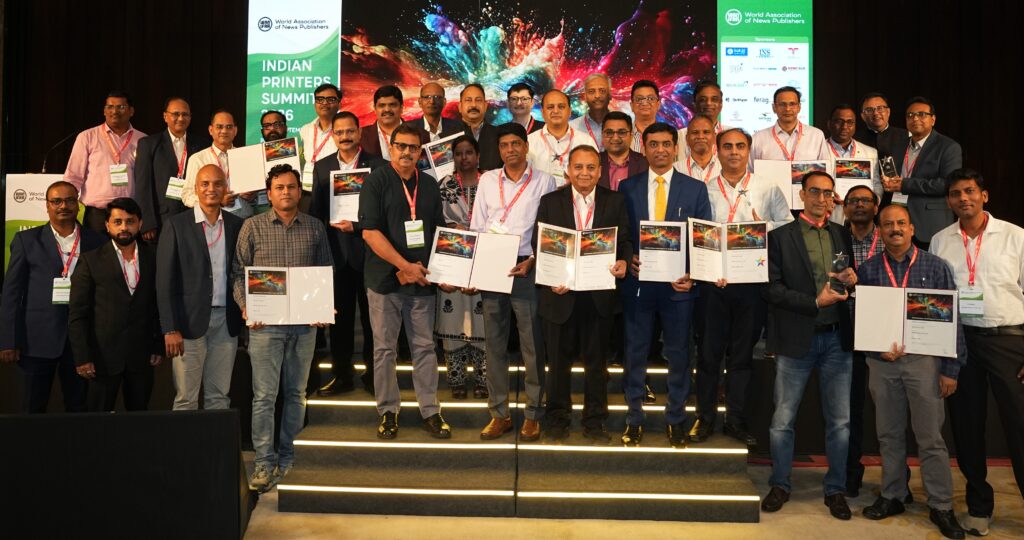
Amidst the strategic debates, the summit took time to celebrate technical excellence. Printers who bagged recognitions under the International Color Quality Club standards proved that Indian press rooms can match strict global benchmarks for colour reproduction and ISO compliance.
Achieving these benchmarks requires rigorous calibration. It means moving away from guesswork and treating ink density, paper absorption, and dot gain as exact sciences. When local plants hit these targets, they lock in international credibility that attracts high-end commercial clients looking for flawless execution.
Where the Industry Goes From Here
The takeaway from Pune is simple. Stop trying to out-volume digital feeds. Instead, build operations that prioritize sustainability, measurable trust, and uncompromising physical quality. The presses that survive the decade will be the ones treating every sheet as a premium touchpoint rather than a commodity.


