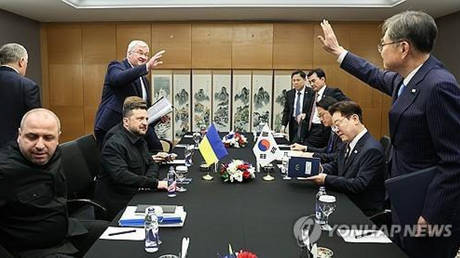
Headline diplomacy rarely explains the underlying incentives driving two capitals to meet in a commercial hub. When a headline states that India's External Affairs Minister held talks with the UAE's Foreign Minister in Mumbai and called the West Asia situation a matter of "deep concern," it captures a diplomatic signal while obscuring the operational architecture beneath it. This analysis deconstructs the baseline reporting model, maps the causal chains connecting Mumbai, Abu Dhabi, and New Delhi to West Asian instability, and lays out a structured framework for evaluating bilateral resilience without inventing unverified figures or treating diplomatic phrasing as a policy blueprint.
Deconstructing the Standard Headline Model
Standard diplomatic reporting relies on a compressed three-part formula: actor pairing, venue, and quotable sentiment. In the reference headline, the actors are India's top diplomat and his Emirati counterpart, the venue is Mumbai rather than New Delhi, and the quoted sentiment centers on "deep concern" over West Asia. That structure serves speed and clarity, yet it leaves three analytical blind spots that distort how readers interpret bilateral strategy.
The first blind spot is treating rhetoric as an operational variable. Phrases such as "deep concern" in diplomatic readouts function as baseline risk signaling rather than precise threat assessments. They communicate alignment on the gravity of regional friction without specifying whether the primary risk is maritime transit disruption, spillover conflict, humanitarian strain, or supply-chain repricing.
The second blind spot is ignoring venue selection as a signal of functional priority. Holding talks in Mumbai rather than a purely administrative capital shifts the implicit frame of reference toward commerce, finance, ports, and cross-border enterprise. Whether a meeting occurs in a financial center or a seat of government changes the institutional lens through which agreements, risk contingencies, and commercial exposure are weighed.
The third blind spot is compressing multi-causal regional instability into a single label. "West Asia situation" acts as a catch-all container for distinct mechanisms—energy market volatility, shipping lane security, regional diplomatic realignments, and diaspora safety. Without separating those channels, observers often assume that a bilateral meeting addresses all of them equally when in practice states prioritize specific transmission pathways.
The Four Transmission Channels of West Asian Instability
To move from headline observation to analytical rigor, evaluate West Asian instability across four distinct transmission channels that link regional events to India and the UAE. Each channel operates on different timelines and affects different domestic constituencies.
Maritime Chokepoints and Freight Economics
West Asia sits astride vital maritime corridors, including the Persian Gulf, the Strait of Hormuz, and broader Red Sea and Arabian Sea shipping routes. When regional tensions rise, commercial shipping faces physical threat premiums, rerouting friction, and war-risk insurance adjustments. Even when physical blockades do not occur, elevated risk raises freight costs, lengthens transit times, and forces importers and exporters to buffer inventory against schedule slippages.
Energy Pricing and Balance-of-Payments Pressure
Energy markets price geopolitical risk through expectations of supply disruption and precautionary stockbuilding. For a major net energy importer like India, sustained oil and gas price shocks transmit pressure into import bills, inflation expectations, and fiscal subsidies. For a major energy producer and logistics hub like the UAE, price movements alter fiscal revenues while regional instability tests the security and predictability of export and transit infrastructure.
Diaspora Exposure and Remittance Flows
Millions of expatriates work across Gulf economies, making workforce safety, consular readiness, and labor mobility core pillars of bilateral statecraft. Regional escalation can disrupt aviation corridors, alter hiring or project timelines, and affect household income streams tied to cross-border remittances. A foreign ministry cannot treat regional volatility abstractly when millions of citizens and residents sit directly inside or adjacent to potential flashpoints.
Diplomatic Hedging and Strategic Autonomy
Regional crises test how middle powers balance relationships with competing external actors and regional rivals. Both India and the UAE maintain dense economic and security ties across multiple capitals rather than locking into rigid bloc alignment. High-level bilateral consultations allow both sides to compare threat perceptions, coordinate crisis contingencies, and protect core commercial corridors while preserving room for independent diplomatic maneuvers.
Known Facts Versus Educated Hypotheses
Rigorous analysis requires separating verified structural facts from educated hypotheses about intent and outcome. Conflating the two turns plausible interpretation into false certainty.
| Analytical Layer | Known Fact or Structural Mechanism | Educated Hypothesis Requiring Verification |
|---|---|---|
| Diplomatic Engagement | High-level talks between Indian and Emirati foreign ministers signal active bilateral communication amid regional tension. | Specific tactical trade-offs, contingency triggers, or behind-the-scenes mediation roles discussed during the session. |
| Commercial Geography | Mumbai is a primary center for Indian finance, maritime trade, and business connectivity with the Gulf. | That choosing Mumbai reflects a deliberate push to insulate private-sector trade and investment pipelines from regional shocks. |
| Risk Transmission | Instability in West Asia can affect maritime insurance, shipping routes, energy prices, and expatriate mobility. | Which specific risk scenario—shipping delay, energy spike, or regional escalation—carries the highest weight in current planning. |
| Bilateral Posture | Both states prioritize economic connectivity and regional stability while maintaining multi-aligned external ties. | That bilateral coordination will produce uniform policy responses if a broader regional crisis materializes. |
Distinguishing these layers prevents over-reading a single readout. A meeting confirms channel readiness and political attention; it does not by itself prove that a new mechanism has been operationalized or that all parties share identical risk tolerances.
The Bilateral Resilience Cost Function
Rather than asking whether India and the UAE have "strong ties"—a qualitative label too broad to guide decisions—evaluate their bilateral posture through a Resilience Cost Function. In operational terms, resilience depends on minimizing four cost components when regional shocks hit:
- Logistics friction cost: Extra transit days, rerouting expenses, and marine insurance spikes on trade routes linking Indian ports, Gulf hubs, and wider West Asian markets.
- Input repricing cost: Higher energy, feedstock, or intermediate goods costs passed through to manufacturing, transport, and consumer prices.
- Coordination lag cost: Delays between an emerging regional incident and synchronized consular, maritime, or commercial advisories across agencies and embassies.
- Credibility erosion cost: Damage to trade corridors or investment confidence if prolonged instability turns temporary disruptions into structural bottlenecks.
Consider an illustrative scenario rather than a factual claim: suppose a localized maritime incident in West Asia drives up war-risk premiums for vessels transiting a key corridor. A purely rhetorical response lowers coordination lag cost only marginally if supply-chain managers still face abrupt insurance surcharges and sailing delays. Conversely, clear contingency playbooks, diversified routing options, and transparent risk communication reduce logistics friction cost and credibility erosion cost even while underlying geopolitical tensions remain unresolved.
The second limitation of relying on diplomatic alignment alone is asymmetric exposure. Even close partners experience regional shocks differently depending on their economic structure—energy importer versus energy exporter, manufacturing and service base versus logistics and financial hub. Alignment on diplomatic stability does not automatically equalize economic pain.
Tactical Logic for Decision-Makers
Executives, policy analysts, and risk teams tracking India–UAE engagement during periods of West Asian tension can apply a five-step operational sequence to separate signal from noise:
- Audit direct corridor exposure first: Map which imports, exports, shipping lanes, and project sites depend on West Asian transit or Gulf logistics hubs, rather than reacting to general regional headlines.
- Separate headline tone from binding commitments: Track concrete follow-through—such as customs facilitation, port logistics coordination, consular protocols, or commercial agreements—rather than relying solely on adjectives in official statements.
- Stress-test working capital and lead times: Model two-week to six-week transit delays and freight or fuel cost swings across critical SKUs or contracts to identify cash-flow pinch points early.
- Verify multi-channel contingency plans: Ensure operational plans account for air corridor disruptions, maritime rerouting, and payment or insurance friction simultaneously, since shocks rarely hit only one variable.
- Re-evaluate assumptions after concrete milestones: Update risk ratings when verifiable policy actions or market shifts occur, avoiding both panic-driven exits and complacency driven by warm diplomatic language.
A clear limitation applies to any analytical framework: geopolitical events in West Asia involve multiple state and non-state actors whose decisions are shaped by domestic politics, security calculations, and sudden escalations outside bilateral control. Structured analysis improves preparedness and clarity of thought, yet it cannot eliminate tail risks or guarantee de-escalation.
Strategic Play for Tracking Bilateral Signals
Treat future high-level India–UAE engagements—whether in Mumbai, New Delhi, or Abu Dhabi—as diagnostic checkpoints on corridor continuity rather than standalone breakthroughs. Pair every diplomatic readout immediately with concrete operational indicators: maritime freight and insurance trends, energy market pricing, aviation and expatriate advisories, and follow-through on trade and logistics initiatives. That discipline keeps focus on the mechanisms that actually move goods, capital, and people when regional stability is under strain.