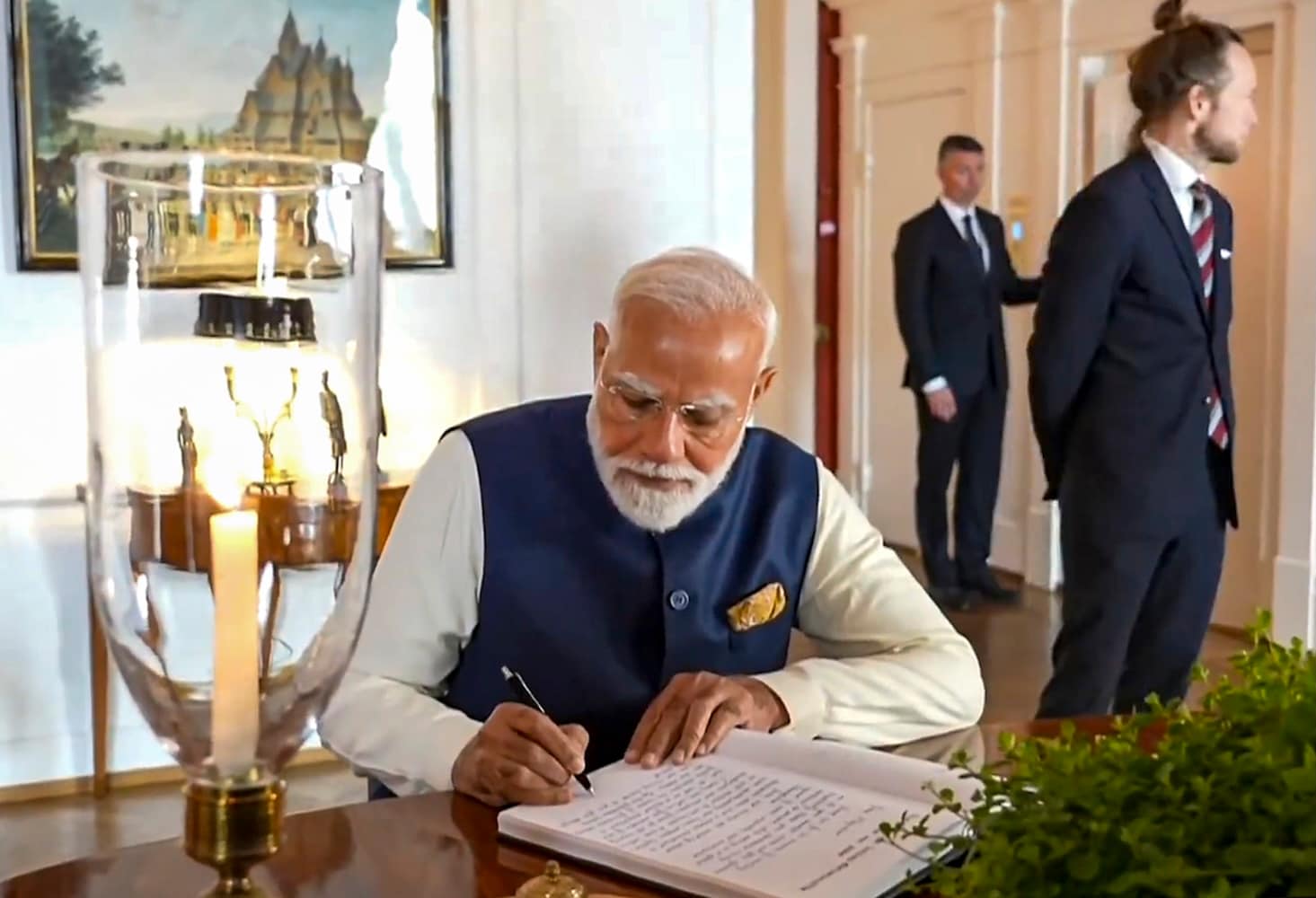
Geopolitics isn't just about giant nations throwing their weight around. Sometimes, the most interesting moves happen when a global heavyweight teams up with a small, highly strategic island.
That's exactly what went down in New Delhi when Indian Prime Minister Narendra Modi hosted Cypriot President Nikos Christodoulides. The big takeaway? India and Cyprus officially upgraded their bilateral relationship to a full strategic partnership.
If you think this is just diplomatic paperwork, you're missing the bigger picture. This move signals a massive shift in how India intends to anchor its economic and security interests inside the European Union and the Eastern Mediterranean.
The Money Multiplier
Let's look at the hard numbers because they don't lie. Most people think of Cyprus as a quiet holiday spot or a tiny Mediterranean nation. Financially, it packs a serious punch. Over the last decade, investments from Cyprus to India have nearly doubled.
New Delhi and Nicosia aren't stopping there. Prime Minister Modi made it clear that the goal is to double these investments again over the next five years.
With negotiations around the India-European Union Free Trade Agreement moving along, Cyprus acts as a perfect entry point for Indian businesses looking to plant a flag in Europe. To turn this ambitious plan into something real, the two countries set up a dedicated joint task force centered on infrastructure, economic cooperation, and shipping.
We aren't talking about vague promises here. The leaders exchanged multiple Memorandums of Understanding targeting real, modern sectors.
- Fintech and Digital Infrastructure: Linking digital payment systems and tech platforms.
- Research Hubs: Joint scientific research and institutional collaboration.
- Mobility Deals: Progressing toward a comprehensive Migration and Mobility Agreement alongside a Social Security Agreement to protect professionals moving between the two nations.
This last point is crucial for Indian IT and financial experts. It guarantees their rights and simplifies the paperwork required to work out of Nicosia or Limassol.
Shipping and Defense Take Center Stage
You can't talk about Cyprus without talking about the sea. The island sits at a critical maritime crossroads. Because of this geography, maritime security and defense cooperation received a major upgrade during these talks.
The two democracies signed off on a formal Defence Cooperation roadmap stretching from 2026 to 2031. They also established an official Cyber Security Dialogue.
With global shipping lanes facing constant threats, India wants a reliable partner in the Eastern Mediterranean. The defense expansion focuses heavily on maritime domain awareness, tracking cross-border threats, and enhancing cyber defense networks.
They also formally established a Joint Working Group on Counter-Terrorism. This group directly addresses radicalization and intelligence sharing, showing that both nations see eye to eye on security risks.
Realpolitik and the UN Power Play
Diplomacy is a two-way street. Cyprus has consistently backed India on the global stage, and this visit was no different. President Christodoulides explicitly reiterated his country's absolute support for India's permanent seat in a reformed United Nations Security Council. His view is straightforward: global governance needs to reflect current global realities, not the world of 1945.
In return, India remains firm on its long-standing stance regarding Cyprus. Modi reaffirmed India's commitment to the independence, sovereignty, and territorial integrity of the Republic of Cyprus, supporting a peaceful reunification based on UN resolutions.
This mutual support is incredibly valuable. It gives India a dependable ally within the EU voting bloc, while Cyprus secures the backing of a rising global superpower.
The Geopolitical Context
This meeting didn't happen in a vacuum. It follows a direct line of momentum built from Modi’s visit to Cyprus. The timing matters immensely. The leaders actively discussed the ongoing West Asia crisis and the Ukraine conflict.
India's message has remained steady: an immediate end to hostilities and a return to direct diplomacy. By aligning with Cyprus—a nation that serves as the easternmost edge of the EU and sits right next to the Middle East—India positions itself as a balanced, stabilizing force capable of engaging with all sides.
What Businesses and Investors Need to Do Next
If you operate in logistics, shipping, fintech, or cross-border corporate services, this strategic upgrade changes your operating environment. You need to stop viewing Cyprus as just a legacy tax route and start looking at it as an active operational base.
First, track the upcoming joint task force announcements. The specific infrastructure and shipping projects cleared by this task force will offer direct avenues for public-private partnerships.
Second, if you run a tech or financial services firm, audit how the incoming fintech alignments can lower your compliance costs when entering the European market. The integration of digital frameworks means setting up secondary operations in Europe is about to become a lot less bureaucratic.
The political will is there, the legal agreements are signed, and the capital is already moving. The only mistake you can make right now is ignoring the corridor building up between New Delhi and Nicosia.


