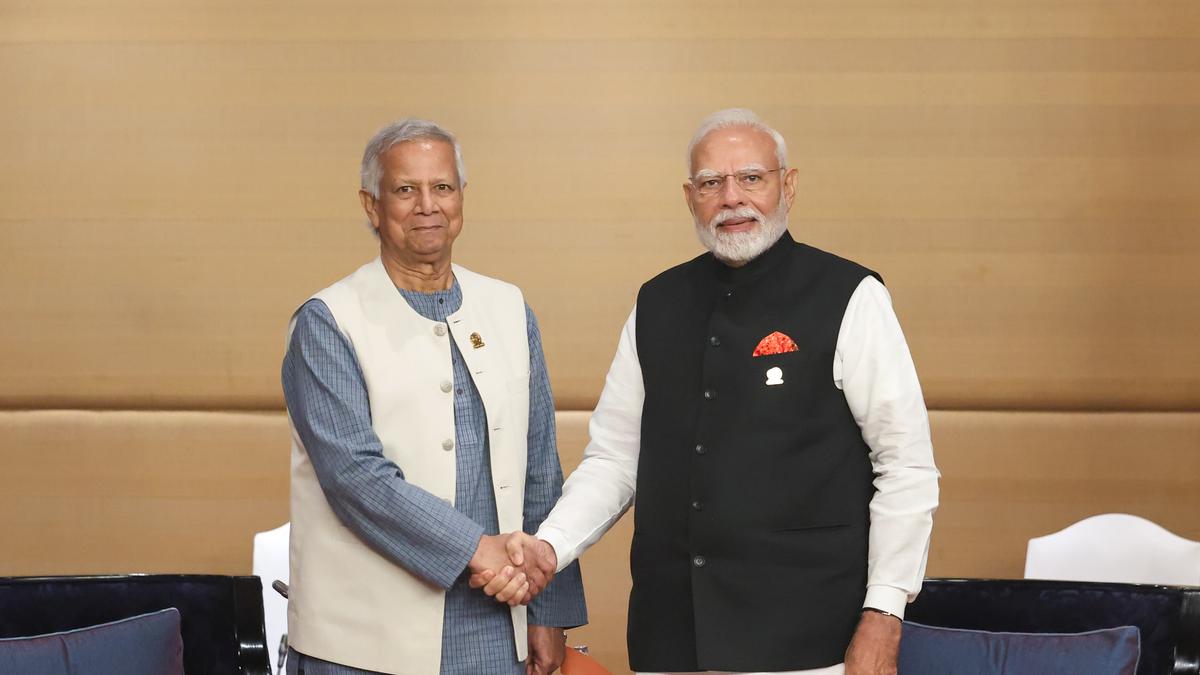
Geopolitics doesn't care about personal chemistry. When Indian Prime Minister Narendra Modi and Bangladesh's former interim leader Muhammad Yunus sat down for talks on the sidelines of the BIMSTEC Summit in Bangkok, nobody expected a magical reset. You're looking at a relationship fundamentally upended by the dramatic ouster of Sheikh Hasina, leaving New Delhi and Dhaka to navigate a maze of conflicting security demands, minority protection worries, and an explosive extradition crisis.
The Heavy Shadow of Sheikh Hasina
The elephant in the room during any diplomatic conversation between India and Bangladesh is simple. It's Sheikh Hasina. After fleeing to India following the massive student-led protests that crushed her Awami League government, Hasina became the ultimate flashpoint.
Dhaka wants her back to face legal accountability, pointing to severe charges and a trial outcome from the International Crimes Tribunal. New Delhi, meanwhile, finds itself caught between honoring long-standing diplomatic hospitality and managing a volatile neighbor. When Yunus pressed India to keep Hasina from issuing sharp political commentary from Indian soil, he touched a raw nerve. India's approach relies on cautious strategic patience, refusing to rush into decisions that could alienate future political configurations in Dhaka.
Minorities and Border Realities
Beyond the high-profile political exile, ground-level tensions continue to strain the 4,096-kilometer porous border. New Delhi has repeatedly raised alarms over the safety of Hindu minorities and other vulnerable communities inside Bangladesh following outbreaks of civil unrest.
At the same time, Dhaka brings its own grievances to the table. Border management remains a bleeding sore. Incidents along the frontier, allegations of unauthorized movement, and the long-standing friction over border security force actions create continuous domestic pressure for leaders on both sides. Yunus pushed for strict restraint, arguing that border management needs a humanitarian recalibration rather than militarized responses.
Why Pragmatism Must Override Politics
If you look past the media soundbites, both nations are tied to an inescapable geographic reality. India and Bangladesh share major river systems, vital trade corridors, and deep economic interdependencies. Bangladesh stands as a key partner in regional frameworks like BIMSTEC, and neither capital can afford a permanent diplomatic freeze.
The core challenge isn't about pretending disagreements don't exist. It's about containing them. Trade routes, energy transit, and regional security cannot be held hostage indefinitely to domestic political turbulence. Pragmatism has to win over posturing if both countries want to secure their shared neighborhood against rising external influences.
Managing this turbulence requires steady diplomatic channels that operate quietly behind the scenes. Expect friction to persist as Dhaka reshapes its political identity and New Delhi recalibrates its neighborhood priorities.
PM Modi and Bangladesh's Muhammad Yunus Discuss Hindu Minority Safety Amid Rising Tensions
This video provides valuable background context on the initial diplomatic friction and minority safety concerns that emerged following the political transition in Dhaka.


