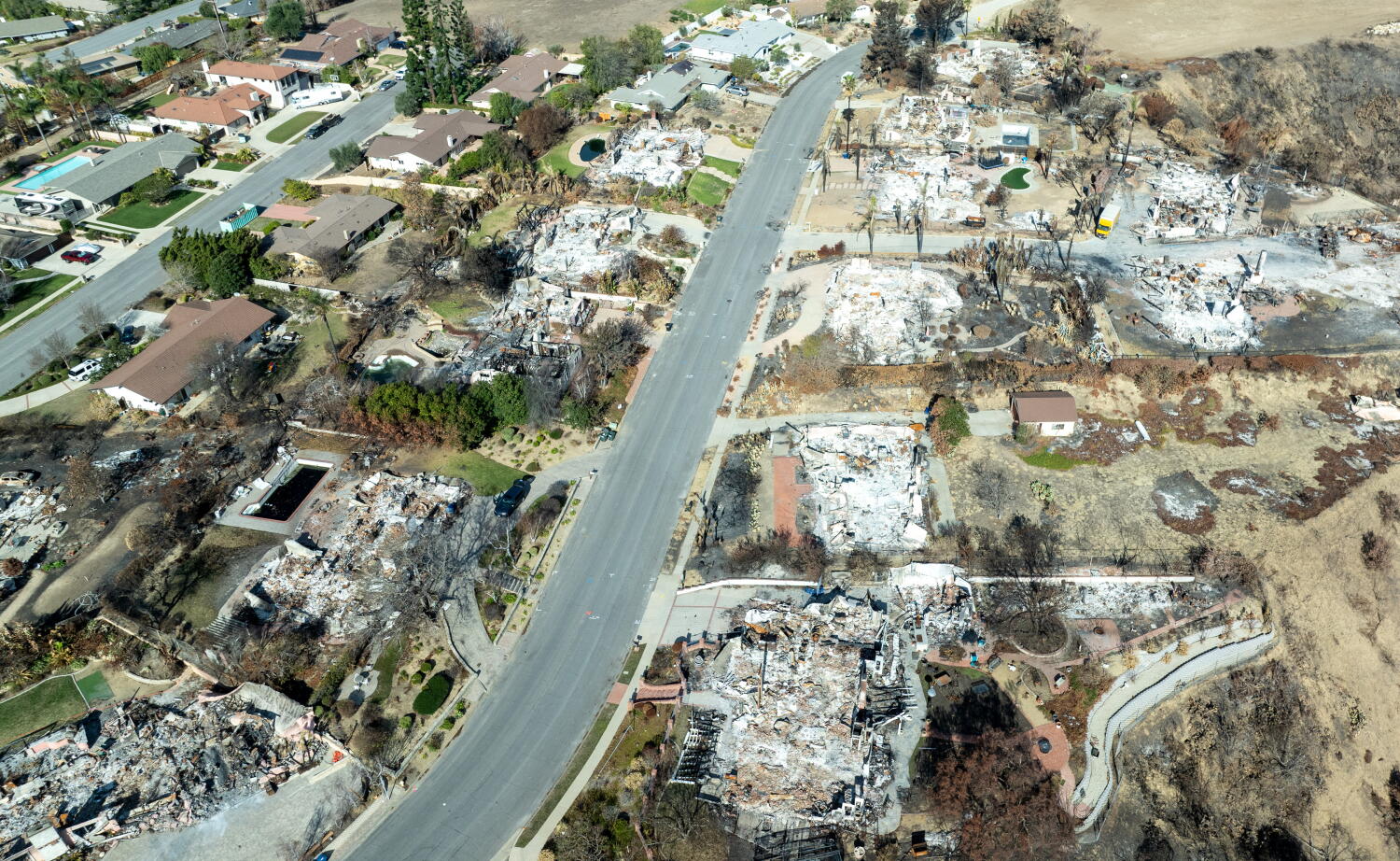
Possessing a documented emergency playbook does not guarantee operational execution when environmental conditions exceed baseline assumptions. An analysis of incident command failures during major urban-wildland fires—such as the 2025 Los Angeles fire events—reveals that breakdowns rarely stem from an absence of standard operating procedures. Instead, they emerge from structural friction between static plans and dynamic physical systems. To evaluate why command systems falter under extreme stress, this analysis maps the gap between documented doctrine and real-time execution using four analytical pillars: Doctrine-Reality Divergence, The Span-of-Control Cost Function, Resource Allocation Friction, and Information Latency Cascades.
Doctrine-Reality Divergence
Emergency management playbooks are built on historical averages, known resource envelopes, and predictable progression models. When an event shifts from a conventional wildfire to a fast-moving urban-wildland interface conflagration driven by extreme wind speeds and dry fuels, the underlying premises of the playbook break down. A plan assumes that fire behavior follows recognizable vectors and that suppression assets can position ahead of the flaming front. Under extreme meteorological forcing, spotting distances increase, ember showers outpace ground crews, and fire behavior shifts from linear advance to simultaneous multi-point ignition. For an alternative look, check out: this related article.
A critical distinction must be drawn here between known operational facts and educated hypotheses. It is a well-established operational fact in incident command that span-of-control limits degrade coordination when incident complexity spikes. It is a hypothesis—subject to post-incident review and forensic reconstruction—that specific tactical delays in particular municipal zones resulted directly from rigid adherence to outdated containment sequences rather than rapid dynamic re-tasking. Treating hypotheses as settled facts obscures the exact failure points that require reform.
When command staff rely on pre-planned sector boundaries that no longer match active fire perimeters, two failure modes appear: Related analysis on this trend has been published by BBC News.
- Cartographic lag: Maps and sector assignments lag behind real-time fire spread, causing crews to enter compromised zones or hold positions that offer no tactical advantage.
- Role mismatch: Standard task force configurations designed for brush or structural work struggle when simultaneous structure protection, evacuation traffic control, and ember suppression collide on narrow streets.
- Assumption lock-in: Commanders trained to follow established checklists may delay abandoning a primary containment line even after wind velocity and fuel moisture indicate failure is probable.
The operational lesson from practitioner experience is straightforward: a playbook is a starting baseline for low-to-moderate complexity, not a substitute for real-time situational reassessment when environmental variables cross critical thresholds.
The Span-of-Control Cost Function
Incident command doctrine—most notably the Incident Command System (ICS)—prescribes an ideal span of control of three to seven reporting units per supervisor, with five often cited as optimal. This rule exists because human cognitive bandwidth is finite. As the number of subordinate units increases linearly, the number of potential communication paths and coordination dependencies grows non-linearly.
Consider the Span-of-Control Cost Function. In operational terms, the coordination overhead borne by a single commander rises steeply once active tactical units exceed manageable thresholds or when task volatility rises. Each additional division, strike team, or agency liaison adds status updates, requests for resources, safety alerts, and conflicting priorities. When an incident expands across multiple jurisdictions and simultaneous fronts, span-of-control stress manifests in two distinct ways:
- Vertical compression: Senior commanders become pulled into low-level tactical decisions because intermediate layers are saturated or understaffed.
- Horizontal fragmentation: Adjacent divisions operate with partial awareness of neighboring movements, creating unmonitored flanks or duplicated requests.
In a high-tempo fire environment, exceeding effective span of control does not merely slow paperwork; it degrades decision velocity. If a branch director or operations section chief takes forty minutes to process a request that requires action within ten minutes, field supervisors begin making isolated local choices. While local initiative can save lives and property in immediate danger, uncoordinated local actions can also strain shared water supply networks, block evacuation corridors, or pull resources away from higher-priority containment anchors.
Resource Allocation Friction
Even when command identifies the highest-value tactical objective, translating intent into physical deployment faces severe structural friction. Fire suppression and emergency response operate under strict physical constraints: finite apparatus counts, crew rest mandates, travel times choked by traffic or debris, and competing demands across simultaneous ignitions.
Economists describe scarcity as a condition where human wants exceed available means. In an extreme fire event, scarcity is immediate and non-negotiable. Every engine assigned to structure protection in one canyon is unavailable for initial attack or containment elsewhere. Every water tender routed to a staging area reduces pressure or supply volume for another sector.
Commanders face an allocation trade-off that rarely has a clean optimal solution. Protecting dense residential neighborhoods preserves life and high-value capital assets, yet committing large ground forces into complex street grids can expose crews to entrapment and pull them away from anchor points where the fire can actually be stopped. Conversely, holding forces back for perimeter containment can appear passive to residents watching structures burn in real time, generating intense political and public pressure that distorts tactical prioritization.
The mechanisms driving allocation friction include:
- Competing objective functions: Life safety, responder safety, critical infrastructure preservation, and property defense do not always align on the same geographic priority order during rapid fire spread.
- Logistics bottlenecks: Moving fuel, water, relief crews, and specialized equipment through congested urban corridors introduces delays that standard response-time models underestimate.
- Equilibrium failure: When multiple ignitions occur simultaneously, dispatching assets sequentially rather than batching them by strategic risk leaves secondary fronts unguarded until containment is already lost.
No scheduling algorithm or command chart eliminates scarcity. What separates effective command from stalled command is how explicitly leaders define what will not be protected in the immediate window so remaining assets can achieve decisive effect somewhere else.
Information Latency Cascades
Modern emergency response generates vast streams of data: dispatch logs, computer-aided dispatch alerts, 911 call volume spikes, aerial telemetry, utility status reports, and public social media feeds. Yet high data volume frequently coincides with low actionable signal.
An information latency cascade occurs when delays at early stages of reporting compound downstream decisions. If initial fire behavior or wind shifts take twenty minutes to verify and transmit through formal channels, evacuation orders or resource redeployments based on that stale picture arrive after conditions have already changed. Worse, when official channels lag behind visible reality on the ground, field units and civilians rely on fragmented observations, increasing confusion over road closures, utility hazards, and safe egress routes.
Consider a conceptual example of how latency compounds error. Suppose a wind shift accelerates fire spread along a ridge at 14:00, but confirmation only reaches the incident command post at 14:25. Between 14:25 and 14:40, staff reconcile conflicting reports from ground units and dispatch, updating tactical maps at 14:40. Orders issued at 14:45 reach field crews at 14:55—fifty-five minutes after the physical inflection point. In an extreme wind-driven event, a fifty-five-minute lag represents miles of fire advance and dozens of lost structures.
Reducing latency requires separating verification from immediate protective action when risk thresholds are crossed. Waiting for complete certainty before issuing precautionary warnings or staging reserve units trades speed for accuracy—a trade-off that favors accuracy in routine incidents but penalizes survival in rapid-onset disasters.
Limitations and Counterarguments
Critiquing command performance from an analytical standpoint carries its own blind spots. Retrospective evaluations often suffer from hindsight bias, treating outcomes that were foreseeable only in retrospect as obvious failures of leadership at the time. A decision that looks flawed once a fire overruns a line may have been reasonable given the wind forecasts, asset locations, and risk tolerances available hours earlier.
Furthermore, no command structure can fully overcome extreme physical boundary conditions. When hurricane-force winds push embers miles ahead of a flaming front across bone-dry vegetation and dense structures, even a well-resourced, tightly coordinated command post faces severe limits on what ground and air assets can physically extinguish. Blaming command architecture alone can distract from underlying urban planning, building materials, vegetation management, and utility hardening issues that determine whether a fire becomes catastrophic in the first place.
Critics of rigid command centralization also argue that over-structuring response can stifle adaptability. If lower-level leaders wait for top-down approval in a chaotic environment, paralysis sets in. Effective command systems must balance clear strategic intent and accountability with enough local autonomy for experienced field supervisors to act safely when communications degrade or conditions shift abruptly.
Strategic Play
Municipal leaders, fire agencies, and emergency planners should stop treating incident command failures as simple training deficits or isolated leadership lapses, and instead redesign real-time decision architecture around extreme-event physics. Specifically, agencies should establish pre-authorized dynamic trigger thresholds tied to wind speed, fuel moisture, and simultaneous ignition counts that automatically shift command from standard containment playbooks to high-velocity life-safety and triage protocols—pre-authorizing rapid resource reallocation, shortening verification loops for protective alerts, and enforcing strict span-of-control splits before communication channels saturate.