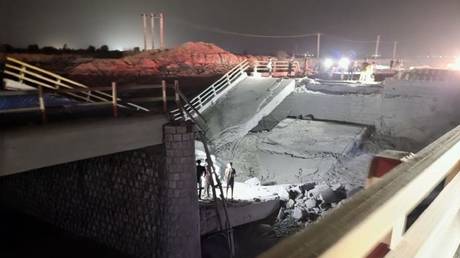
The sirens are wailing. The news tickers are flashing bright red. Mainstream media pundits are hyperventilating about "imminent regional escalation" and the "imminent chokehold on the global economy."
According to the established narrative, the latest round of US strikes near the Strait of Hormuz has brought us to the precipice of World War III. We are told to brace for $150 oil, supply chain collapses, and a hot war that will engulf the Middle East. Learn more on a connected topic: this related article.
It is a terrifying story. It is also entirely wrong.
What you are witnessing is not the prelude to a global war. It is a highly choreographed, mutually beneficial theater co-produced by Washington and Tehran. Both sides are playing their parts to perfection, satisfying domestic audiences while ensuring they never cross the actual red lines that would trigger real chaos. Further journalism by BBC News explores related views on this issue.
If you want to understand what is actually happening in the Persian Gulf, you have to stop reading the breathless live blogs and start looking at the cold, hard mechanics of geopolitical self-interest.
The Strait of Hormuz Myth: Why Iran Will Never Close It
Let us address the biggest bogeyman in international relations: the threat that Iran will shut down the Strait of Hormuz.
This narrow waterway is the transit point for roughly one-fifth of the world’s petroleum liquids. The conventional wisdom says Iran holds a knife to the throat of the global economy, ready to slice at any moment.
But this threat is a paper tiger. Iran cannot close the Strait of Hormuz for one simple reason: doing so would be an act of economic suicide.
The Chinese Lifeline
Tehran’s economy does not run on revolutionary fervor; it runs on oil. Specifically, it runs on oil sold to China. Due to Western sanctions, Beijing is Iran’s primary buyer, taking in the vast majority of Iranian crude through a complex network of dark fleet tankers and ship-to-ship transfers.
Now, ask yourself a basic question. If Iran blocks the Strait of Hormuz, whose economy suffers first? China’s.
Beijing relies heavily on Middle Eastern crude flowing through that very strait. If Iran shuts down the waterway, they do not just anger Washington; they directly sabotage their only economic superpower patron. The moment Tehran seriously disrupts Chinese oil supplies, Beijing pulls the plug on the Iranian regime’s financial life support. Without China, the Islamic Republic collapses from within.
The Geography of Self-Preservation
Iran’s own export terminals, like those at Kharg Island, are located inside the Persian Gulf. If the strait is blocked, Iran blocks its own ability to export oil.
While they have spent years trying to build out-of-gulf terminals like Jask, the capacity is nowhere near enough to sustain their economy. A closed strait means a bankrupt Tehran. The Iranian leadership is highly pragmatic when it comes to survival. They will threaten to close the strait every single week, but they will never actually do it.
Performative Deterrence: The Anatomy of a Calibrated Strike
When you read that the US has launched a "new wave of strikes" against Iranian-backed groups, it sounds like a massive escalation. In reality, it is a carefully calibrated exercise in brand management.
I have spent years watching military budgets and defense policy. Here is how the game actually works:
- Step 1: An Iranian-backed proxy group fires a low-cost drone at a US base or a commercial vessel. They do just enough damage to make a statement, but deliberately avoid causing mass US casualties.
- Step 2: The US military issues a stern warning, wait days (giving target personnel ample time to evacuate), and then strikes back.
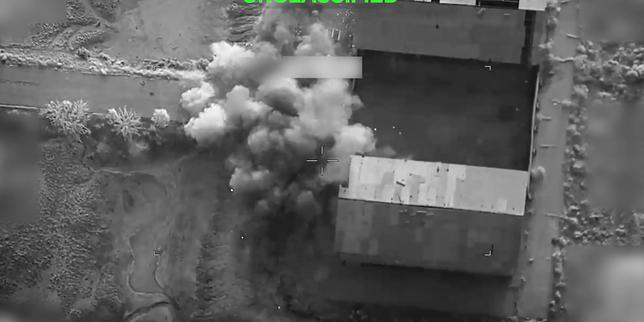
- Step 3: The US hits empty warehouses, radar stations, or unmanned launch sites.
- Step 4: Both sides claim victory. Tehran boasts about standing up to the Great Satan; Washington claims it has restored deterrence.
This is not war; it is performative deterrence.
If the US wanted to destroy Iran’s proxy capabilities, they would target the leadership networks and active command centers in real-time, not empty storage facilities three days after an incident. But doing so would force Iran into a corner where they would have to retaliate genuinely, breaking the unspoken rules of the game. Neither Joe Biden nor Iran’s Supreme Leader wants a real, direct war. A real war means American body bags on the eve of elections and the potential end of the regime in Tehran.
The True Winners of the Geopolitical Circus
If this conflict is largely theatrical, why does it keep happening? Because the theater is incredibly lucrative for the people running it.
The Defense Sector Payday
Every time a drone is intercepted by a multi-million-dollar missile, a defense contractor gets its wings. The escalation narrative is the ultimate marketing campaign for military spending. It justifies massive naval deployments, endless procurement of air defense systems, and bloated defense budgets.
The Oil Premium
Energy speculators love a crisis. The mere whisper of "explosions near the Strait of Hormuz" adds a geopolitical risk premium to every barrel of oil.
Traders buy up futures, oil companies watch their margins swell, and producing nations—including Iran, which sells its sanctioned oil at a discount that becomes more lucrative when global prices rise—make a killing. The fear of war is far more profitable than war itself. Once a real war starts, supply chains actually break, assets get destroyed, and the system collapses. The sweet spot is perpetual tension.
Dismantling the "People Also Ask" Panic
Let’s dismantle the flawed premises that dominate the public conversation around this crisis.
"Will oil hit $150 a barrel because of these strikes?"
No. The global oil market has changed fundamentally over the last decade. The US is now the world’s largest oil producer, pumping out record volumes. Meanwhile, non-OPEC production in countries like Brazil, Guyana, and Canada continues to rise.
Furthermore, global demand is softening, particularly as China's economic growth slows. The market is structurally oversupplied. Unless there is actual, sustained physical destruction of major oil fields in Saudi Arabia or the UAE—which neither Iran nor its proxies have the appetite to execute—a brief spike to $90 or $95 is the ceiling. The fear-mongering about $150 oil is designed to sell newsletters, not reflect market realities.
"Is this the start of World War III?"
Absolutely not. World War III requires great powers willing to fight each other. Neither Russia nor China has any interest in fighting the United States over Iran.
Russia wants Iran to keep supplying them with cheap drones for their own conflicts; they do not want to get dragged into a Middle Eastern quagmire. China wants cheap oil and stable trade routes; they have zero desire to back a rogue state in a hot war against the West. Without superpower backing, Iran is a regional power with a weak economy and an outdated air force. They are a nuisance, not a global threat.
The Danger of Buying the Hype
The real risk here is not a sudden, catastrophic war. The risk is that we allow this manufactured panic to distort our economic and foreign policy priorities.
We pour billions into securing shipping lanes for oil we claim we want to transition away from. We allow defensive policy to be guided by headlines rather than long-term strategy. We tolerate the enrichment of defense contractors and commodity speculators who rely on this endless cycle of simulated conflict to boost their bottom lines.
The next time you see a breaking news alert about explosions in the Gulf, take a deep breath. Look at the oil prices. Look at the shipping schedules. Look at the empty warehouses that were targeted.
Stop reacting to the script, and start watching the actors. They are putting on a great show, but they have absolutely no intention of burning down the theater.