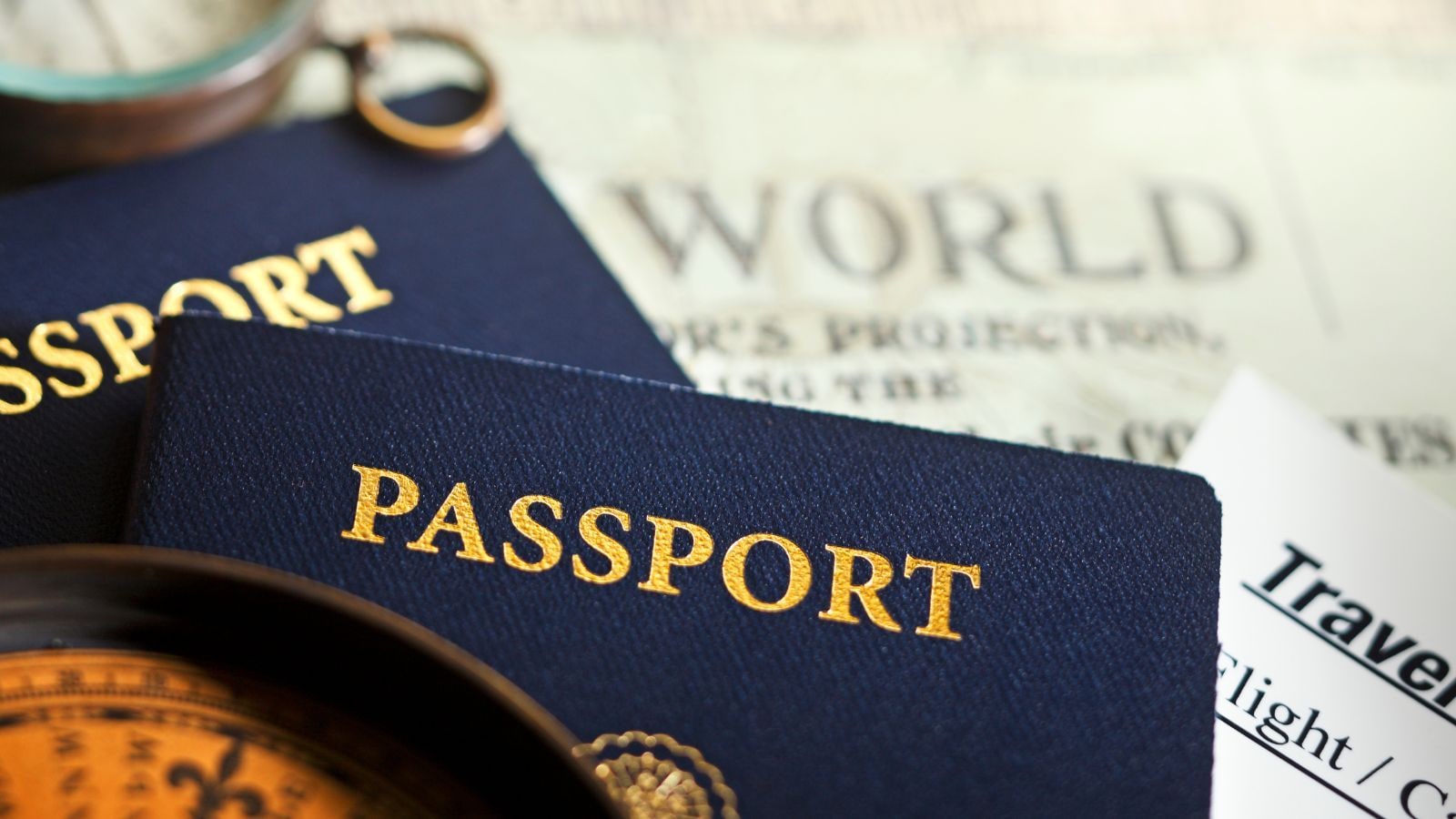
For generations, travelers have treated the little booklet stamped with a national crest as the ultimate proof of identity. It is the gold standard of belonging, a weapon of bureaucratic finality to be thrown down on immigration desks when a border agent begins asking too many questions.
Except, legally speaking, it isn't.
A sudden wave of regulatory clarifications across the globe has exposed a structural flaw in how international transit and domestic citizenship laws interact. On June 25, 2026, India's Ministry of External Affairs issued a stark reminder to its population: an Indian passport is strictly a travel document, not a standalone, conclusive proof of citizenship. The statement sent shockwaves through social media, but to seasoned legal analysts and constitutional experts, it merely stated what has been true for decades under international law. Passports do not create citizens; they merely request safe passage for them.
From New Delhi to Ottawa, and across Berlin and Paris, governments are widening the gap between a document that allows you to board a flight and the legal framework that defines whether you actually belong to a nation. If your status is challenged by a state agency, that booklet in your pocket can be reduced to a piece of administrative hearsay.
The Separation of Travel and Belonging
The core of the issue lies in the historical architecture of passport laws compared to citizenship laws. Most modern democracies treat them as two distinct legal spheres.
When a state issues a passport, it does so based on administrative satisfaction at a specific moment in time. The applicant brings forward a series of secondary documents—birth certificates, school records, local identity numbers—and an adjudicator decides if the burden of proof has been met. However, that administrative decision is not a judicial decree. It does not permanently bind the state if new facts emerge, if the underlying documents are later found to be flawed, or if the laws governing birthright citizenship change retroactively.
Consider the reality of administrative execution. Passports are routinely issued for ten-year periods. During that decade, a citizen might take an action that triggers automatic loss of nationality under domestic law, such as serving in a foreign military or acquiring a second citizenship in nations that forbid dual nationality. The passport remains physically valid, unexpired, and perfectly functional at an airport electronic gate. Yet, under the strict letter of the law, the holder has already ceased to be a citizen.
Furthermore, many countries maintain provisions that allow passports to be issued to individuals who are explicitly not citizens. Under Section 20 of India’s Passports Act of 1967, for instance, the central government retains the authority to issue a passport to a non-citizen if they deem it to be in the "public interest." Historically, this mechanism has been used to provide travel documents to displaced populations, refugees, or individuals left stateless by shifting geopolitical borders.
When a passport can legally be held by a non-citizen, the document itself ceases to be absolute proof of status.
The Domestic Disconnect
The true friction occurs when a citizen attempts to use their passport not at an international border, but within their own domestic legal framework.
In multiple high-profile cases, domestic courts have refused to accept valid passports as definitive proof of citizenship when a person's status was called into question by the state. The legal precedent is uniform across several major jurisdictions. In India, the Bombay High Court ruled in cases like Babu Abdul Sardar v. State of Maharashtra that identity documents—including passports, voter ID cards, and national tax numbers—cannot resolve core citizenship disputes. Those questions must be scrutinized strictly under the provisions of the Citizenship Act of 1955.
A similar, subtle dynamic exists within Western nations like Canada and Germany. While a Canadian or German passport is universally recognized abroad, domestic authorities retain the right to demand the foundational proof of status—such as a certified birth certificate indicating parentage or a formal Certificate of Naturalization—during deep security clearances, employment verification for sensitive state roles, or property disputes involving nationality laws.
The United States and the United Kingdom sit on the more absolute end of the spectrum, recognizing a valid, full-validity passport as primary evidence of citizenship for almost all domestic functions, including employment verification via Form I-9. Yet even within the American system, a subtle bureaucratic asterisk exists. The U.S. Department of State occasionally issues passports to individuals who are legally classified as "non-citizen nationals"—primarily individuals born in outlying possessions like American Samoa. These individuals carry a U.S. passport that looks virtually identical to any other, yet they do not possess the domestic political rights of a full citizen, such as voting in federal elections.
The Burden of Proof
The assumption that the state must prove you are not a citizen if you hold a passport is a dangerous misconception. In immigration and nationality law, the burden of proof is almost universally inverted.
In landmark rulings, such as the Sarbananda Sonowal precedent, supreme judiciaries have repeatedly affirmed that the onus of establishing citizenship rests entirely on the individual claiming it. If a state agency challenges your status—whether during an audit of electoral rolls, a background check, or an intensive domestic identity revision—you cannot simply point to the crest on your passport cover and rest your case.
This leaves millions of citizens in a strange administrative limbo. They are citizens by birth, meaning they have never been issued a formal "Citizenship Certificate." Those certificates are typically reserved for naturalized immigrants. For the natural-born population, citizenship is not represented by a single definitive document; it is a legal status pieced together from a chain of historical facts.
To defend your status in a high-stakes legal challenge, you are required to produce the root evidence of those facts.
- The exact date and geographic location of your birth.
- The verified citizenship status of your parents at the exact time of your birth.
- Proof of continuous domicile or adherence to specific statutory conditions if born abroad.
If any link in that ancestral chain is broken—if a municipal birth registry from forty years ago was destroyed in a fire, or if a parent's documentation contains a typographical error—the passport built upon that foundation becomes vulnerable to administrative cancellation.
The Policy Paradox
Governments are caught in a self-inflicted structural paradox. They require a highly mobile workforce and seamless international travel, which demands a standardized, easily scannable identity token like the modern e-passport. At the same time, domestic political pressures and security concerns drive states to implement increasingly rigorous filters on who belongs to the body politic.
The move toward national registers and centralized identity databases is an attempt to bridge this gap, but it frequently creates secondary layers of bureaucracy. Systems like India’s Aadhaar or various European national identity cards are highly efficient for verifying identity and distributing state benefits, but they explicitly disclaim any authority to determine citizenship. They prove who you are, and where you are, but not by what legal right you remain.
This leaves the global traveler in a position of quiet vulnerability. The passport remains an indispensable tool for global transit, functioning perfectly at airline counters and border checkpoints where the primary concern is identity verification and visa compliance. But the moment you step off the tarmac and enter the realm of domestic legal scrutiny, that book is no longer an unassailable shield. It is an administrative convenience, held at the pleasure of the issuing government, and subject to the foundational laws of the land you call home.