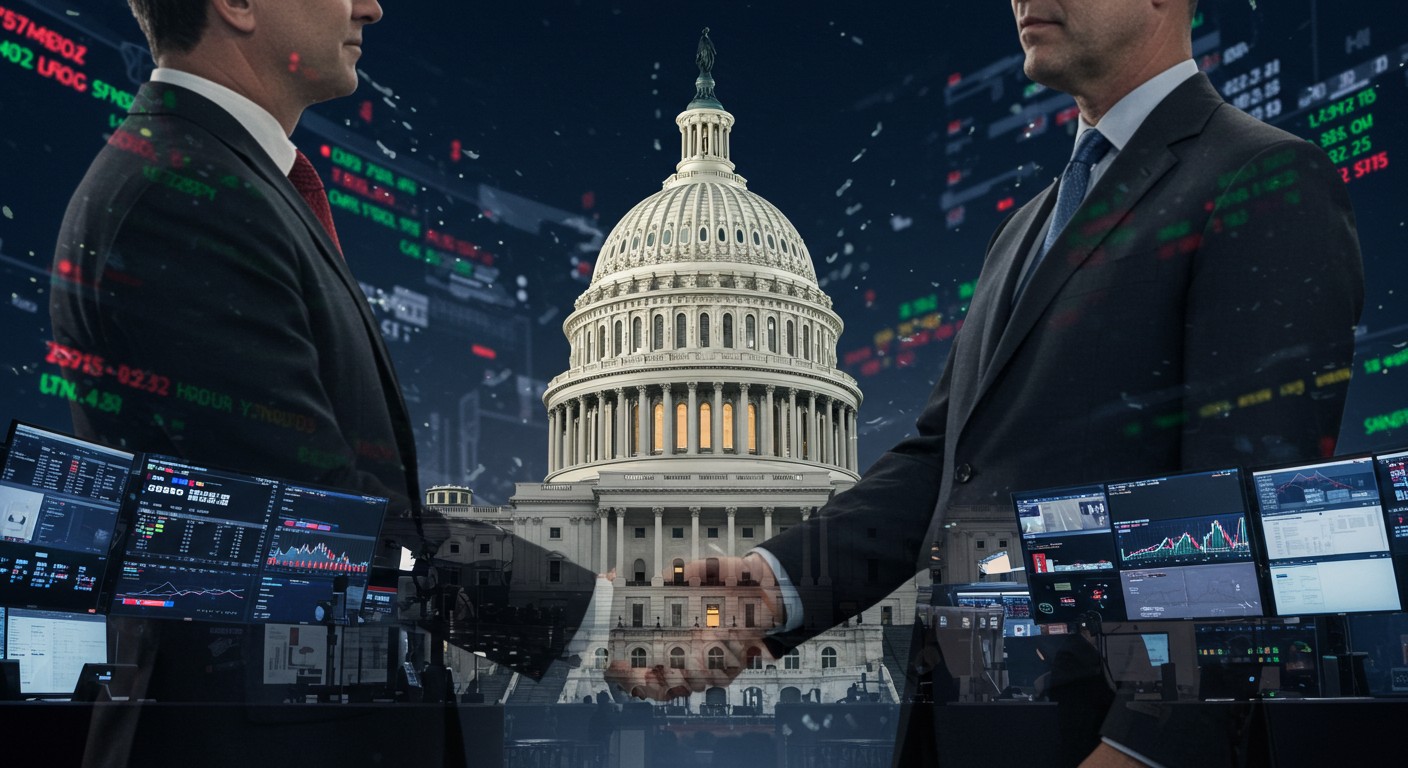
Senator Richard Blumenthal stood before a crowded hearing room on Capitol Hill, holding a synthetic audio clip that sounded precisely like his own voice reading a speech he never wrote. The demonstration was startling. It was designed to shock lawmakers out of their usual complacency. When Blumenthal warned that humanity stood on the verge of losing control over artificial intelligence, he was not just tossing out a dramatic soundbite for evening television. He was describing an administrative panic. Capitol Hill is scrambling to build guardrails around a technology that moves faster than the slow legislative machinery designed to check it. Yet beneath the theater of congressional warnings lies a starker truth. Washington does not know how to regulate a system it barely understands, and Silicon Valley knows it.
The fundamental problem with federal oversight hearings is the vast asymmetry of technical competence. Lawmakers rely heavily on briefings provided by lobbyists, corporate executives, and academic consultants who have direct financial or ideological stakes in the outcomes of any potential statutes. When a senator asks a tech chief executive how an algorithm determines the boundaries of data privacy or model alignment, the response is often a polite deflection wrapped in corporate jargon. The questioning rarely penetrates the commercial architecture of these models. Instead, hearings pivot toward abstract philosophical discussions about sentient machines and science fiction dystopias. This intellectual diversion suits the major tech firms quite well. While Congress debates whether artificial intelligence might one day destroy civilization, current corporate practices continue unchecked regarding labor displacement, copyright theft, and unchecked mass surveillance.
The Anatomy of Congressional Theater
Public committee hearings are designed for the cameras rather than for rigorous policy formulation. Members of Congress often arrive with pre-written soundbites tailored for social media clips rather than substantive questions intended to uncover regulatory blind spots. The five-minute questioning rule further impedes meaningful dialogue. Just as a senator begins to corner an executive on proprietary training data sources or labor practices, the timer expires, and the microphone cuts off. The witness escapes unscrutinized, and the committee moves on to another legislator with an entirely different line of inquiry.
This format ensures that accountability remains superficial. Corporate legal teams spend weeks coaching executives on how to run out the clock with polite evasions and commitments to look into the matter. Observers who have watched congressional oversight of the banking sector or social media giants recognize this exact pattern. The hearings provide an outlet for populist frustration, allowing elected officials to express moral outrage without committing to the difficult, politically risky work of passing restrictive legislation. Meanwhile, the code continues to compile, the server farms expand, and the commercial products ship to millions of consumers without independent safety verification.
The Structural Failure of Voluntary Commitments
For months, the White House has leaned heavily on voluntary agreements with major technology companies. Tech executives line up in front of cameras to sign pledges promising internal safety testing, watermarking of synthetic media, and third-party security audits. These agreements are presented to the public as monumental triumphs of statecraft. In reality, they are public relations shields. A voluntary commitment is fundamentally an agreement with zero legal teeth. If a company decides that speed-to-market outweighs a safety protocol, there is no statutory penalty or regulatory fine waiting to stop them. They simply absorb the reputational hit, pay for a quick apology tour, and keep shipping code.
Veteran observers of the technology sector recognize this script. It mirrors the early days of social media regulation. For more than a decade, lawmakers treated major internet platforms with kid gloves, accepting assurances that algorithms would organically police misinformation and protect user privacy. That trust resulted in a fractured media environment, radicalized political discourse, and immense psychological harm to younger users. Now, the federal government is repeating the exact same error with an even more powerful technology. By substituting executive pledges for binding federal statutes, Washington grants tech conglomerates the authority to write their own rules of engagement.
The Geopolitical Pressure Cooker
Another factor driving the frantic tone of congressional warnings is the looming shadow of foreign competition. Lawmakers are constantly reminded by defense contractors and venture capitalists that any domestic restriction on artificial intelligence development hands an immediate advantage to foreign adversaries, primarily Beijing. This national security argument is a powerful conversation stopper. Whenever a critic suggests slowing down deployment to test for systemic risks or algorithmic bias, the counter-argument is immediate. Competitors abroad will not slow down. Therefore, the United States must sprint, consequences be damned.
This zero-sum framing creates a dangerous policy trap. It treats every technical risk as an acceptable casualty in a geopolitical race. But a race without brakes usually ends in a crash. The rush to deploy foundational models without adequate verification has led to a race to the bottom regarding data quality, copyright respect, and infrastructural safety. When companies cut corners on training data curation to beat a rival to market, they bake biases, security vulnerabilities, and copyright liabilities directly into the foundation of the technology. The national security justification functions as a blanket absolution for reckless commercial acceleration.
The Open Source Controversy
The debate over open-source artificial intelligence exposes another deep fracture in the regulatory approach. Well-funded corporate lobbyists frequently argue before Congress that open-source model weights must be strictly controlled or banned entirely to prevent bad actors from weaponizing the code. They paint a picture of rogue individuals building biological agents in their garages using publicly available large language models. This narrative conveniently serves corporate monopolies. By restricting open-source development, big tech firms can lock down the market, ensuring that only a handful of multi-trillion-dollar corporations possess the computational power and legal clearance to build advanced systems.
Independent researchers and smaller academic institutions see through this protectionist maneuver. They point out that open-source models are essential for transparency, academic scrutiny, and democratic distribution of technology. Without open access to model weights, independent scientists cannot audit the internal mechanics of these systems for bias, hidden backdoors, or systemic failures. Blindly trusting closed-source corporations to police themselves while outlawing public scrutiny is a recipe for corporate autocracy disguised as national security. Yet congressional committees often lack the technical literacy to distinguish between genuine security risks and protectionist lobbying efforts.
Economic Realities and Labor Displacement
While congressional panels focus heavily on existential scenarios, the immediate economic fallout of automation is happening right now with very little legislative friction. Writers, coders, graphic designers, customer service representatives, and administrative workers are watching their livelihoods erode as corporations rush to replace human labor with cheaper automated alternatives. This is not a distant future threat. It is a present-day restructuring of the workforce that transfers wealth upward at an unprecedented scale.
Yet when lawmakers question technology executives, the discussion rarely touches upon labor rights or mandatory compensation for the copyrighted material used to train these models. Instead, the dialogue drifts back to abstract ethics panels and vague promises of future retraining programs. Workers whose life work was scraped without consent to train commercial models receive zero compensation, while venture capitalists reap billions in valuation spikes. True oversight would require examining the labor economy, intellectual property laws, and antitrust enforcement. Instead, Washington prefers the theater of moral panic over the hard labor of economic justice.
Toward Real Accountability
If the federal government genuinely intends to prevent a loss of control, the playbook must change drastically. Theatrical hearings and handshake agreements must give way to strict, enforceable statutory frameworks. This means establishing an independent federal oversight agency with real enforcement powers, subpoena authority, and the technical staff required to audit algorithms before deployment. It means creating strict liability standards for corporations that release harmful or defective systems into the public sphere. If a car manufacturer is held legally responsible when faulty brakes cause a highway accident, a software developer should bear similar responsibility when a negligently deployed model causes demonstrable economic, physical, or social damage.
Furthermore, transparency must be mandated by law. Companies should no longer be allowed to hide behind trade secret claims when their algorithms make consequential decisions affecting credit scores, housing access, medical diagnoses, or judicial sentencing. Independent auditors must have unobstructed access to training data, model architectures, and safety testing reports. Without compulsory transparency and legal accountability, congressional warnings will remain empty theater. The technology will continue to evolve on corporate terms, leaving the public to manage the fallout while lawmakers issue more urgent press releases from the safety of Capitol Hill.
The window to establish meaningful oversight is closing rapidly. Every month that passes without concrete legislative action entrenches the power of a few monopolistic corporations even further into the civic and economic infrastructure. Senator Blumenthal is correct to sound the alarm, but alarms alone do not stop a freight train. Until Congress moves past the comfortable distraction of existential philosophy and enacts hard legal liabilities, the people steering the engine will continue full speed ahead with nobody at the controls.