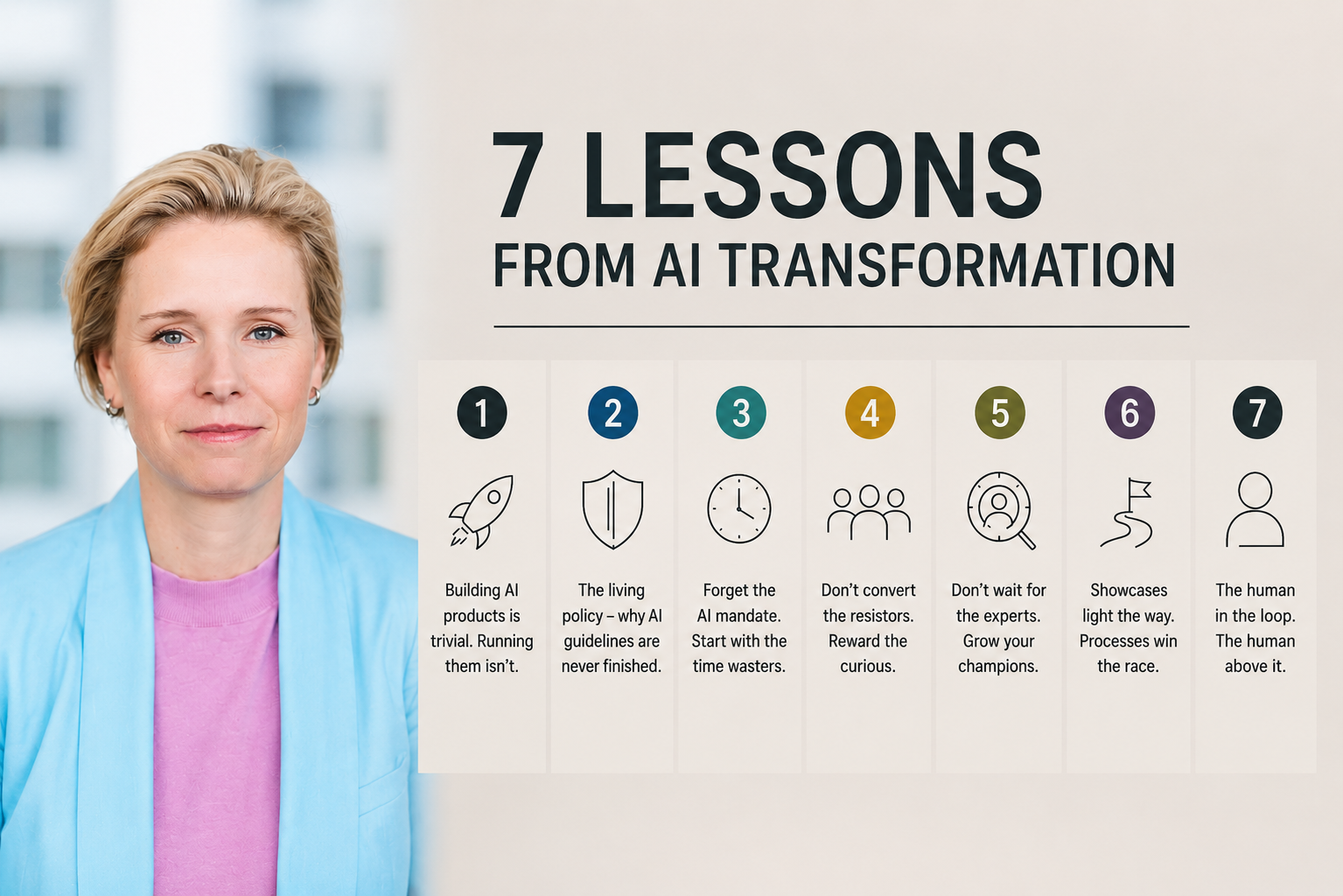
Boardrooms are currently obsessed with a comforting lie. The lie says that as enterprise automation scales from simple algorithmic tasks to autonomous executive decisions, human oversight remains intact. Industry marketing calls this the human in the loop. It is a phrase designed to soothe nervous regulators and shareholders, conjuring the image of a vigilant supervisor ready to pull the emergency brake.
The reality is far more dangerous. The traditional human in the loop model is dead, replaced by a systemic blind spot where executives do not manage technology but merely rubber-stamp it. When algorithmic systems process millions of data points per second to optimize supply chains, price assets, or evaluate credit risks, a human cannot meaningfully intervene. The speed disparity creates a psychological phenomenon known as automation bias. People trust the machine because verifying the machine's work requires more time and cognitive effort than any executive possesses. To fix this structural failure, companies must move from a reactive loop to a proactive stance. True oversight requires moving the human above the loop, shifting the role from an active operator to a systemic architect who dictates the ethical and operational boundaries before the code ever runs. Don't forget to check out our recent coverage on this related article.
The Velocity Trap and the Failure of Real Time Oversight
When a financial institution deploys an algorithmic trading system, or a logistics giant hands its route optimization over to an autonomous network, they cross a technological point of no return.
Consider a hypothetical example of a regional logistics provider using an automated dispatch system. The software identifies a supply chain bottleneck and instantly reroutes hundreds of delivery vehicles. A human manager sits in front of a dashboard, watching notifications flash across the screen. Each notification represents a complex calculation involving fuel costs, driver hours, weather patterns, and contract penalties. The system gives the manager twelve seconds to approve or reject the change. If you want more about the background of this, CNET offers an informative breakdown.
Is that manager actually in the loop? Of course not.
The manager lacks the cognitive capacity to rebuild the calculation in twelve seconds. Rejection means halting operations and risking immediate losses. Approval keeps the screen green. The human becomes a glorified compliance mechanism, existing solely to take the legal blame if something goes wrong.
This is the velocity trap. The loop requires real-time intervention, but real-time intervention is humanly impossible at enterprise scale. When operations move at machine speed, human oversight shrinks to a binary choice: trust the black box or shut down the business. Most leaders choose the black box.
The Hidden Cost of Cognitive Offloading
Delegating routine decisions to automated platforms feels like efficiency. It frees up intellectual capital, or so the pitch goes.
The hidden cost is the rapid erosion of institutional expertise. When software handles pricing strategies, inventory management, or legal document screening for years, the middle management layer forgets how to perform those tasks manually. They lose the intuition required to spot subtle system drift.
System drift happens slowly. An algorithm optimized solely for short-term margin might begin squeezing suppliers in a way that damages long-term relationships. Because the decline is incremental, and because the daily metrics remain positive, human monitors see no reason to interfere. By the time the damage becomes visible on a quarterly balance sheet, the human talent capable of diagnosing and fixing the root cause has already departed or checked out.
This creates a paradox of automation. The more reliable the automated system, the less attentive the human operator becomes. The less attentive the operator, the more catastrophic the failure when the system encounters an edge case it was not trained to handle.
Redefining the Architecture of Oversight
To break this cycle, the corporate hierarchy must be inverted. Organizations need to stop trying to force human judgment into the middle of automated execution streams. Instead, executive leadership must operate strictly above the system.
Traditional Model (In the Loop):
[Data Input] -> [Automated System] -> [Human Reviewer (10 Seconds)] -> [Action]
                                              ^
                                      (Velocity Trap)

Elevated Model (Above the Loop):
[Human Architect] -> Defines Boundaries & Guardrails
                            |
                            v
[Data Input] --------> [Automated System] -----------------------------> [Action]
                            |
                            v
                     [Auditing Engine] -> Reports Anomalies to Human
Operating above the loop means shifting focus from individual transaction approvals to the continuous auditing of systemic behavior. It requires a structural framework built on three specific pillars.
Hard Operational Guardrails
Executives must define absolute parameters within the software code that cannot be overridden by automated optimization logic. If a pricing algorithm determines that predatory pricing maximizes margin in a specific zip code, a hardcoded compliance guardrail must automatically block the execution without requiring a human monitor to spot it. The system must be constrained by design, not by post-hoc review.
Independent Continuous Auditing
Instead of expecting managers to review live transactions, companies must deploy separate, independent software tools designed specifically to audit the primary operational systems. These auditing engines do not participate in daily execution. They track systemic outputs over time, searching for statistical anomalies, bias, and drift, then report these trends to human leadership in weekly or monthly reviews.
Scheduled Disruption Drills
A airline pilot spends hours in a flight simulator practicing for double-engine failure. Corporate executives must do the same for their critical software infrastructure. Organizations should intentionally take key automated systems offline during controlled testing windows. This forces the human workforce to manually execute processes, maintaining their operational muscle memory and exposing gaps where the technology has obscured operational vulnerabilities.
The Liability Shift
Regulators are waking up to the fiction of the human observer. Insurance companies and legal bodies are changing how they evaluate corporate negligence.
Historically, a company could defend an algorithmic error by claiming it was an unforeseen technical glitch, or that a human manager approved the action in good faith. That defense is losing its validity. Courts are increasingly viewing the rubber-stamp model of human oversight as a form of willful blindness. If you build a system that moves too fast for a human to comprehend, you cannot claim a human was supervising it.
The financial risk is shifting directly to the C-suite. Executives can no longer hide behind the defense of technological complexity. If you do not understand the decision-making criteria of your operational tools, you are not managing your company; you are letting an un-audited asset manage your capital.
The Path to Algorithmic Governance
Transitioning an enterprise to this elevated model requires an immediate change in how technology projects are funded and evaluated.
The current metric for success is often deployment speed or immediate cost reduction. This view is short-sighted. A true investigative audit of automated enterprises reveals that the highest-performing organizations over the long term are those that spend as much on building oversight architecture as they do on the core automation itself.
Every automated deployment must be accompanied by an explicit governance charter. This document must state exactly how the system’s outputs will be monitored, what metrics will trigger an automatic shutdown, and how the company will maintain human competence in the underlying business function.
Stop asking your team to sit in the loop and watch the data fly past. They cannot stop the train if it derails. Elevate them to the position of track engineers, designing the systems, setting the speed limits, and inspecting the infrastructure far ahead of the machine's arrival.


