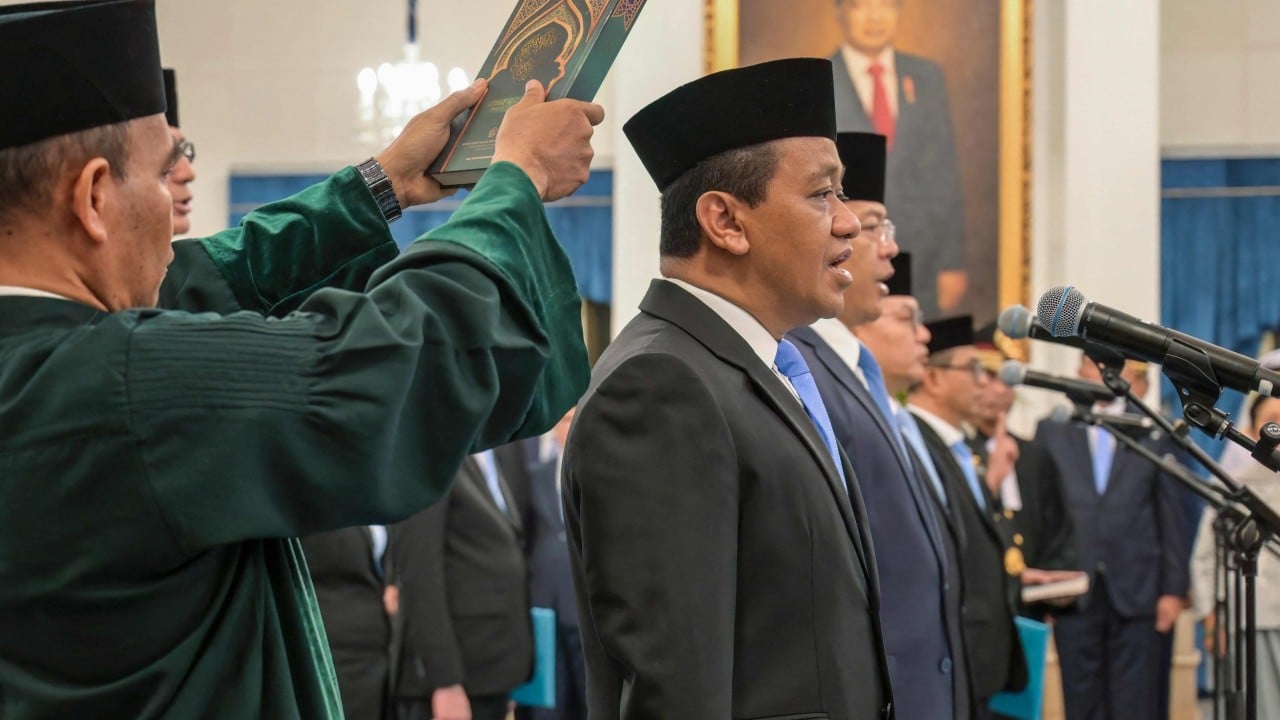
Indonesian President Prabowo Subianto is attempting to arrest a severe decline in institutional credibility through rapid-fire cabinet replacements, but swapping personnel cannot compensate for structural dysfunction. By churning through three finance ministers, replacing his military and police chiefs, and purging corrupt agency heads within two years of taking office, Prabowo has turned his executive council into a revolving door. This relentless shuffling aims to reassure foreign investors and placate a furious domestic electorate. Instead, it signals a presidency struggling to maintain control over a bloated political coalition.
Behind the ceremonial inaugurations at the State Palace lies a deeper crisis of governance. When Prabowo took office in October 2024, he assembled a mega-cabinet designed to buy loyalty across Indonesia’s vast political landscape. That strategy backfired. Rather than building a cohesive administration, the administration created an unwieldy apparatus where line ministries operate as independent fiefdoms, locked in turf wars while economic momentum stumbles.
The Technocratic Mirage and Market Anxiety
The most alarming metric of instability sits inside the Ministry of Finance. The quiet departure of veteran technocrat Sri Mulyani Indrawati in late 2025 marked the end of an era defined by fiscal conservatism. Her replacement, Purbaya Yudhi Sadewa, lasted barely a year before market volatility, currency depreciation, and fiscal disagreements forced another change. Suahasil Nazara now sits in the ministerial chair—the third figure to hold the post under Prabowo’s administration.
Market operators do not view these rapid transitions as decisive management. They see a presidency willing to burn through fiscal guardrails to fund expansive populist programs, including a multi-billion-dollar signature nutrition initiative that has already fallen into corruption scandals and leadership purges.
┌─────────────────────────────────────────────────────────┐
│              FINANCE MINISTRY TURNOVER                 │
├────────────────────────┬────────────────────────────────┤
│ Sri Mulyani Indrawati  │ Departed September 2025        │
├────────────────────────┼────────────────────────────────┤
│ Purbaya Yudhi Sadewa   │ Sept 2025 – Sept 2026          │
├────────────────────────┼────────────────────────────────┤
│ Suahasil Nazara        │ Appointed September 2026       │
└────────────────────────┴────────────────────────────────┘
Technocrats inside the ministry face an impossible mandate. They are expected to maintain the statutory 3 percent budget deficit cap while financing ambitious spending directives, aggressive state-led infrastructure pushes, and downstreaming policies that strain trade relations. When revenue collection inevitably falls short, the minister takes the fall. The underlying policy logic remains completely untouched.
Security Apparatus Reorganization and Internal Fractures
The reshuffles extend far beyond economic portfolios. A sudden swap at the head of the Indonesian Army and the sudden replacement of the National Police chief highlight deep operational friction within the security sector.
The dismissal of senior defense officials came on the heels of high-profile operational failures and embarrassing scandals involving state assets linked to illicit operations. Simultaneously, Prabowo expanded the role of active and retired military officers within civil administration, placing trusted security figures over key development and land agencies.
This centralization of security leadership reveals Prabowo’s core governing style. Trained in the military command structures of the twentieth century, the president defaults to tactical command swaps when bureaucratic systems stall.
- Command Centralization: Placing trusted defense figures into civilian ministries to bypass traditional bureaucratic channels.
- Coalition Discipline: Stripping cabinet positions from coalition partners who fail to enforce party line support in parliament.
- Scandal Containment: Removing department heads immediately after public outrage erupts, insulating the presidential office from direct fallout.
Yet tactical maneuvers cannot fix systemic friction. Replacing an army chief or a police commander alters the leadership chart, but it leaves the underlying institutional corruption and operational failures entirely intact.
Purging the Predecessor Legacy
When Prabowo took power, he relied heavily on the political network and patronage systems built by his predecessor, Joko Widodo. The initial cabinet roster reflected a compromise: key economic and infrastructure positions were preserved for loyalists of the outgoing administration to ensure a smooth transition.
That consensus has fractured. Recent reshuffles demonstrate a deliberate effort to displace legacy figures and install Prabowo's personal inner circle across strategic sectors, including foreign affairs, energy, and industry.
Foreign Policy Realignment
The replacement of career diplomats and coalition appointees with personal confidants like Arrmanatha Nasir at Foreign Affairs highlights a shift toward direct presidential diplomacy. International relations are increasingly driven by strategic transactions rather than established diplomatic protocols.
Energy and Downstreaming Oversight
The creation of specialized coordinating posts for downstreaming and energy transition under political heavyweights like Bahlil Lahadalia cements state management over natural resources. However, conflicting mandates between energy, industry, and environmental ministries continue to generate regulatory bottlenecks that scare off foreign capital.
State Utility Accountability
Immediate executive dismissals following severe infrastructure failures—such as major regional power blackouts—show an administration reactive to public anger. Yet executive firings do not modernize aging power grids or resolve structural debt within state-owned enterprises.
The Structural Limits of Perpetual Reshuffling
Replacing personnel creates a temporary illusion of decisive momentum. It dominates news cycles and gives the public an impression of presidential accountability. But persistent cabinet instability produces severe institutional paralysis.
Senior bureaucrats within ministries hesitate to sign off on major development projects or long-term procurement contracts when their minister might be removed in the next quarterly reset. Policy implementation halts while incoming leadership teams conduct months of administrative reviews.
Furthermore, global rating agencies and foreign investors view high cabinet turnover as a primary risk indicator. When fiscal leadership changes every twelve months, long-term capital investments are quietly shelved in favor of more predictable emerging markets.
Prabowo’s central problem is not the competence of individual ministers. It is an executive strategy that treats deep policy contradictions as simple personnel failures. Until the administration addresses its unsustainable fiscal promises and bloated coalition structure, no amount of palace ceremonies will restore permanent stability to Jakarta.