The New York Knicks did not just win Game 1 of the Eastern Conference finals; they weaponized Cleveland's premature sense of victory to pull off a historic 115-104 overtime triumph after trailing by 22 points in the fourth quarter.
With 7:52 remaining in regulation, the Cleveland Cavaliers held a commanding 93-71 lead, suffocating a New York squad that looked heavy-legged and rusted from a nine-day layoff. What followed was not a standard NBA run, but a systematic unravelling. Driven by a 38-point masterpiece from Jalen Brunson, the Knicks engineered a 44-11 closing surge that exposes a foundational flaw in how modern basketball teams attempt to freeze a lead. If you liked this article, you might want to read: this related article.
The Strategy of Hunting James Harden
To understand how a 22-point lead vanishes in less than eight minutes, ignore the vague notions of momentum and look at the deliberate target selection on the floor.
New York coach Mike Brown altered his offensive geometry down the stretch. He stopped running complex sets and initiated a brutal, repetitive hunting of James Harden in pick-and-roll switches. Brunson became the executioner. By dragging Harden into space, Brunson eliminated Cleveland’s help-side rim protection, scoring 17 of his 38 points in that final stretch of regulation and overtime. For another perspective on this event, check out the recent update from The Athletic.
The strategy worked because it exploited a fundamental physical reality. While the Cavaliers were playing their 11th basketball game in 21 days after an exhausting seven-game series against Detroit, the Knicks were entirely fresh. New York looked slow early due to rust, but when the game became a war of attrition in the fourth quarter, the stamina differential flipped.
Cleveland’s offensive structure collapsed entirely under pressure. After building their lead on sharp ball movement and perimeter shooting, the Cavaliers choked out their own spacing. They tried to milk the shot clock, walking the ball up the floor and settling for late-clock isolation plays. It was a fatal miscalculation. The Cavaliers shot a dismal 4-of-18 from the field and committed seven turnovers after taking their 22-point advantage.
The Mirage of Rest Versus Rust
For three quarters, the narrative of the series seemed set. The Knicks had not played a competitive minute since completing their second-round sweep of Philadelphia on May 10. That inactivity showed. New York started the game shooting a miserable 4-of-23 from beyond the arc, missing routine uncontested looks and failing to match Cleveland's operational speed.
But the postseason rewards defensive identity when shots refuse to fall. While the Knicks' offense searched for its rhythm, their defense remained anchored. Karl-Anthony Towns anchored the paint with 13 points and 13 rebounds, absorbing contact and preventing the Cavaliers from getting easy transition buckets when the New York offense stalled.
Late-Game Disparity (Final 13 Minutes)
+-------------------------+-----------------+-----------------+
| Statistic               | New York Knicks | Cleveland Cavs  |
+-------------------------+-----------------+-----------------+
| Points Scored           | 44              | 11              |
| Field Goal Percentage   | 58.3%           | 22.2%           |
| Turnovers Committed     | 1               | 7               |
+-------------------------+-----------------+-----------------+
The data illustrates that this was less of a miraculous shooting display by New York and more of a total physical collapse by Cleveland. The Knicks simply maintained their baseline intensity while the Cavaliers hit an emotional and physical wall. OG Anunoby, playing through a strained right hamstring after sitting out the previous two contests, typified this endurance. He looked compromised for thirty minutes, yet his defensive lateral quickness in the final six minutes of regulation completely erased Cleveland’s perimeter options.
The Structural Failure of the Clock-Bleeding Offense
NBA coaches have a tendency to coach scared when holding a massive lead late in playoff games. Kenny Atkinson fell into that familiar trap. By instructing his team to milk the 24-second clock down to its final ticks before starting an action, he inadvertently aided the Knicks' defensive scheme.
A slow offense allows a defense to set its shell perfectly. Donovan Mitchell, who carried Cleveland with 29 points through three quarters, was neutralized by this approach, scoring just three points across the entire fourth quarter and overtime period. He was forced into contested, deep jumpers because the offense lacked any early-clock penetration or paint touches.
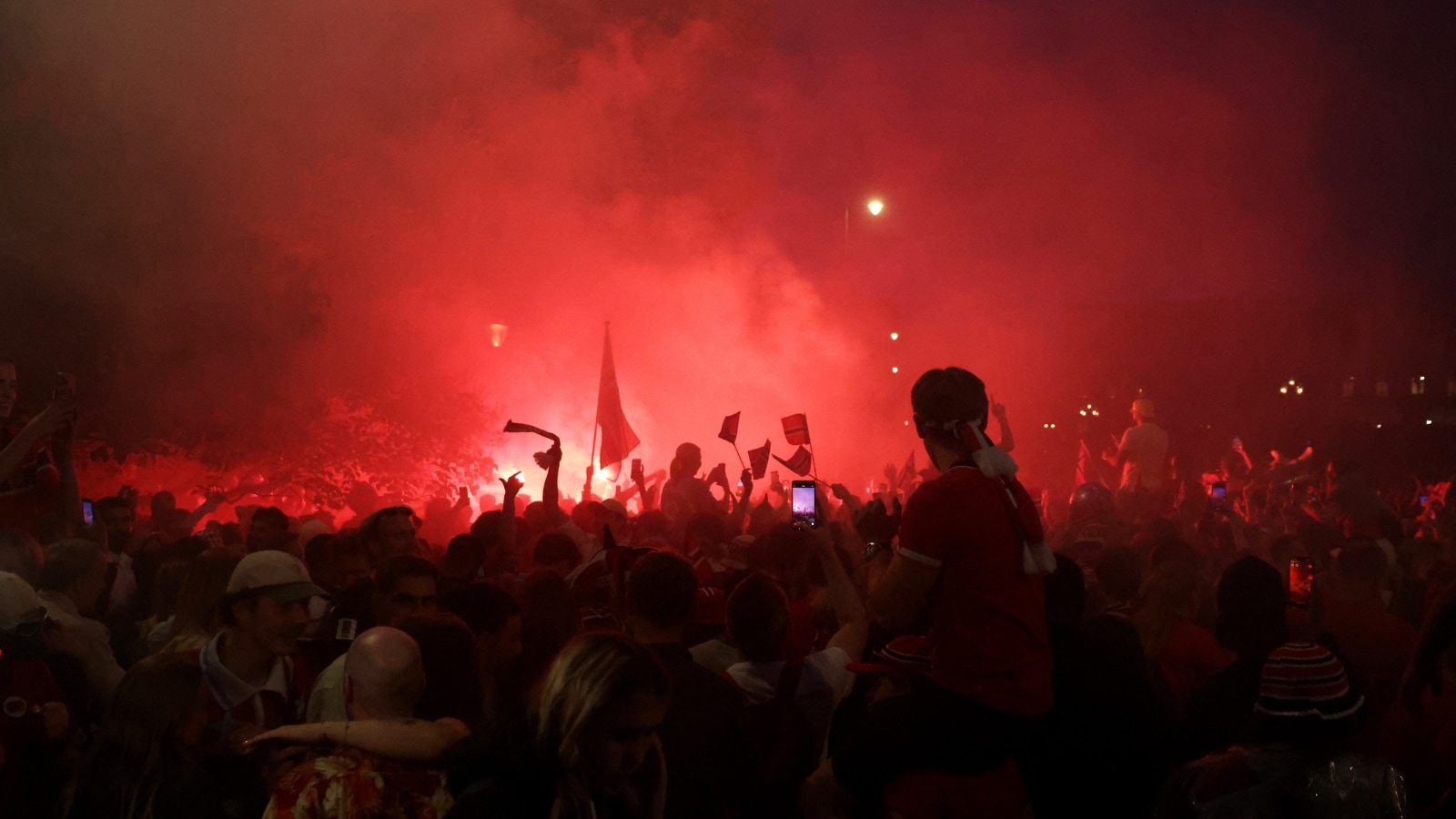
When Landry Shamet hit a corner three-pointer to tie the game at 99 with 45 seconds left, the psychological shift was absolute. Overtime was a mere formality. The Knicks opened the extra period on a 9-0 run, fueled by a defensive intensity that Cleveland simply could not replicate. The Madison Square Garden crowd, quieted by three quarters of subpar execution, turned the arena into an echo chamber that rattled a tired Cavaliers roster.
This loss will linger for Cleveland. While Mitchell dismissed fatigue as an excuse after the game, the reality of their condensed schedule showed in every short jumper and missed defensive rotation late in the evening. They played as if the game was won at the third-quarter buzzer, forgetting that a Tom Thibodeau-built roster—now guided by Mike Brown—is designed to play at maximum velocity until the final horn sounds. New York is now three wins away from its first NBA Finals appearance since 1999, not because they are vastly more talented, but because they understood that a lead in modern basketball is nothing more than an illusion of security.