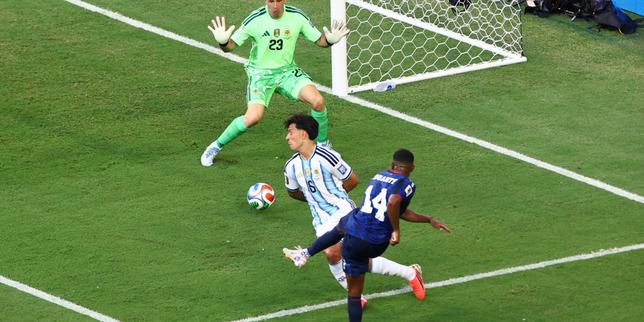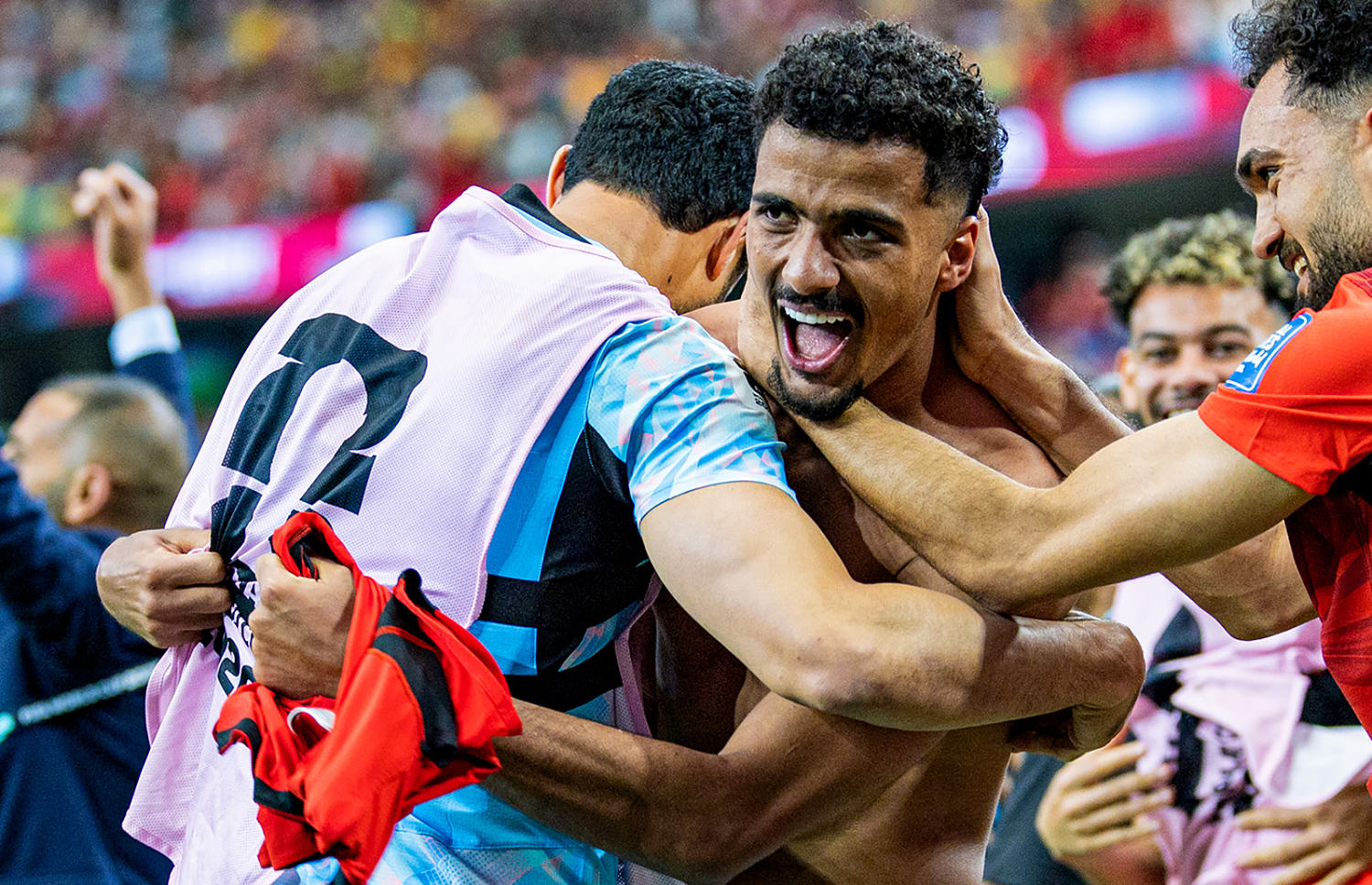
The final act inside Dallas Stadium did not resemble a modern sporting event as much as a psychological experiment gone wrong. With seventy thousand fans screaming in the Texas heat, Egypt secured its first knockout victory in World Cup history, defeating Australia four to two in a penalty shootout after a grueling one-one draw. While the headlines will loudly proclaim the triumph of Mohamed Salah and the historic ascension of the Pharaohs, the deeper reality of this Round of 32 clash rests on a catastrophic tactical gamble that will haunt Australian football for a generation.
In the final minute of extra time, Australian coach Tony Popovic chose to replace his brilliant twenty-two-year-old starting goalkeeper, Patrick Beach, with thirty-four-year-old veteran Mathew Ryan. It was a calculated move designed to manufacture a psychological edge for the shootout. Instead, it exposed a structural misunderstanding of modern penalty dynamics, as Ryan failed to lay a hand on a single Egyptian spot-kick, while Egypt's shooters executed their tasks with clinical precision.
The Substitution That Broke a Team
Football managers often mistake historical precedent for a repeatable formula. Popovic’s decision to pull Beach in the hundred-and-nineteenth minute was a direct imitation of famous historical gambles, yet it completely ignored the reality of the preceding two hours. Beach had been the finest player on the pitch. The young keeper had single-handedly dragged Australia into extra time, producing a spectacular one-handed save in the ninety-fourth minute to deny a bullet header from Ramy Rabia, before turning away a stinging effort from Mohamed Salah.
He was warm, his reflexes were sharp, and his confidence was soaring.
By removing him, Popovic did not just introduce an cold goalkeeper into the cold reality of a World Cup shootout. He signaled an implicit lack of faith in the young player who had earned the right to finish what he started. Ryan, despite his extensive international resume, was forced to step cold into a stadium vibrating with intense pressure.
The data regarding late-game goalkeeper substitutions for shootouts reveals a harsh truth. Unless the incoming goalkeeper possesses an extraordinary, statistically anomalous record of saving penalties, the disruption to team chemistry and the psychological burden placed on the substitute far outweigh any theoretical advantage. Ryan dived the wrong way twice and was beaten easily down the middle by a audacious Panenka from Salah. The gamble did not just fail. It collapsed.
The Tragic Infamy of Mohamed Hany
While Australia wrestled with its self-inflicted wounds, Egypt’s path to victory was defined by a bizarre mixture of physical sacrifice and historical misfortune. The match had opened brightly for the Pharaohs, who took the lead in the thirteenth minute when Emam Ashour timed his run perfectly to plant a firm header past Beach from a Karim Hafez cross. It was a goal born of defensive passivity, as the Australian backline allowed Ashour to drift entirely unmarked at the back post.
Then came the fifty-fifth minute, an incident that will occupy a grim place in the archives of international football.
Ten minutes prior to Australia's equalizer, Egyptian right-back Mohamed Hany was involved in a violent collision with Connor Metcalfe during an aerial challenge. Hany remained on the turf for several minutes as medical personnel evaluated him, with a stretcher waiting nearby. In an era where head injuries are scrutinized with intense administrative rigor, Hany was permitted to return to the pitch after a brief concussion assessment.
The consequences were immediate and tragic. Off an Aiden O’Neill free-kick, a clearly disoriented Hany rose and accidentally sliced a header into his own net. The blunder earned him an unenviable position in World Cup history, making him only the second player ever to score two own-goals in a single edition of the tournament, following a similar mishap against Belgium in the group phase.
The incident raises uncomfortable questions about player welfare and the efficacy of on-field medical protocols during high-stakes tournament matches. Hany played on, his body operating on survival instincts, while his team's tactical shape deteriorated around him.
The Fragile Genius of Egypt
Egypt’s progression to the Round of 16 on Tuesday in Atlanta, where they will face either Argentina or Cape Verde, cannot mask the systemic flaws within Hossam Hassan’s squad. The Pharaohs entered the tournament heavily dependent on Mohamed Salah, who spent the evening tracking back deeply and protecting a visibly wrapped hamstring. Salah’s physical limitations forced forward Omar Marmoush to carry an unsustainable creative burden, one that evaporated in the opening seconds of the second half when he dragged a golden opportunity wide of the post.
Egypt won because they possessed an old-school defensive resilience that Australia completely lacked.
When the game descended into an ugly, fragmented battle of attrition during extra time, the Egyptian central defensive pairing of Ramy Rabia and Yasser Ibrahim simply refused to yield. Ibrahim picked up a tactical yellow card late in extra time to halt a dangerous counter-attack from Nestory Irankunda, demonstrating a cynical clarity that tournament football demands.
When the shootout arrived, the psychological disparity became glaring. Australia’s giant defender Harry Souttar blazed the opening penalty high over the crossbar, a shot born of sheer anxiety. While Jackson Irvine and Awer Mabil converted their chances, eighteen-year-old Lucas Herrington rattled the crossbar with Australia's fourth attempt.
The Egyptian penalty takers, by contrast, walked to the spot with the calm demeanor of executioners. Mahmoud Saber, Ramy Rabia, and Salah all scored before twenty-five-year-old center-back Hossam Abdelmaguid stepped up. With zero career international goals to his name, the young defender calmly rolled the ball into the lower left corner, sending Ryan the wrong way and triggering a wild celebration among the seventy thousand spectators.
Australia and the Knockout Ceiling
For the Socceroos, this defeat marks their third consecutive exit from the World Cup knockout rounds, following losses to Italy in 2006 and Argentina in 2022. The consistency of these failures points to a deeper malaise within Australian player development rather than simple bad luck in Texas.
Australia possesses athletes of immense physical capability. Souttar is a mountain in the box, and youngsters like Irankunda offer blistering pace on the transition. Yet, when forced to break down a low defensive block or retain possession under technical pressure, the Australian midfield consistently lacks creative imagination. Their only goals in World Cup knockout history have come via opposition own-goals, an astonishing statistic that highlights an inability to generate high-quality chances through deliberate attacking patterns.
Popovic tried to solve a structural footballing problem with a psychological gimmick at the hundred-and-nineteenth minute. By focusing on the theater of the penalty shootout rather than the execution of the game itself, he ensured that Australia’s golden generation of young talent remains trapped beneath a glass ceiling. Egypt moves onward to Atlanta with a battered superstar and a highly questionable medical report, but they possess a cold, pragmatic understanding of tournament survival that Australia has yet to learn.