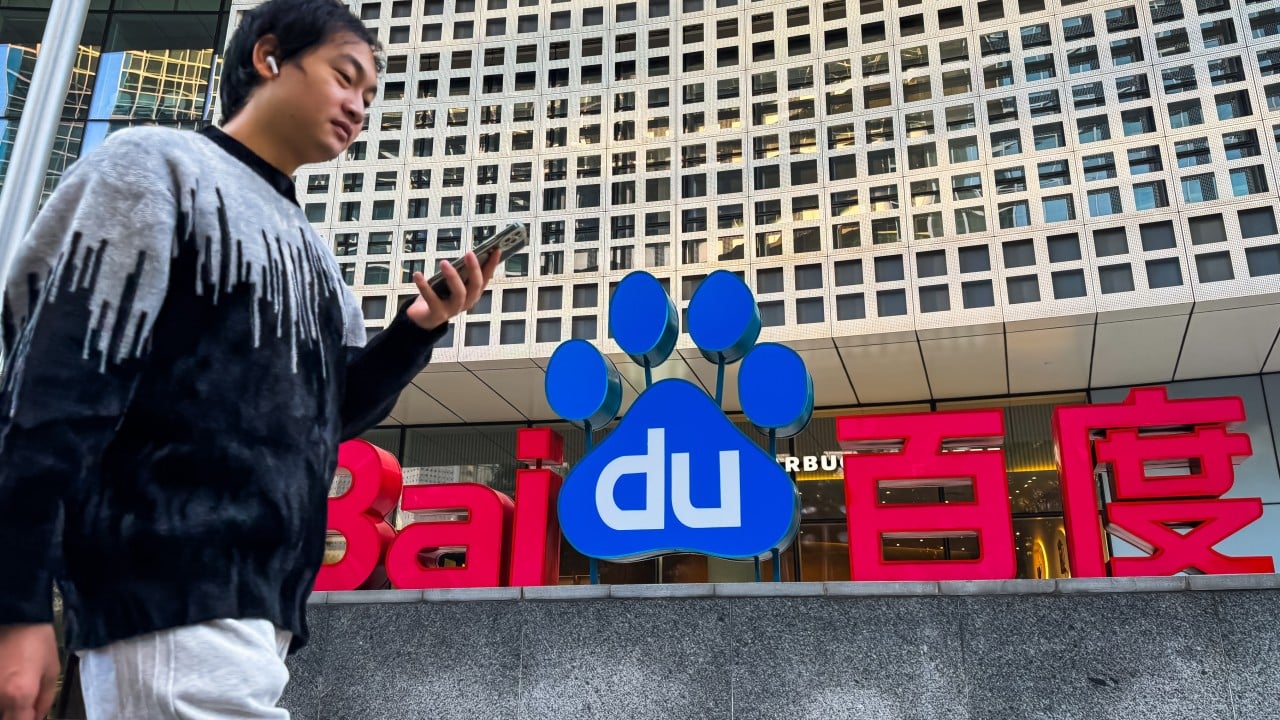
Baidu co-founder Robin Li announced today that artificial intelligence has become the primary driver of the company, with its core AI-powered segments accounting for 52% of its general business revenue for the first time. The headline numbers for the first quarter of 2026 paint a picture of a successful structural pivot. Total revenue hit 32.08 billion yuan ($4.54 billion), beating consensus estimates, while the underlying AI-related revenue surged 49% year-over-year to 13.6 billion yuan. Beneath this surface-level milestone lies a much harsher operational reality. The company posted a fourth consecutive quarter of top-line contraction, with net profit sliding 55% to 3.45 billion yuan, revealing that Baidu is trading its highly profitable legacy search business for capital-intensive, lower-margin cloud plumbing.
Wall Street and regional analysts have frequently praised the rapid growth of the Ernie large language model and the enterprise monetization of Baidu AI Cloud. This enthusiasm overlooks the fundamental accounting dynamics at play. The reason AI now commands the majority of Baidu general business revenue is not just because the AI division grew, but because the traditional high-margin online marketing business is structurally eroding.
The Margin Dilution in the GPU Cloud Boom
A closer look at the financial architecture of Baidu shows where the pressure is building. Online search engines operate on a software-like margin profile. Once the indexing infrastructure is built, serving an extra ad costs almost nothing, creating massive free cash flow. Cloud infrastructure, particularly the graphics-processing unit cloud services that Baidu reported grew 184% this quarter, requires a completely different capital structure.
Data centers demand continuous, massive outlays for silicon, electrical power, and cooling facilities. While AI Cloud revenue jumped 79% to 8.8 billion yuan, the corporate operating margin hovered at just 10%.
The financial trade-off is clear. Every yuan shifted from search advertising to AI cloud infrastructure dilutes overall profitability. The 55% drop in net profit demonstrates that the operational leverage of Ernie 5.1 and enterprise cloud deployments cannot yet cover the capital depreciation and power costs associated with running massive cluster arrays. This is an asset-heavy business replacing an asset-light monopoly.
The Missing Consumer Dollar
The secondary issue facing Baidu is consumer-facing application adoption. While the enterprise side is buying raw compute capacity, application revenue tells a different story.
- AI Applications Revenue: 2.5 billion yuan, remaining entirely flat year-over-year.
- Productivity Tools: The newly launched DuMate agent represents technical progress, but monetization lags.
- The Revenue Gap: Enterprise buyers are renting GPUs to train their own models, but commercial end-users are not yet buying software subscriptions at scale.
This flat performance in applications indicates that Baidu is acting primarily as a hardware landlord rather than an enterprise software provider. Landlords face commoditization risks. As more domestic hardware capacity becomes online across China from competitors like Alibaba and Tencent, the price per GPU hour will compress, threatening the thin margins Baidu currently relies on.
The Structural Decline of Search Advertising
The narrative presented by corporate communications suggests that macroeconomic headwinds in China are the sole cause of weak ad spending. The truth is more permanent. Baidu is facing an irreversible shift in how internet users discover information.
For over two decades, Baidu operated as the absolute gateway to the Chinese web. Today, the digital ecosystem is fragmented into closed ecosystems. Users searching for products look directly inside Alibaba platforms. Users looking for entertainment or lifestyle recommendations go to Xiaohongshu or ByteDance platforms.
Legacy Search Model:
User Input -> Broad Web Index -> Sponsored Links -> Margin Capture (High)

Modern Fragmented Model:
E-Commerce Search -> Monopolized App Ecosystems -> Direct Transaction
Social/Lifestyle Search -> Algorithmic Video Feeds -> Content E-Commerce
This structural fragmentation means that even when the broader consumer economy recovers, search ad budgets will not automatically return to legacy search providers. The legacy engine is shrinking because the open web in China has effectively been replaced by standalone applications.
The Unresolved Costs of Autonomous Mobility
The brightest spot in the earnings report was Apollo Go, which completed 3.2 million driverless rides during the quarter. The service earned widespread recognition, even placing prominently on global innovation rankings alongside Western peers like Waymo.
This operational milestone hides a steep regulatory and financial hurdle. Operating a robotaxi fleet involves substantial localized overhead. Every city requires specific government permissions, custom high-definition mapping, and local maintenance hubs.
Robotaxi Scaling Constraints
+-------------------------+-----------------------------------+
| Operational Milestone   | Structural Bottleneck            |
+-------------------------+-----------------------------------+
| 3.2 Million Rides       | High localized deployment costs   |
| Global Tech Recognition | Regional regulatory variations    |
| Large Vehicle Fleet     | High capital asset depreciation   |
+-------------------------+-----------------------------------+
Autonomous driving cannot scale with the friction-free speed of a software update. It requires physical vehicles on actual roads, making it a capital-intensive transport service rather than a high-margin tech platform. Until full driverless operations can run without remote human safety monitors across hundreds of municipalities simultaneously, the segment will remain a cash drain.
Investors have rewarded the company with a premium price-to-earnings ratio, which currently sits near 80. This valuation is based on the expectation that Baidu will successfully transform into an AI utility provider. The risk is that the market is valuing a capital-heavy hardware and transport business using the valuation multiples of a high-margin software monopoly. The latest quarterly numbers show that the transformation is occurring, but the financial rewards are becoming thinner, more expensive, and far more difficult to sustain.