When the International Court of Justice confirmed that Myanmar committed genocide against the Rohingya, human rights groups immediately demanded sweeping new economic sanctions against the ruling military junta. That predictable call misses the real story. International courts have finally attached the heaviest legal label in human history to the 2017 clearance operations in Rakhine State, yet the financial enforcement tools meant to punish the Tatmadaw remain porous, fragmented, and easily bypassed through regional banking corridors. A historic legal victory at The Hague does not automatically freeze a single dollar in Naypyidaw.
The gap between judicial condemnation and actual financial pain has defined international diplomacy for decades. Rights organizations want total isolation of the junta's revenue streams, targeting state-owned enterprises, aviation fuel suppliers, and offshore natural gas revenues. Those demands collide directly with geopolitical reality in Southeast Asia, where neighboring powers treat Myanmar not as a pariah to be starved, but as an essential strategic corridor for energy pipelines, rare earth minerals, and Indian Ocean access. Meanwhile, you can read other events here: The Ghost at the Dover Border and the Quiet Return of the Brexit Question.
Why the Hague Ruling Changes the Legal Math
For years, diplomats and legal scholars debated whether the atrocities committed against the Rohingya met the extraordinarily high threshold of the 1948 Genocide Convention. Proving dolus specialis—the specific intent to destroy a national, ethnical, racial, or religious group in whole or in part—is notoriously difficult in international law. War crimes and crimes against humanity require proving systematic attacks or violations of the laws of war. Genocide requires proving what was inside the minds of the commanders who ordered the villages burned.
The International Court of Justice cleared that hurdle. Brought forward by The Gambia on behalf of the Organization of Islamic Cooperation, the case forced the court to weigh satellite imagery, UN fact-finding missions, survivor testimonies, and the junta's own public statements. By ruling that Myanmar breached its obligations under the Genocide Convention, the court stripped away the diplomatic ambiguity that regional governments had used to justify business as usual. To see the complete picture, we recommend the recent article by NPR.
Under international law, a genocide determination triggers a legal duty for all state parties to the convention to prevent and punish the crime. That duty is not optional. Governments that continue to supply weapons, dual-use technology, or financial clearing services to an entity judged responsible for genocide face heightened legal exposure themselves. Corporate boards in Europe, North America, and parts of Asia suddenly have to calculate whether doing business with Myanmar's state conglomerates carries complicity risks that no compliance department can insure away.
The Anatomy of the Junta's Survival Economy
To understand why rights groups are screaming for targeted sanctions right now, you have to look at how the Myanmar military funds itself. The Tatmadaw is not a conventional army dependent on parliamentary budget appropriations. It is a sprawling, vertically integrated business conglomerate that happens to own fighter jets and artillery.
For decades, military-controlled holding companies—most notably Myanma Economic Holdings Limited (MEHL) and the Myanmar Economic Corporation (MEC)—have dominated the country's most lucrative sectors. Mining, telecommunications, banking, brewing, jade extraction, and real estate all feed directly into off-budget military accounts. When Western nations imposed initial rounds of sanctions following the 2021 coup and earlier Rohingya crackdowns, they targeted these conglomerates and specific generals.
The junta adapted quickly.
The Gas Revenue Lifeline
Natural gas remains the single largest source of legitimate foreign currency for the military regime. Offshore fields in the Andaman Sea, such as Yadana and Zawtika, generate hundreds of millions of dollars annually in royalties, taxes, and production-sharing revenues paid into the Myanma Oil and Gas Enterprise (MOGE).
Western energy giants like TotalEnergies and Chevron eventually exited Myanmar under intense public and shareholder pressure. Their departure did not shut off the taps. Instead, state-backed Asian energy firms and regional operators absorbed the equity stakes, keeping the gas flowing to Thailand and China. While the United States and the European Union eventually moved to restrict financial transactions involving MOGE, regional buyers continued paying for the gas using alternative currency arrangements and non-Western banking intermediaries.
The Aviation Fuel Supply Chain
If natural gas pays the bills, aviation fuel keeps the military in power. Facing widespread armed resistance across the country, the junta has relied heavily on indiscriminate airstrikes against civilian towns, schools, and clinics. Those fighter jets and helicopter gunships cannot fly without imported Jet A-1 fuel.
Investigations by amnesty organizations and independent researchers revealed a complex web of maritime shipping, shell companies, and storage facilities bringing aviation fuel into Yangon's ports. Even after Western governments sanctioned specific suppliers and shipping insurers, shipments continued via ship-to-ship transfers in international waters and opaque intermediaries registered in jurisdictions with lax corporate transparency laws. Cutting off that fuel supply requires secondary sanctions that penalize any bank, port operator, or insurer anywhere in the world that touches the cargo.
Where Sanctions Routinely Fail
Calling for sanctions is easy. Making them bite is an entirely different discipline.
Sanctions work best when the target economy is deeply integrated into the US dollar and Euro clearing systems, and when neighboring states cooperate with border enforcement. Myanmar meets neither condition. Decades of prior isolation taught the military's financial architects how to operate in the shadows, relying on cash couriers, informal value transfer networks known as hundi, and bilateral trade conducted in Chinese yuan, Thai baht, and Indian rupees.
Consider a hypothetical scenario illustrating how a sanctioned state enterprise moves money. Suppose a military-linked timber or gem exporter needs to purchase spare parts for heavy machinery. Rather than wiring US dollars through a correspondent bank in New York—where automated compliance filters would immediately freeze the funds—the exporter sells raw jade to a broker across the northern border in exchange for yuan deposited into a regional trading account. That broker then pays a third-party logistics firm in Singapore or Dubai, which invoices the machinery parts as agricultural equipment and ships them overland. No Western bank ever sees the transaction. No sanctions list is triggered.
This is the daily reality of sanctions evasion in Southeast Asia. When rights groups urge Western capitals to "tighten the noose," they often run up against the hard limits of Western financial reach. Washington and Brussels cannot unilaterally freeze assets held in state-owned banks in Beijing, Bangkok, or New Delhi unless they are willing to trigger major diplomatic and trade crises with those governments.
The Geopolitical Wall Around Naypyidaw
The hardest truth surrounding the ICJ ruling is that the countries with the greatest economic leverage over Myanmar have the least interest in using it to enforce human rights norms.
China shares a rugged, 2,100-kilometer border with Myanmar. For Beijing, stability along that frontier—and uninterrupted access to the China-Myanmar Economic Corridor, which gives landlocked western Chinese provinces direct pipeline and port access to the Bay of Bengal—trumps every other consideration. Beijing has consistently shielded the junta from binding arms embargoes and referral to the International Criminal Court at the UN Security Council. While China has occasionally tolerated or even leveraged ethnic armed organizations along its border to pressure the junta over cross-border scam centers, it has zero appetite for a total collapse of the Myanmar state that could bring a pro-Western government to its doorstep.
India faces a similar strategic calculation. New Delhi views Myanmar as a vital buffer against Chinese influence in the Bay of Bengal and a critical partner in suppressing insurgent groups operating in India's remote northeastern states. India's Kaladan Multi-Modal Transit Transport Project, designed to connect Kolkata to Mizoram via Myanmar's Sittwe port in Rakhine State, runs directly through the region where the Rohingya genocide took place. New Delhi will not jeopardize billions of dollars in strategic infrastructure to enforce a Western sanctions regime.
Then there is ASEAN. The Association of Southeast Asian Nations remains paralyzed by its founding principle of non-interference. While Indonesia, Malaysia, and Singapore have voiced sharp frustration with the junta's brutality and failure to implement the bloc's Five-Point Consensus, Thailand and Vietnam maintain deep commercial and security ties with Naypyidaw. Without unified regional backing, Western sanctions remain an incomplete perimeter—a fence built across half a field.
The Quiet Collateral Damage Nobody Wants to Admit
Veteran sanctions analysts know a dirty secret that rarely makes it into human rights press releases. Broad financial sanctions frequently hurt ordinary citizens long before they topple generals.
When international banks de-risk an entire country to avoid accidental violations, legitimate businesses suffocate. Garment factories in Yangon—which employ hundreds of thousands of young women—lose access to letters of credit from foreign buyers. International aid agencies struggle to wire funds into the country to pay local staff, buy medical supplies, or feed displaced families in Rakhine State. The local currency, the kyat, collapses in value, driving up the cost of basic staples like rice, cooking oil, and medicine.
Meanwhile, the military elite insulates itself. Generals control import licenses, monopolize fuel distribution, and extract rents from illicit economies—including methamphetamine production, illegal rare earth mining, and industrial-scale online fraud compounds—that thrive precisely when legitimate economic avenues are shut down. In a criminalized war economy, sanctions can inadvertently strengthen the military's hand by destroying the independent private sector that might otherwise fund political opposition.
This does not mean sanctions are useless. It means blunt instruments fail where surgical financial warfare is required.
What Actual Enforcement Would Look Like
If governments want the ICJ genocide ruling to carry real consequences beyond diplomatic speeches, they have to abandon performative blacklists and target the specific plumbing that keeps the junta's war machine running.
First, enforcement agencies must shift from sanctioning individuals to sanctioning financial networks and enablers. Naming another dozen generals on a Treasury list achieves nothing if those generals do not hold assets in Western jurisdictions. Targeting the specific regional banks, insurance underwriters, maritime registries, and corporate service providers that facilitate aviation fuel imports and arms purchases forces commercial actors to choose between doing business with the junta or maintaining access to global financial markets.
Second, Western capitals must coordinate enforcement with the compliance departments of major Asian financial hubs, particularly Singapore. For years, Singapore served as a primary banking and procurement hub for Myanmar's military elite and their cronies. Under sustained diplomatic pressure and scrutiny from investigative journalists, Singaporean authorities and banks began tightening due diligence and closing accounts linked to the junta. Expanding that model to other regional transit and financial centers is far more effective than issuing new unilateral decrees from Washington.
Third, governments must treat the Genocide Convention's duty to prevent as a binding legal trigger for corporate accountability. In Europe, new supply chain due diligence laws allow prosecutors and civil society groups to hold companies legally liable if they fail to prevent severe human rights abuses in their value chains. A formal ICJ genocide judgment turns voluntary corporate social responsibility into hard legal liability for any multinational firm buying rare earths, timber, or garments sourced from military-controlled entities.
The Justice Deficit in Cox's Bazar
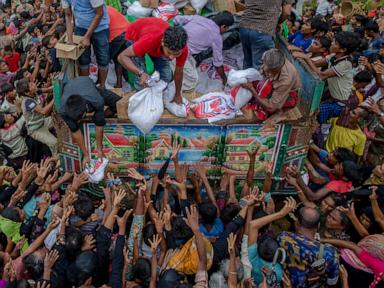
While diplomats debate sanctions mechanics and legal scholars dissect the ICJ's prose, more than a million Rohingya refugees remain trapped in sprawling bamboo-and-tarpaulin camps across the border in Cox's Bazar, Bangladesh.
They have lived in legal limbo since August 2017, when the Tatmadaw launched systematic clearance operations that killed thousands, burned hundreds of villages to the ground, and drove over 700,000 people across the Naf River in a matter of weeks. They cannot legally work in Bangladesh. Their children have limited access to formal education. International food rations have been repeatedly cut as donor fatigue sets in and global humanitarian budgets are stretched thin by crises in Ukraine, Gaza, and Sudan.
For the survivors in those camps, the ICJ ruling offers profound moral validation. The world's highest court officially recognized what happened to them as genocide, shattering years of military propaganda that painted them as illegal immigrants and terrorists.
Yet recognition does not buy rice, restore citizenship, or make Rakhine State safe for their return. Today, Rakhine State is a active warzone, largely overrun by the ethnic Rakhine Arakan Army, which has routed junta forces across much of the region while maintaining a deeply fraught, often violent relationship with the remaining Rohingya population. Safe, voluntary, and dignified repatriation remains a distant fantasy.
The ICJ ruling has closed the book on historical denial, proving beyond legal dispute what the Myanmar military did to the Rohingya, even as the global financial system proves it still lacks the will to make the perpetrators pay.