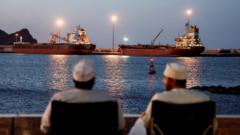
Merchant sailors are breaking. Right now, hundreds of crew members are trapped on commercial vessels anchored in and around the Persian Gulf, casualties of the ongoing Strait of Hormuz blockade. They didn't sign up for a geopolitical chess match. They signed up to move cargo.
While shipping executives calculate insurance premiums and supply chain analysts chart rerouting delays, the men and women on board are facing severe psychological decay. Months of isolation, constant drone threats, and arbitrary detentions have turned commercial ships into floating pressure cookers.
The maritime industry likes to talk about resilience. It likes to call seafarers the invisible backbone of global trade. But right now, that backbone is fracturing. This isn't just a logistics crisis. It's a humanitarian emergency unfolding in plain sight, and the standard industry response is failing the people who matter most.
Life Inside the Floating Pressure Cookers
Imagine living where you work for nine months straight. Now add the constant fear of a missile strike or an armed boarding party. That's the reality for crews stuck near the choke point.
When a blockade freezes shipping lanes, vessels drop anchor in designated waiting areas. Days turn into weeks. Weeks turn into months. The routine becomes mind-numbing, punctuated only by sudden panic when unidentified radar tracks approach.
International maritime regulations stipulate maximum contract lengths for crews, usually capping out at 11 months under the Maritime Labour Convention (MLC). But blockades create legal and physical deadlocks. Port authorities in neighboring regions frequently refuse to allow crew changes for blocked vessels due to security classifications. Sailors are stuck.
The psychological toll builds quietly. Sleep deprivation is rampant. Crews pull extra watches to monitor for waterborne threats or suspicious drones. Fresh food supplies dwindle, forcing cooks to rely heavily on frozen rations and canned goods.
Physical confinement amplifies every minor friction between crew members. On a standard container ship or supertanker, you have roughly 20 to 25 people sharing a steel hull. When you can't go ashore, when your internet access is throttled or completely cut for security reasons, the walls close in fast.
The Severe Shortage of Seafarer Support
The maritime industry has a massive blind spot when it comes to mental health. Shipping companies often point to their employee assistance hotlines. They highlight their corporate wellness initiatives.
Honestly, a helpline phone number is useless when a sailor has zero satellite connectivity because the vessel is operating under an electronic blackout to avoid targeting.
Data from the Seafarers Hospital Society and various maritime welfare charities consistently shows that psychological distress leads to operational errors. A fatigued, terrified navigator makes mistakes. In a high-risk zone like the Strait of Hormuz, a single mistake can trigger an international incident or a environmental catastrophe.
- High anxiety from constant missile and drone alerts.
- Severe depression rooted in indefinite contract extensions.
- Physical exhaustion caused by double-watch schedules.
- Deep resentment toward shore-based management.
Shipowners often treat crews as line-item expenses rather than human beings. When a ship is trapped, the primary focus in corporate headquarters is cargo liability and hull insurance. The crew gets a boilerplate email telling them to stay vigilant. It's insulting.
How Maritime Bureaucracy Abandons Trapped Crews
Why can't these sailors just leave? The answer lies in the tangled mess of international maritime law and flag-state politics.
A massive portion of the global merchant fleet flies flags of convenience. Countries like Panama, Liberia, and the Marshall Islands register ships that have no actual connection to those nations. When a crisis hits, these flag states offer virtually no diplomatic leverage to protect crews. They're paper tigers.
Furthermore, abandonment is a growing loophole. If a shipping company faces financial ruin because its vessel is blocked indefinitely, unscrupulous owners occasionally cut their losses. They stop paying wages. They stop sending provisions. They leave the crew legally bound to the ship because international law forbids abandoning a vessel without a skeleton crew to prevent navigation hazards.
The International Transport Workers' Federation (ITF) regularly battles these cases, but legal interventions take months. Meanwhile, sailors are left begging passing ships for fresh water. It's a archaic system that protects capital while exploiting labor.
Real Security Demands Real Accountability
We need to stop pretending that standard corporate social responsibility policies work during a military blockade. If shipping lines want to operate in high-risk corridors to cash in on elevated freight rates, they must bear the full burden of crew protection.
First, contract enforcement must be absolute. If a sailor hits their contract limit inside a high-risk zone, the shipping company must mandate a crew swap at the nearest safe port, regardless of the operational cost or delay. If local ports refuse, the company needs to leverage diplomatic channels immediately, not three months later.
Second, hazard pay needs to be standardized and significant. It shouldn't require union threats to grant double wages to crews sailing through active conflict zones or sitting ducks in a blockade.
Finally, universal satellite internet access must be classified as a fundamental right for seafarers, not a luxury perk turned off at management's whim. Families at home suffer agonizing silence, not knowing if a relative's ship has been seized or struck. Reliable communication reduces anxiety exponentially.
If you run a shipping company, look at your operational logs today. Check the contract dates of the crews sitting off the coast of Oman or UAE. Don't wait for a crew member to suffer a total breakdown before arranging a relief rotation. Demand that your insurers and charterers prioritize human extraction over cargo salvage. Pass stiffer penalties for flag states that fail to intervene when their vessels are compromised. The shipping industry needs to take care of its own people before the entire system runs out of willing workers.


