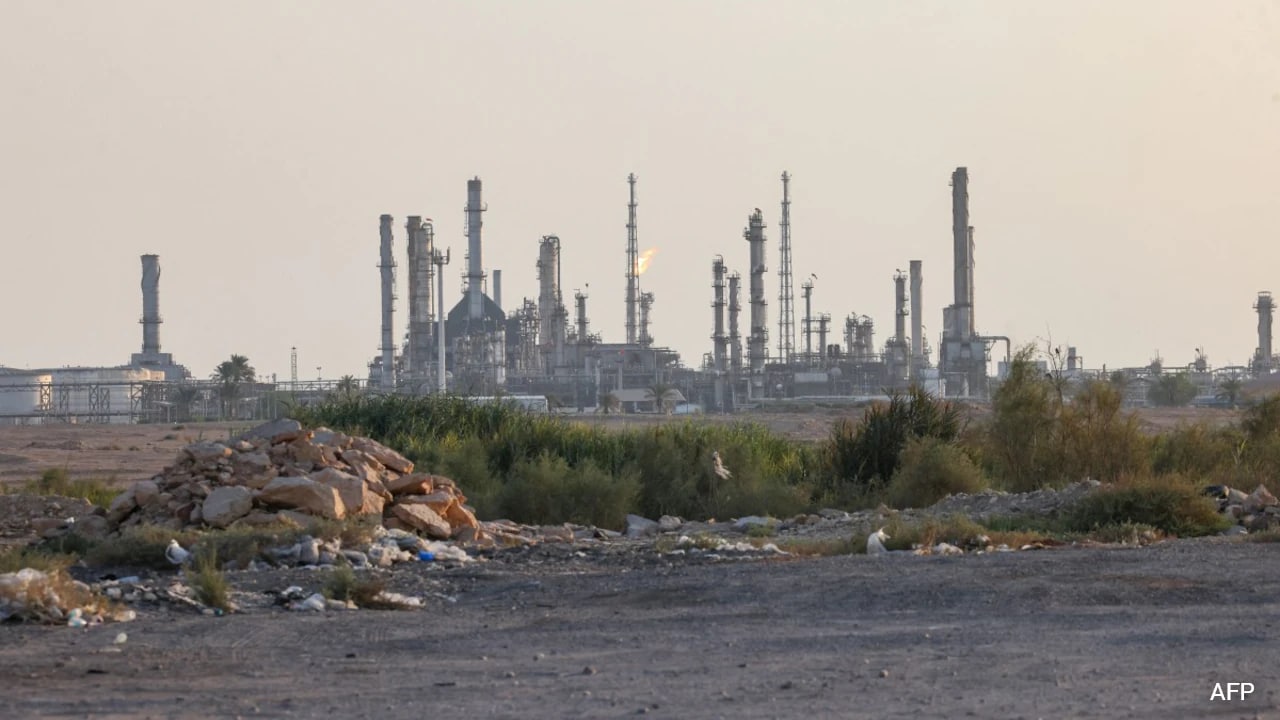
Read a headline claiming Houthis targeted Riyadh, two airports, and Saudi oil facilities, and your stomach drops. You picture burning refineries. Stranded passengers. Oil spiking overnight.
Calm down. Most of what you just read is information warfare dressed up as breaking news.
The lazy consensus in mainstream coverage treats every Houthi press release as a verified strike and every strike as a strategic catastrophe for Saudi Arabia. One side announces a sweeping operation across multiple high-value targets. The other side stays quiet, issues a terse denial, or reveals only fragments. The headline writers rush to stitch the announcement into a narrative of overwhelming reach and mounting vulnerability.
That framing is sloppy. It confuses intent with effect, and it confuses announcement with impact. In asymmetric conflict across long distances, announcing a dozen targets costs nothing. Hitting them cleanly, penetrating layered air defenses, and causing lasting economic damage is a completely different problem.
I have spent years watching supply chain teams, commodities desks, and corporate risk managers blow millions reacting to sensationalized threat alerts instead of measuring physical reality. A client once hedged energy exposure and rerouted logistics based on a dramatic cross-border claim that turned out to involve intercepted drones miles from any critical node. They paid real money for phantom disruption. When you trade or plan off press releases rather than physical damage and operational bottlenecks, you get fleeced every time.
Defining the Real Mechanics of Long-Range Strikes
To read cross-border strike claims without getting played, you have to separate three distinct stages: launch, penetration, and effect.
Most coverage collapses all three into a single word: attacked.
- Launch proves a group fired something—a ballistic missile, a cruise missile, or a one-way attack drone—toward a general direction or coordinate set.
- Penetration means the munition survived detection, jamming, electronic spoofing, and kinetic intercepts to reach the vicinity of its intended target.
- Effect means physical or operational damage actually occurred—a ruptured pipeline, a damaged stabilizer tower, a closed runway, a downed substation, or a prolonged outage.
If a drone is shot down hundreds of kilometers from Riyadh, it was intercepted, not a successful strike on the capital. If a projectile lands in empty desert near an airport perimeter without halting flights, calling it an airport disruption misleads anyone tracking aviation or logistics. If a refinery keeps pumping and exporting on schedule, treating a claim against oil infrastructure as a supply shock ignores how modern energy networks actually absorb blows.
Military analysts and defense economists—figures like Anthony Cordesman, who has tracked Gulf security and missile dynamics for decades, alongside energy market researchers at organizations such as the International Energy Agency—have long pointed out that Gulf infrastructure protection relies on redundancy, hardening, and layered defense, not magic invulnerability. Even when individual systems face pressure, physical infrastructure is rarely a single point of failure.
Why Airports and Oil Facilities Are Harder to Break Than Headlines Imply
When headlines lump Riyadh, two airports, and oil facilities into one sentence, they create an illusion of synchronized devastation. Look closer at each target category and the picture changes.
Aviation Hubs and Airspace Reality
Major international airports in Saudi Arabia—such as King Khalid International in Riyadh, King Abdulaziz International in Jeddah, or regional hubs—operate inside heavily monitored airspace with strict air traffic control protocols and defense buffers. Even brief airspace holds or precautionary diversions are major operational events, and airlines hate uncertainty. Yet a claim that an airport was "targeted" is not the same as a closed hub or destroyed terminal. Runways can be repaired quickly if damaged, and commercial aviation routinely adapts to temporary holds unless sustained, accurate fire makes operations untenable.
Oil Infrastructure and Redundancy
Oil facilities sound fragile until you look at how oil actually moves. Crude production, processing, domestic distribution, and export terminals are sprawling, interconnected systems. Historically, even dramatic strikes on Saudi energy assets—most famously the September 2019 attacks on Abqaiq and Khurais—caused sharp initial shockwaves followed by faster-than-expected recovery because of spare capacity, storage buffers, rerouting options, and rapid repair engineering.
Imagine a scenario where a strike claim names Riyadh, two airports, and two oil sites all at once. On paper, that sounds like a coordinated blitz. In reality, long-range drones and missiles face wildly different flight times, fuel limits, radar signatures, and intercept envelopes depending on their launch points and trajectories. Claiming a multi-site barrage is easy. Achieving simultaneous, high-impact hits across dispersed, defended targets is brutal.
That is why hype and reality diverge so often. A single headline gives equal weight to a near-miss in open sand and a direct hit on a critical manifold. Markets and executives who treat every claim as a confirmed hit end up overreacting to noise and missing real signals.
The Questions People Actually Ask—and Why They Miss the Point
When news like this breaks, search engines fill up with predictable questions. Most of them start from a flawed premise.
Did the Houthis actually hit Riyadh, the airports, and the oil facilities?
Asking "Did they hit them?" as a yes-or-no question is already a trap. A better question is: What was launched, what was intercepted, what struck near a perimeter, and what suffered verified damage? Until independent satellite imagery, official operational updates, commercial flight data, or verified infrastructure reports confirm impact, a claim is just a claim. Treating an unverified claim as established fact hands propaganda free credibility.
How badly will this disrupt Saudi oil supply and global prices?
People ask this expecting an immediate math formula: strike announced = barrels lost = price spike. Real oil markets do not work that cleanly. Prices react first to fear, risk premiums, and headline velocity, then adjust to actual physical flows, spare capacity, inventory levels, and broader macroeconomic demand. A sharp intraday jump on a dramatic claim often fades once traders see no sustained barrel loss. Conversely, quiet, repeated attrition or real damage to specific export choke points matters far more than loud rhetoric.
Why do these claims keep happening if defenses intercept so many attacks?
Because the goal is not always physical destruction. Psychological pressure, domestic morale, regional signaling, and forcing an adversary to spend expensive interceptors against cheaper drones are core parts of asymmetric strategy. Even a failed or mostly intercepted salvo generates headlines, tests reaction times, and keeps tension elevated. Judging a campaign solely by physical damage misses its information value; judging it solely by press releases misses its physical limits.
The Downside of Being Skeptical
Taking a cold, skeptical stance toward dramatic strike claims has real risks. You can underreact if you become too dismissive.
Sometimes a claim precedes—or accompanies—a genuine hit that takes hours or days to verify. Fog of war cuts both ways: early denials or incomplete disclosures happen, especially around sensitive security or energy sites. If you wave off every warning as pure theater, you can get caught flat-footed when a real operational disruption occurs.
That is the trade-off. Overreacting to every headline wastes money and triggers panic. Ignoring every warning leaves you blind to genuine escalation. The discipline is staying calm without becoming careless—demanding confirmation before acting, while still maintaining sensible contingency plans for volatile regions.
What You Should Actually Do When the Next Headline Hits
Skip the doomscrolling and run a tighter filter before making any business, travel, or financial move.
- Separate the claim from the confirmation. Treat an announcement of targeted sites as an assertion, not a battle damage assessment. Wait for corroborating signals such as verified imagery, flight status changes, or confirmed infrastructure impacts.
- Track operational metrics, not adjectives. Words like massive, crippling, or sweeping tell you nothing. Look at whether flights are actually delayed or diverted, whether ports or terminals are operating normally, and whether physical supply chains face real bottlenecks.
- Audit your exposure to false alarms. Check whether your team, portfolio, or travel plans overreact to geopolitical headlines. Build buffers where real physical risk exists, and stop paying a "headline tax" on unverified noise.
Headlines sell urgency. Verified facts pay off. Check what actually got hit before you move a dime.