If you watch how information moves across the globe today, you notice a massive trust deficit. Governments want control. Audiences want authenticity. And journalists caught in the middle usually get crushed.
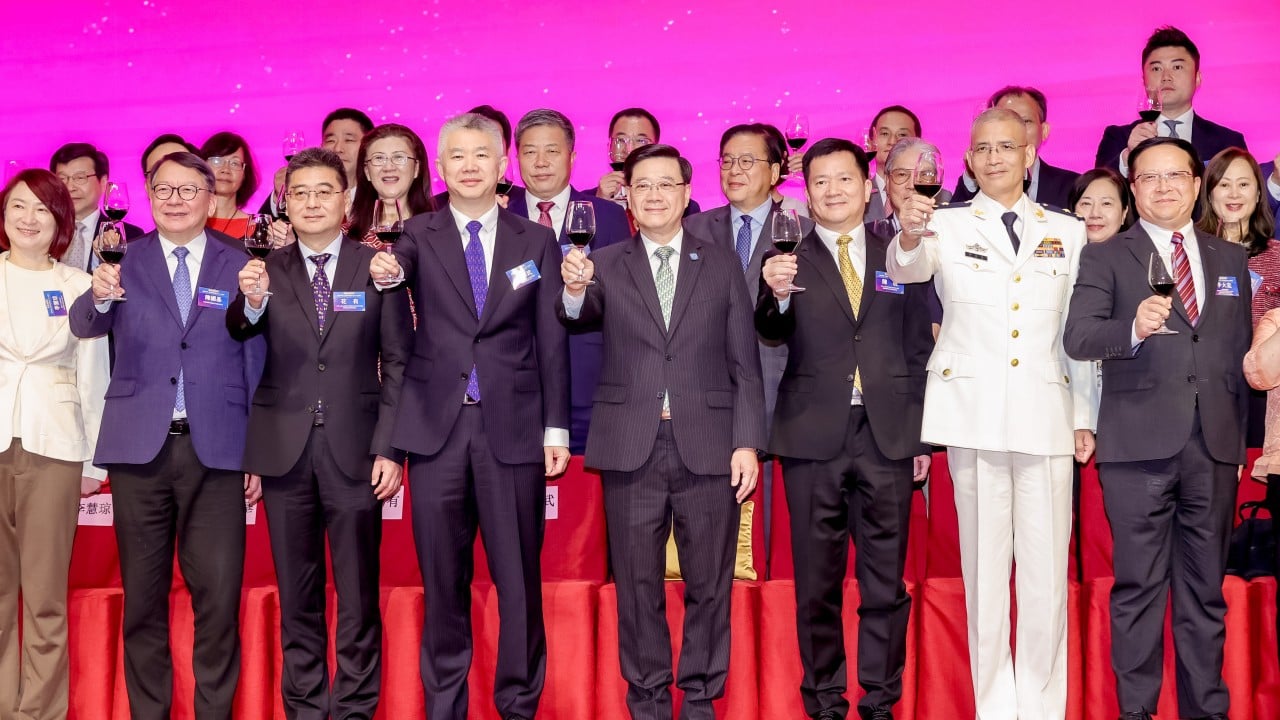
When Hong Kong's Chief Executive John Lee stepped up to address local media executives recently, his message wasn't subtle. He pushed two distinct imperatives for the city's press corps: safeguard the truth and expand global reach. On paper, it sounds like standard bureaucratic guidance. In practice, it hits a wall of compounding geopolitical tension, shifting audience habits, and a severe crisis of credibility that stretches far beyond Victoria Harbour.
You can't talk about Hong Kong media without confronting the elephants in the room. Press freedom rankings have shifted dramatically over the last few years. National security legislation reshaped editorial lines. Newsrooms that once operated with wild-west abandon now tread carefully, self-censoring or simply shutting down. Yet, Lee's mandate points toward an ambitious goal. He wants local outlets to punch above their weight, cutting through international noise to tell stories that resonate worldwide.
Can they actually pull it off? Or is projecting a compelling global narrative impossible when domestic trust is fractured?
Let's look at what's really happening on the ground.
The Global Reach Problem
Everyone wants international attention. Few achieve it.
Hong Kong has unique cards to play. It sits at a historic crossroads between East and West. It has world-class financial infrastructure, bilingual talent pools, and deep roots in international commerce. For decades, English-language and Chinese-language outlets based in the city supplied vital intelligence to Wall Street, London, and Tokyo.
That advantage is eroding fast.
When international audiences tune into Hong Kong news today, they're looking for signs of life, business agility, and cultural vibrancy. But they're also hyper-vigilant about state influence. If a publication avoids tough questions or glosses over structural economic shifts, global readers tune out instantly. Credibility online works on a binary scale. You either have it or you lose it permanently.
Expanding global reach isn't about setting up more social media accounts or translating articles into five languages. It requires radical transparency. If Hong Kong media wants international eyeballs, outlets have to report on complex domestic realities—housing crunches, emigration waves, startup struggles, and regulatory adjustments—with zero sugar-coating. Readers outside the city smell spin from miles away.
Guarding the Truth in an Age of Noise
John Lee emphasized safeguarding the truth. That sounds great in a keynote speech. Daily journalism is messy.
Truth isn't just about avoiding outright lies. It's about context, pacing, and resisting the urge to amplify cheap propaganda. Local newsrooms face relentless pressure from multiple directions. Beijing wants positive narratives about national integration and the Greater Bay Area. Western critics want cautionary tales about declining autonomy. Local citizens just want to know why rent is astronomical and whether their kids can find good jobs.
Navigating this crossfire requires ironclad editorial discipline.
Think about how major financial or cultural stories break. A rumor hits a messaging app. Within minutes, it trends globally. Traditional outlets panic, rushing to publish unverified angles just to keep up with algorithms. That is where the truth dies.
Real truth-guarding means slowing down. It means verifying primary sources, looking at underlying data, and ignoring the Twitter mob. Hong Kong journalists have deep institutional knowledge that foreign correspondents often lack. They understand the subtext of policy announcements. They know the corporate networks. If they channel that insider expertise into meticulous, fearless reporting, they don't just protect the truth—they become indispensable to global markets that desperately need accurate signals.
The Economic Trap Facing Newsrooms
You can't do elite journalism on an empty stomach.
The dirty secret of modern media is that idealism dies without a sustainable revenue model. Print circulation is dead. Digital advertising dollars flow directly to tech monopolies, leaving local publishers fighting over scraps.
When revenue collapses, newsrooms shrink. When newsrooms shrink, investigative reporting vanishes, replaced by rewritten press releases and lifestyle fluff.
If Hong Kong media outlets want to build a sustainable international footprint, the business model must change. Relying on government subsidies or traditional ad dollars won't cut it. Outlets must build direct-to-consumer models based on specialized value. Think high-end data analysis on Asian supply chains, exclusive insights into mainland tech developments, or deep dives into luxury markets and wealth management.
Audiences pay for what they can't get anywhere else. If local media produces generic summaries of global news agencies, nobody in New York or Singapore will pay a dime.
What Leadership Expects Versus What Audiences Demand
There's a persistent disconnect between political expectations and audience behavior.
Political figures want media to act as a bridge—explaining policies, building confidence, and projecting stability. Audiences want media to act as a mirror—reflecting their daily frustrations, holding power accountable, and asking the uncomfortable questions.
Bridging that gap is the central challenge for every editor currently running a newsroom in the city.
Ignoring the tension won't make it disappear. Outlets that lean too far into purely promotional coverage lose all international standing. Outlets that ignore local regulatory realities risk immediate closure. Survival demands a masterclass in nuance. It means finding the stories where public interest and official priorities genuinely intersect—such as economic diversification, green energy transitions, and technological innovation.
There's plenty of incredible innovation happening in Hong Kong right now. Biotech labs in the Science Park are building breakthroughs. FinTech startups are scaling across Southeast Asia. Artists are finding new ways to blend traditional Cantonese culture with modern digital mediums. These aren't political flashpoints. They are compelling human stories waiting for world-class storytellers.
Moving Past the Rhetoric
The directive has been issued. The expectations are clear. Now comes the hard part of execution.
If Hong Kong media wants to command global respect, it has to stop worrying about external perception campaigns and focus entirely on the quality of the work. Write tighter sentences. Chase original scoops. Refuse to publish unverified fluff. Treat readers with intelligence rather than treating them as targets for persuasion.
Truth isn't protected by slogans. It's protected by relentless questioning, deep verification, and the courage to print facts that make powerful people uncomfortable. That standard applies whether you're reporting from London, New York, or Hong Kong. The outlets that figure this out will survive the decade. The rest will become footnotes in someone else's broadcast.