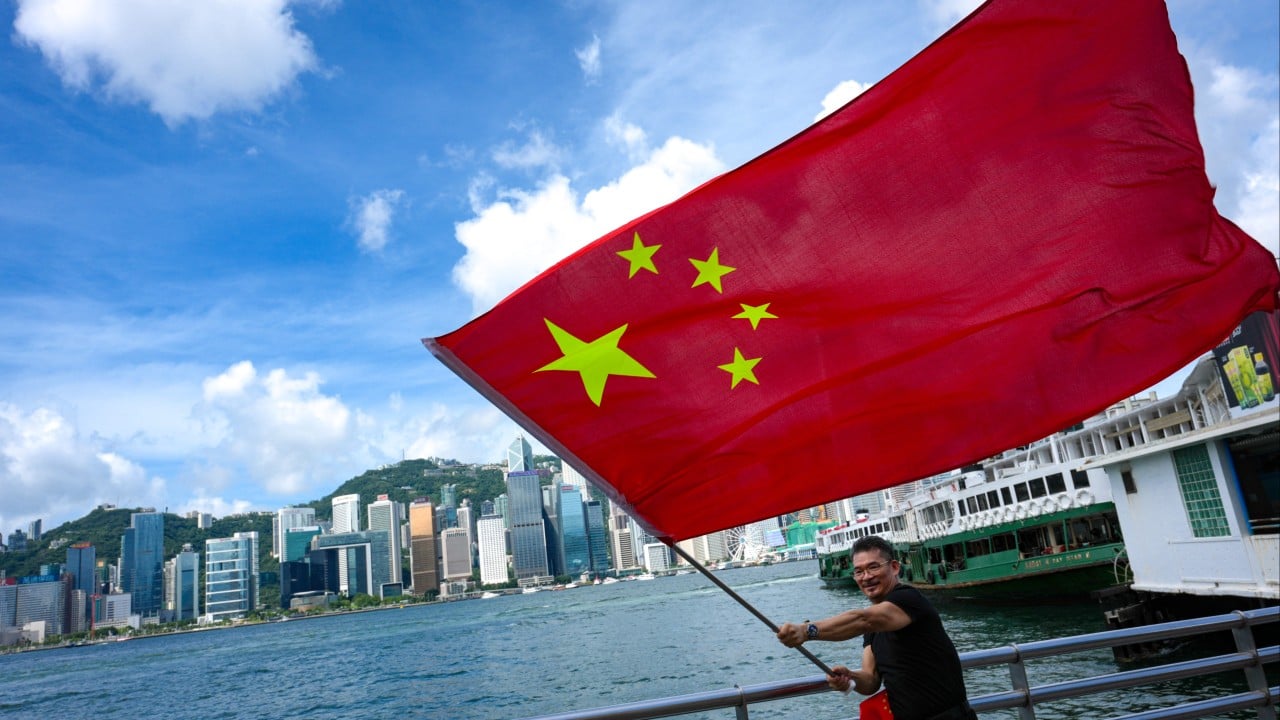
If you walked through the streets of Hong Kong a decade ago, the idea of the city officially hosting mass celebrations for the founding anniversary of the Communist Party of China would have seemed highly improbable. Times change. On July 1, 2026, the city didn't just acknowledge the party's 105th anniversary. It integrated the event into its civic calendar with a massive launch ceremony at the Hong Kong Convention and Exhibition Centre, flanked by synchronized events across all 18 districts.
Why is a city known for its capitalist roots and British common law heritage celebrating a communist milestone with such fervor?
The answer is straightforward. It comes down to stability and a permanent shift in how Hong Kong defines its survival. After years of political volatility, local authorities and the business community view visible alignment with Beijing as the baseline for economic predictability. The days of keeping the ruling party at arm's length are over. Today, public celebration is a policy tool used to signal that the city is secure, open for business, and fully aligned with the mainland.
The Shift From Distance to Direct Alignment
For more than two decades after the 1997 handover, Hong Kong operated under a unspoken rule. The city belonged to China, but the Communist Party stayed mostly backstage. Local officials rarely mentioned the party by name.
That dynamic broke permanently around the turn of the 2020s. Following the massive social unrest of 2019, Beijing decided that political ambiguity was a structural vulnerability. The introduction of the National Security Law in 2020 and the Safeguarding National Security Ordinance changed the rules.
Local leadership now openly credits the party for saving the city from chaos. Chief Executive John Lee made this explicitly clear during his speech at the anniversary event, noting that the country provides fundamental safeguards for the city. Celebrating the party isn't an afterthought anymore. It's a core component of local governance.
By putting the party center stage, Hong Kong's administration is sending a clear message to domestic critics and international observers. The political debate about the city's direction is finished. The current system is locked in, and integration with the mainland is the only path forward.
What Political Predictability Means for Global Capital
International headlines frequently argue that increased mainland control hurts Hong Kong's status as a financial hub. The data on the ground shows a more complicated picture. Business leaders hate unpredictability. The protests of 2019 paralyzed the city center, shuttered retail sectors, and made long-term corporate planning impossible.
For the international financial community, the current political setup offers a different kind of certainty. You might not agree with the politics, but you know exactly where the boundaries are.
Consider the current economic metrics. Hong Kong secured third place in the latest Global Financial Centres Index. The city also regained its position as the world’s freest economy in the Fraser Institute’s Economic Freedom of the World report. Furthermore, it holds the 24th spot globally in the World Justice Project Rule of Law Index.
These numbers don't lie. They show that despite the political evolution, the city’s underlying commercial infrastructure remains incredibly strong. Capitalist markets require a functioning court system, capital mobility, and physical safety. The current administration uses party anniversary events to remind global investors that the political foundation is stable enough to guarantee those economic privileges.
Incorporating Patriotic Education and the Next Generation
The 105th anniversary events aren't limited to banquet halls filled with politicians and tycoons. They are explicitly designed to reach the broader public through practical education initiatives.
The Education Bureau integrated the party’s anniversary directly into the National Education Event Planning Calendar for the current school year. This means students aren't just learning abstract history. They are studying the specific steps the party took to develop modern China.
To make this message stick, the government isn't relying on old political texts. They are using themes that resonate with modern teenagers and young adults. Throughout July and August, the city is rolling out interactive exhibitions focused on two major areas.
- Aerospace Achievements: Highlighting China's space station program and Hong Kong's role in selecting local payloads and specialists.
- Green Transition: Showcasing the mainland's massive investments in renewable energy and how local engineering firms contribute to those goals.
Focusing on technology and environmental sustainability helps the government shift the conversation. It moves the narrative away from historical grievances and toward future career opportunities within the broader Chinese economy.
Redefining One Country Two Systems
During the anniversary gathering, General Secretary Xi Jinping emphasized that maintaining long-term prosperity in Hong Kong is essential for national rejuvenation. He reiterated that the framework of one country, two systems remains an unwavering policy.
There's a subtle but crucial distinction in how this framework is interpreted now compared to the past. Previously, the emphasis in Hong Kong was almost entirely on "two systems." People wanted to know how different the city could remain from Shenzhen or Shanghai.
Now, the priority is firmly on "one country."
The administration views Hong Kong’s future not as an isolated island, but as a superconnector. The city's value lies in its ability to bridge mainland capital with global markets. With the rollout of the 15th Five-Year Plan running through 2030, Hong Kong is being woven directly into national development strategies. If the city wants to solve its deep-seated domestic issues, like the chronic housing shortage, it needs the economic momentum generated by this integration.
How to Navigate the New Hong Kong Environment
If you are running a business, managing investments, or analyzing regional policy, you have to look past the political theater. The high-profile celebrations aren't going away. They are a permanent fixture of the civic landscape.
To operate successfully in this environment, you need to adjust your strategy to match the current reality.
First, track the policy cycles coming out of Beijing just as closely as you track local Hong Kong regulations. Understand how the 15th Five-Year Plan impacts your specific sector, whether you are in logistics, finance, or technology.
Second, utilize the geographic advantages of the Greater Bay Area. The infrastructure connecting Hong Kong to Shenzhen and Guangzhou is designed for high-speed economic cross-pollination. Companies that position themselves to serve both international clients and mainland enterprises will find the most success.
Third, accept the new compliance standards. The legal framework is clear, and the boundaries regarding national security are strictly enforced. Focus your corporate communications on operational efficiency, technological innovation, and economic contribution, which are the metrics that local and central authorities value most.