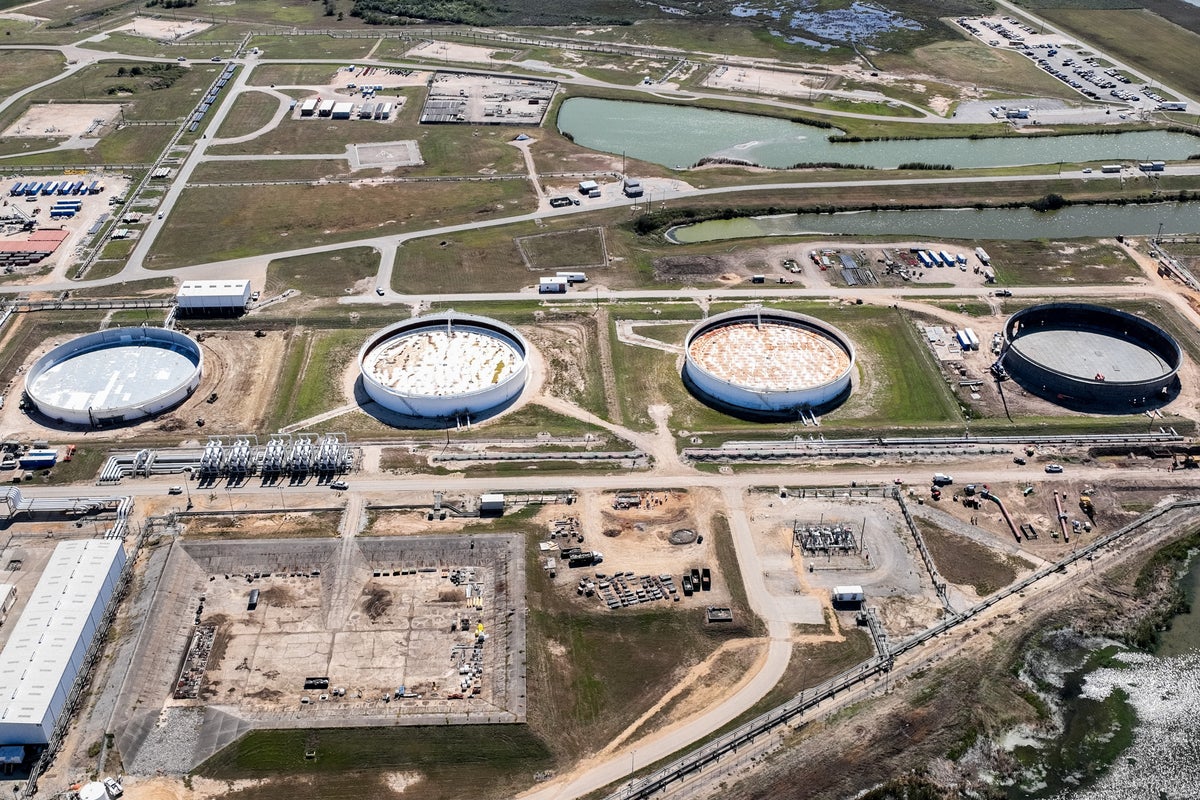
The Strategic Petroleum Reserve sits at its lowest point since the early 1980s. Beneath the Gulf Coast, sixty salt caverns once hailed as an impenetrable fortress of energy security now face an existential technical crisis. As government drawdown orders continue to meet the demands of an unpredictable global conflict with Iran, the physical integrity of these storage sites has reached a point of observable degradation. We are no longer discussing mere supply management. We are talking about the potential permanent scarring of the very infrastructure designed to protect the nation from total energy collapse.
Engineers have long understood the basic mechanics of salt dome storage. You pump oil in, it displaces the brine, and you wait for a crisis. However, the system relies on a delicate balance of pressure and structural density. When these caverns are aggressively emptied, they do not simply remain inert voids. They are susceptible to inward deformation, where the walls begin to sag or collapse under the immense geological pressure of the surrounding earth. Furthermore, as inventory levels plummet, the depth of the oil column shrinks. This brings extraction pipes perilously close to the bottom, where sediment, sludge, and mineral deposits accumulate over decades.
At the current levels, the reserve is dancing on a razor’s edge. If we draw the volume down toward the reported danger zone of 70 million barrels, we risk pulling that contaminated bottom-sludge directly into the nation’s distribution pumps. This would not just slow down the flow of emergency oil; it would physically ruin the delicate valve assemblies and piping that form the backbone of the withdrawal process. A compromised cavern does not easily recover. Repairing a sub-surface void thousands of feet underground requires massive capital investment and years of geological stabilization, assuming it can be returned to operational status at all.
The political framing of these drawdowns often ignores the physical reality. While policy makers argue over the necessity of market interventions to keep prices at the pump from soaring, the technical reality of the infrastructure is often relegated to a footnote. The government has attempted to manage this by cycling oil, yet the cyclical nature of these withdrawals has accelerated the structural wear on the domes. Every time we pull oil out and replace it with fresh water to manage pressure, we dissolve a fraction more of the salt walls. Over forty years of usage, this process has widened the caverns beyond their original engineered specs, thinning the protective barriers between them.
This creates a hidden contagion risk. As the caverns expand, the space between them inside the salt domes narrows. If the thinning continues, the risk of a breach between adjacent chambers rises. This could lead to a catastrophic loss of containment, rendering massive swaths of the reserve inaccessible. Relying on these sites as a backstop for a prolonged conflict is a strategy built on diminishing returns. We are essentially betting the national supply chain on the assumption that a system held together by aging pumps and deteriorating geology can withstand the strain of constant, rapid-fire withdrawals.
The conflict in the Persian Gulf has forced the United States into a corner where domestic energy supplies are being traded for immediate price relief. While the administration claims the reserves are being managed as a national security asset, the reliance on the Strategic Petroleum Reserve to mask the inflationary pressures caused by the Iran war has turned a strategic insurance policy into a high-risk gamble. We are burning our savings to buy time in a market that remains sensitive to any twitch in the Strait of Hormuz.
There is a false sense of security in the idea that the oil is just sitting there, waiting to be used. In reality, the oil is part of a complex, living physical system that is currently being taxed beyond its design. If a major hurricane hits the Gulf Coast or if the conflict in the Middle East escalates to a point where global shipping lanes are completely severed, the margin for error will be nonexistent. We would be left with a reserve that is both physically incapable of delivering the volumes needed and structurally compromised to the point of long-term failure.
The path forward requires a shift away from short-term market optics toward a hard look at the engineering constraints. Relying on antiquated storage methods without a massive, sustained reinvestment in the structural health of these caverns is a recipe for a permanent loss of capability. We are effectively liquidating our strategic advantage to avoid the political fallout of a price spike, hoping that the physical foundations of the reserve do not give way before the geopolitical storm settles. That is not a policy of security. It is a slow-motion depletion of our last line of defense.
The Salt Squeeze: The Collapse of the Strategic Petroleum Reserve
This documentary analysis provides the necessary technical breakdown of why reaching the 300-million-barrel threshold threatens the physical integrity of the salt caverns and the extraction infrastructure itself.
http://googleusercontent.com/youtube_content/1