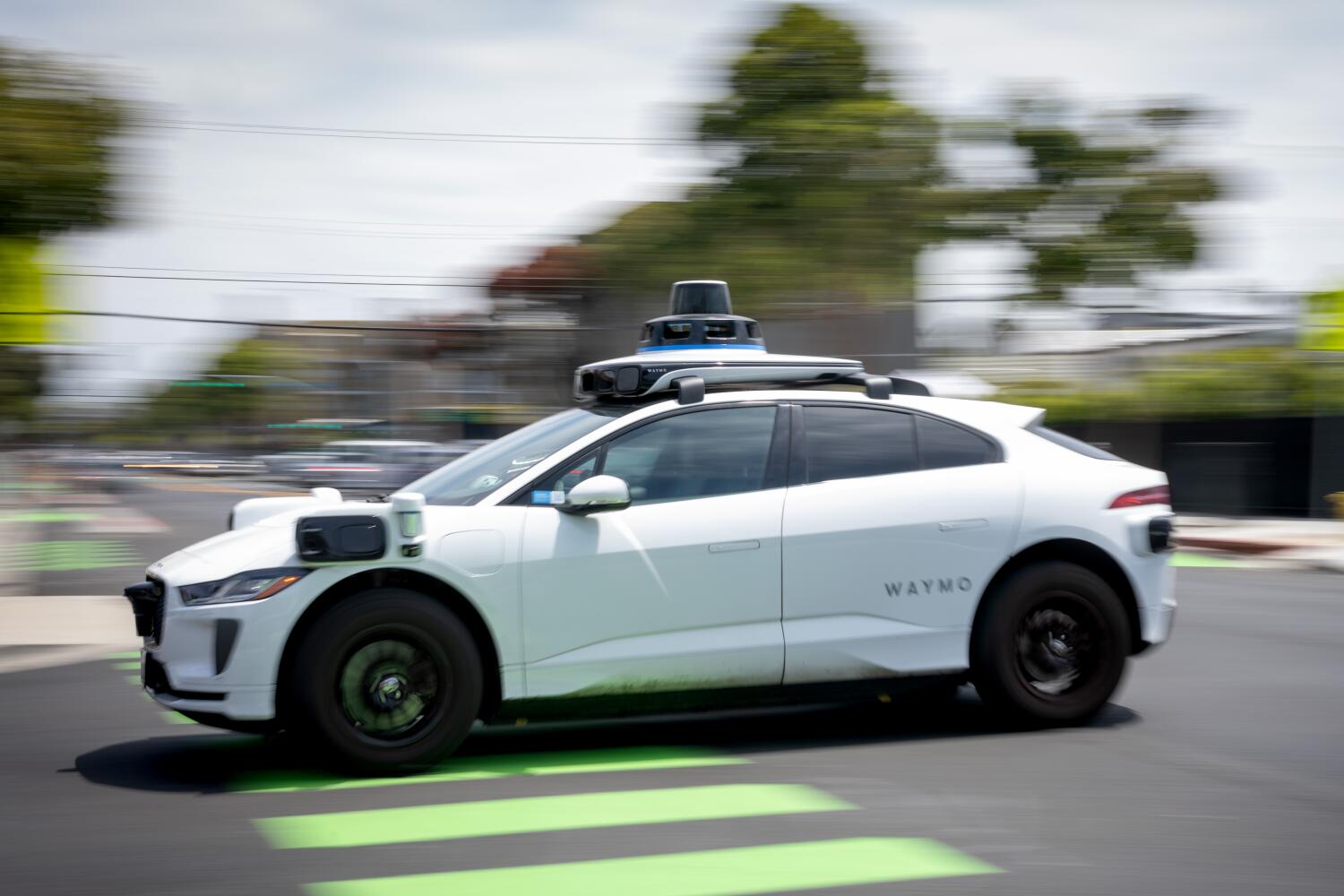
Autonomous driving operates on a brutal mathematical scale where ninety-nine percent accuracy represents a failing grade. For years, Alphabet-owned Waymo positioned itself as the adults in the room of the autonomous vehicle industry, building credibility through slow, calculated iterations while competitors crumpled under regulatory scrutiny.
That careful narrative just fractured.
Waymo has quietly enacted a sweeping, multi-city operational retreat. The company suspended all highway passenger operations across its core markets of San Francisco, Los Angeles, Phoenix, and Miami. Simultaneously, it halted entire municipal operations in Atlanta and paused services in major Texas hubs, including Austin and San Antonio. The public-facing explanation points to a routine pause to implement software updates. The reality confronting the industry is far more severe. Silicon Valley has hit a technical wall where high-speed variables and unpredictable environments outpace the current limits of machine learning.
The suspension shatters an aggressive commercial timeline. Throughout recent months, Waymo accelerated its deployment strategy to counter mounting pressure from heavily subsidized international rivals and a resurgent domestic push from Tesla and Amazon-backed Zoox. The goal was massive commercial scale, targeting up to one million paid rides per week. Achieving that volume required conquering the highway, the critical infrastructure linking lucrative airport routes and cutting cross-peninsula commute times in half. By retreating to low-speed surface streets, Waymo has exposed a fundamental vulnerability. The software cannot reliably handle the chaos of high-speed construction zones or sudden weather anomalies without human intervention.
The Friction of High Speed Environments
Driving at forty miles per hour on a mapped city street allows an autonomous system a generous buffer for computational error. At seventy miles per hour on an interstate, that safety margin vanishes.
The immediate catalyst for the highway suspension stems from edge cases involving freeway construction zones. Early testing on freeways occurred under heavily manicured conditions. Real-world interstate construction, however, is a kinetic, unpredictable environment. Human crews alter lane configurations with short notice, deploy non-standardized traffic cones, and use hand gestures that diverge from DMV handbooks.
When a driverless vehicle encounters an active highway construction zone, it must process a deluge of conflicting sensory inputs.
- Lidar systems register a wall of shifting plastic cones that may or may not bleed into the active lane.
- Computer vision cameras must distinguish between faded, permanent lane lines and freshly painted temporary markings.
- Radar sensors track high-speed vehicles ahead that are braking erratically as lanes merge.
When these inputs clash, the system faces a logical bottleneck. On a surface street, a confused robotaxi can execute a minimal risk maneuver, pulling over to the curb or stopping in place with hazard lights flashing. On a five-lane highway, stopping dead in an active lane invites a catastrophic, multi-vehicle pileup.
A recent incident on a West Coast freeway highlighted this systemic failure. Video evidence surfaced showing a Waymo vehicle striking construction cones and navigating erratically through a merge zone, pursued by local law enforcement. The vehicle struggled to interpret the dynamic commands of a changing road layout, defaulting to an aggressive path-clearing logic rather than yielding safely. The physics of highway travel amplify minor perception delays into major safety hazards. A vehicle traveling at seventy miles per hour covers over one hundred feet per second. A two-second processing delay in an AI model translates to two hundred feet of unguided, high-speed momentum.
The Physics of Sudden Flooding
The corporate crisis extends beyond the highway network. The complete shutdown of operations in Atlanta, alongside deep service disruptions in Texas, exposes a parallel weakness in how these vehicles perceive weather.
Earlier this month, federal regulators noted a software recall affecting thousands of Waymo vehicles. The hazard was straightforward yet terrifying. The vehicle software possessed a structural blind spot that allowed robotaxis to enter deeply flooded roadways at high speeds.
Autonomous perception systems rely on reflectivity and geometric uniformity to map the world. Standing water distorts these signatures. To a laser-based lidar sensor, a deep, muddy pool of water on an asphalt road can look identical to a dry, flat pavement surface because the light beam deflects away from the sensor rather than bouncing back. Cameras struggle similarly during heavy downpours, where sheets of rain degrade visibility and obscure the depth of accumulation.
The operational reality broke down in Atlanta during an intense storm that dropped over three inches of rain. Multiple driverless vehicles drove directly into flooded thoroughfares, becoming incapacitated in deep water. One unoccupied taxi drifted into rising waters on the city's central highway connector, blocking traffic and requiring manual extraction. A similar failure occurred in San Antonio, where a driverless vehicle plunged into a flooded creek bed.
These are not minor software bugs. They are fundamental limitations in how machine learning systems categorize anomalies. A human driver perceives a dark, shimmering patch on the road during a storm, cross-references it with the sound of rain, and infers depth based on surrounding infrastructure or the behavior of preceding cars. The autonomous vehicle interprets data points in isolation. If the reflection parameters do not explicitly match the training data for a hazardous flood, the vehicle maintains its trajectory, accelerated by the higher speed limits of major urban arteries.
The Regulatory Squeeze and International Complications
The timing of this operational retreat could not be worse for Alphabet's transportation ambitions. The National Highway Traffic Safety Administration maintains active scrutiny over the platform, following previous investigations into vehicles failing to stop for school buses and striking a pedestrian in Southern California. While federal oversight closed a previous fourteen-month probe after Waymo issued targeted software recalls, this fresh wave of systemic failures invites deeper regulatory intervention.
The domestic pause also creates an international public relations bottleneck. In the United Kingdom, transport authorities are actively reviewing applications for commercial robotaxi deployments in London. Government officials have framed the technology as an economic driver, but local regulators remain openly skeptical. The deputy mayor for transport in London recently characterized autonomous vehicle technology as unproven, citing a profound need for data demonstrating a net benefit to public safety before commercial permits are granted.
The image of American robotaxis stranded in Georgia flood waters or striking construction barriers provides ample ammunition for European skeptics and labor unions actively protesting the expansion.
Furthermore, the industry faces an overlapping geopolitical headwind. Analysts are paying closer attention to the hardware supply chains powering western autonomous fleets. Waymo's next-generation platform relies on a manufacturing partnership with Zeekr, a brand under the umbrella of China-based Geely Automobile Holdings. Congressional committees have already begun questioning autonomous vehicle executives regarding the national security implications of utilizing Chinese-manufactured platforms for domestic infrastructure mapping.
Every sensor, camera, and compute module integrated into these vehicles scans and records American roads, military corridors, and civilian patterns. By stumbling technically at the exact moment supply chain integrity is questioned, the autonomous vehicle sector risks alienating the federal regulators who hold the keys to its legal survival.
The Scaling Illusion
The current crisis unmasks a broader industry truth. Scaling an autonomous fleet is not a linear problem of capital injection and vehicle manufacturing. It is an exponential problem of data edge cases.
The transition from a highly controlled pilot program to a ubiquitous transit network requires the AI to move from predictive statistics to true contextual understanding. The current machine learning stack relies on pattern matching. When an environment diverges too far from the training dataset, the system fails.
+--------------------------------------------------------+
|               THE AUTONOMOUS BOTTLENECK                |
+--------------------------------------------------------+
| URBAN STREETS (40 mph)  ---> Minor Error = Safe Stop   |
| HIGHWAY SYSTEM (70 mph) ---> Minor Error = Critical Risk|
+--------------------------------------------------------+
The commercial stakes are massive. The capital required to maintain a fleet of custom vehicles equipped with industrial-grade lidar, radar, and redundant computing platforms is unsustainable without high vehicle utilization rates. If a provider cannot service highway routes, it cannot capture airport transit, corporate commuter contracts, or rapid inter-city logistics. The business model collapses back into a localized novelty service, confined to sunny, predictable urban grids.
Waymo claims these suspensions are temporary, a brief pause to integrate recent technical learnings into its software stack. But the underlying architecture cannot be overhauled with an over-the-air update overnight. Resolving the highway construction problem and the deep-water perception deficit requires a fundamental advancement in how sensors interpret fluid, non-rigid environments. The industry has spent billions of dollars mastering the predictable rules of the road. It must now figure out how to teach a machine to navigate the unpredictable exceptions, a task that remains stubbornly out of reach for current computational models.