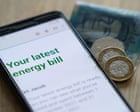
Every time the energy price cap ticks upward in Britain, the media machinery spins into overdrive. Headlines shriek about impending doom, politicians clutch their pearls on morning television, and self-appointed consumer champions demand immediate government intervention. The lazy consensus is deafening: expensive energy equals national impoverishment, and anyone who suggests otherwise is apparently heartless.
It is complete nonsense.
I have watched corporate boards panic and restructure over marginal commodity swings for over a decade. I have seen billions burned on subsidies that merely mask structural rot rather than curing it. The panic over soaring energy bills misses the entire point of how modern economies evolve, innovate, and purge dead weight. If you want a stagnant, fossilized economy that relies on artificial life support, keep begging for price caps and subsidies. If you want a lean, hyper-efficient industrial base that actually competes on a global stage, welcome the pressure.
Higher energy costs are not a crisis to be managed away with borrowed cash. They are a brutally honest economic signal.
The Myth Of The Free Lunch
For decades, British households and businesses enjoyed energy prices that masked their true environmental and infrastructural costs. Cheap gas created an illusion of abundance, leading to remarkably lazy capital allocation. Buildings were constructed with atrocious thermal retention. Industrial processes were left inefficient because running inefficient boilers was cheaper than upgrading machinery.
When energy is artificially cheap, waste becomes invisible.
The consensus argument assumes that the economy is a static box. Inject higher energy prices into that box, and people have less money to spend elsewhere, driving down GDP growth. This is linear thinking at its absolute worst. It ignores the primary driver of market economies: substitution and forced innovation.
Imagine a scenario where a manufacturing plant faces a doubling of its gas bill. The knee-jerk reaction from Westminster is to subsidize the bill to protect jobs. What actually happens under a subsidy? The plant stays inefficient, relying on state life support while bleeding capital that could have been used to retool the factory floor.
When you remove the safety net and let energy prices bite, something remarkable happens. Management stops whining and starts engineering. Waste heat recovery systems get installed. Variable-speed drives get fitted to motors. Supply chains get localized. The pain is real, but the resulting structural upgrade makes the business resilient for decades.
The Fallacy Of Government Protection
Let us look closely at the demand for state-backed price controls. Every time the energy price cap is manipulated, the underlying market distortion deepens. Price signals are the nervous system of capitalism. When you numb the nervous system, you stop feeling the pain, which also means you stop reacting to the danger.
Subsidizing consumption during a supply shock does not create energy out of thin air. It simply shifts the cost from the monthly bill to the national balance sheet, manifesting later as runaway inflation, higher interest rates, or crushing debt servicing costs. You are not saving money; you are financing it through the back door with interest.
The state cannot repeal the laws of supply and thermodynamics by legislative fiat. When global gas supplies tighten or distribution bottlenecks choke the grid, pretending the energy is cheap does not make it so. It just bankrupts the supplier or forces the taxpayer to pick up the tab.
During the European gas crunch, countries that heavily intervened with blunt price caps experienced massive fiscal strain while failing to incentivize actual demand reduction. Meanwhile, economies that absorbed the shock and redirected capital toward aggressive efficiency gains weathered the storm with structurally lower baseline energy consumption.
Why The Consumer Is Asking The Wrong Question
People constantly ask: "How will families survive when energy bills double?"
It is the wrong question entirely. It assumes that energy consumption must remain constant and that higher prices are merely an arbitrary tax levied by greedy corporations.
The right question is: "Why is our entire built environment so pathologically leaky that a spike in gas prices threatens household solvency?"
The problem is not that energy is too expensive. The problem is that British housing stock is a national disgrace. Decades of under-investment in insulation, double and triple glazing, and modern heat pump architecture have left millions of homes resembling drafty Victorian tents.
When you throw money at energy bills via state handouts, you subsidize inefficiency. You pay utility companies with tax dollars so heat can escape through uninsulated cavity walls into the North Sea. It is an economic absurdity.
If governments redirected a fraction of bailout funds into mandatory, comprehensive thermal retrofitting and modernizing grid connections, the vulnerability would vanish within a generation. But that requires political courage and long-term vision, neither of which fit neatly into an election cycle.
The Brutal Reality Of Global Competition
Britain does not exist in a vacuum. Energy costs have historically been higher in Europe and the UK than in manufacturing powerhouses equipped with cheap domestic gas or heavily subsidized grids. Complaining about it on Twitter does not change the physical geography of the planet.
If your business model relies on permanently cheap fossil fuels to remain globally competitive, your business model is broken.
The future belongs to entities that optimize for low energy intensity per unit of output. Companies that use this pressure to automate, electrify, and rethink their supply chains are pulling away from their competitors. Those waiting for the good old days of cheap gas are walking themselves straight off a cliff.
Embrace the squeeze. Let the high prices ruthlessly expose every inefficient process, every lazy corporate strategy, and every poorly insulated home in the country. The economy doesn't need another bailout. It needs a cold shower.