At 4:15 on a Tuesday afternoon in Hamilton, Ontario, the coffee in Marcus’s thermos has gone cold. He is a fictional composite—a forty-two-year-old tool-and-die maker whose mortgaged bungalow sits three miles from the steel mills—but his anxiety is entirely real, shared by millions of people staring at the same arithmetic.
When the grocery bill climbs twenty percent in two years and mortgage renewals threaten to swallow another four hundred dollars a month, macroeconomics stops being an academic sport. It becomes the quiet, gnawing sound of a kitchen light left on at two in the morning while someone tries to make two columns of numbers meet.
Enter Mark Carney.
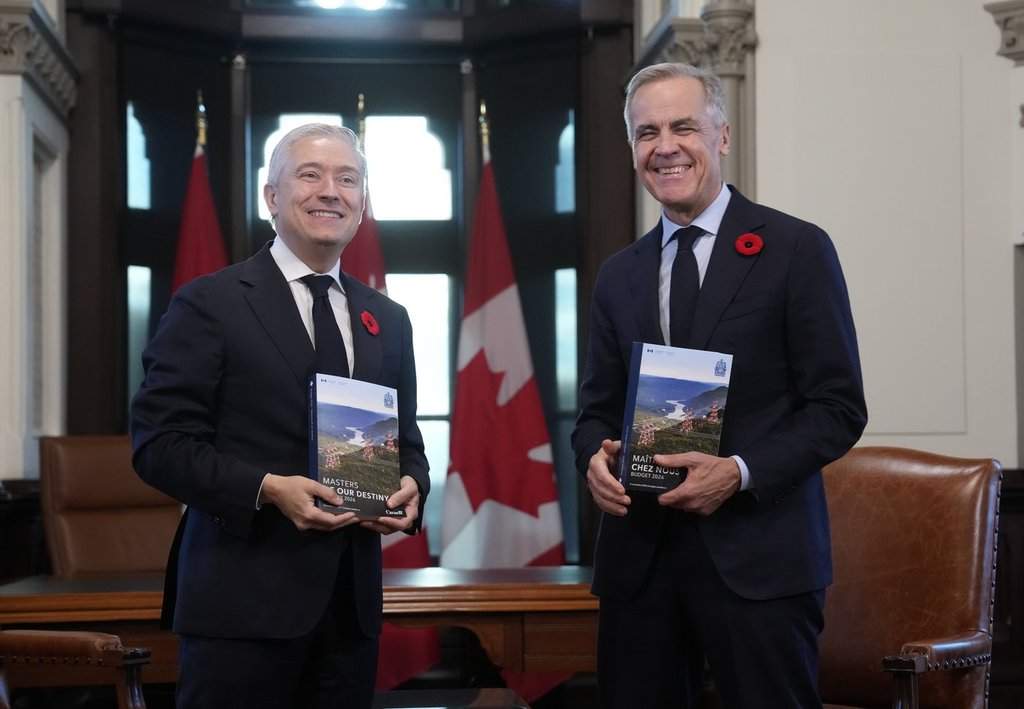
For years, Carney lived in the rarified air of central banking—first steering the Bank of Canada through the 2008 financial crisis, then guiding the Bank of England through the turbulent aftermath of Brexit. He was the ultimate technocrat, the steady hand on the tiller when markets panicked. Now, stepping out of the quiet marble halls of monetary policy and into the messy, unforgiving arena of fiscal politics, he has delivered a budget that economists are calling ambitious, and critics are calling downright dangerous.
They aren’t wrong on either count.
To understand why this document matters, you have to look past the dry columns of billions and trillions. A federal budget is never just an accounting exercise. It is a moral document. It tells you who gets a lifeboat when the tide rises, who gets asked to tread water, and what kind of country the architects believe will exist ten years from now. Right now, Carney is betting the house on a future that hasn't arrived yet, in a world where the old rules of global trade have shattered into sharp, unpredictable pieces.
The Architecture of an Uncertain World
For three decades, Western economies ran on a comforting, predictable script. Supply chains stretched smoothly across oceans, inflation stayed asleep in a corner, and interest rates hovered near zero like a permanent safety net. If a government wanted to spend money, borrowing was practically free.
That era is dead.
Between shifting geopolitical alliances, stubborn supply bottlenecks, the massive capital costs of the green energy transition, and aging populations demanding more healthcare with fewer workers to fund it, the global economy has entered a period of chronic friction. Protectionism is back in fashion. Tariffs are thrown around like opening moves in a bar fight.
Against this backdrop, Carney’s budget makes a radical departure from traditional fiscal restraint. Instead of tightening the belt to cool down lingering price pressures—the classic central banker’s reflex—this plan opens the spigots for massive, targeted capital investment. Clean energy grids, domestic semiconductor manufacturing, artificial intelligence infrastructure, and housing supply acceleration sit at the center of the ledger.
Think of it as a household deciding to take out a massive second mortgage to replace a failing roof and install solar panels during a hailstorm. If the storm passes and energy prices soar, the family looks like geniuses. If interest rates spike or the contractor walks off the job, the house goes into foreclosure.
That is the precise tightrope Carney is walking.
Why Economists Are Losing Sleep
If you sit down with veteran bond traders in Toronto or London, they won’t argue with the diagnosis. Everyone agrees that Canada—like much of the G7—suffers from a chronic productivity slump. For years, too much capital flowed into bidding up the price of existing real estate rather than building factories, laboratories, or software companies. When productivity stalls, wages stagnate. Living standards erode. Marcus in Hamilton works just as hard as his father did, yet his paycheck buys noticeably less security.
The quarrel isn't over the disease. It is over the dosage of the medicine.
By injecting tens of billions of new public dollars into the economy while labor markets remain relatively tight and inflation remains sensitive to supply shocks, the budget runs a glaring risk. When government spending competes with private businesses for the same engineers, concrete, copper wire, and construction crews, prices get pushed upward.
And what happens when inflation flares back up?
The central bank—the very institution Carney once led—is forced to keep interest rates higher for longer. It is the economic equivalent of pressing the gas pedal with your right foot while slamming the brake with your left. The engine screams, the tires smoke, and the passengers in the back seat get whiplash.
Critics point out another uncomfortable truth. Governments have a notoriously patchy record when it comes to picking industrial winners. History is littered with gleaming, taxpayer-funded white elephants—from heavily subsidized battery plants that never reach full capacity to regional tech hubs that evaporate the moment the grant money dries up. Carney’s budget relies heavily on tax credits, co-investment funds, and loan guarantees designed to crowd in private capital. The theory is sound: the state takes the early, terrifying risk so pension funds and corporations will follow. The reality, however, is that political pressure often bends capital toward swing ridings rather than genuinely innovative companies.
The Invisible Cost of Doing Nothing
Yet, before writing off the budget as reckless, consider the alternative.
What happens if a middle-sized, resource-rich nation decides to sit on its hands while the United States pours hundreds of billions into industrial subsidies through legislation like the Inflation Reduction Act, and the European Union erects carbon border tariffs?
Capital is ruthless. It has no patriotism. If the tax incentives, clean power grids, and skilled talent pools are better south of the border, investment dollars will pack their bags and leave before the ink on a balanced-budget pledge is dry. A country that refuses to invest in its own industrial base doesn't stay safe; it slowly turns into a branch-plant economy, selling raw materials abroad and buying back finished goods at a markup.
I remember walking through a shuttered manufacturing corridor in southern Ontario back in 2011, three years after the Great Recession had hollowed out the region. The silence inside those cavernous brick buildings wasn't peaceful; it was heavy, smelling of stale machine oil and wet concrete. Once an industrial ecosystem breaks—once the toolmakers retire, the apprentices move away, and the local suppliers close—you cannot simply flip a switch to bring it back. The institutional memory vanishes.
Carney knows this. His entire career has been spent studying systemic risk—the kind of slow-moving tectonic shifts that look manageable on a quarterly spreadsheet until they suddenly trigger an avalanche. From his vantage point, the greatest danger isn't a wider fiscal deficit today; it is structural irrelevance tomorrow.
The Human Ledger
Strip away the debates over debt-to-GDP ratios and bond yields, and the budget’s real test comes down to three specific pressure points in daily life.
First, there is the housing bottleneck. You cannot recruit global talent or ask young families to build a future if a starter home costs eight times the median household income. The budget throws significant weight behind modular construction, municipal infrastructure grants tied to zoning reform, and low-cost financing for purpose-built rentals. It is an acknowledgment that housing isn't just an asset class; it is basic economic infrastructure, no different from highways or power lines. Still, concrete takes time to pour, and permits take months to clear. Relief won't arrive by next Tuesday.
Second, there is the energy transition. For workers in Alberta’s oil patch or Saskatchewan’s agricultural belt, talk of decarbonization often sounds less like an opportunity and more like an eviction notice. Carney has tried to thread this needle by pairing strict emissions caps with massive subsidies for carbon capture, clean hydrogen, and critical mineral extraction. Whether this buys genuine peace or simply fuels another round of regional resentment remains an open question. You cannot pay a mortgage with a five-year transition roadmap.
Third, and most quietly, there is the generational bargain. Every dollar borrowed today is a claim on future tax revenues. Younger millennials and Gen Z workers, already squeezed by high rents and entry-level job markets disrupted by automation, are being asked to underwrite a massive capital bet. If that bet pays off in higher wages, cleaner air, and globally competitive industries, they will inherit a thriving economy. If it misfires, they will inherit a mountain of debt and a stagnant tax base, forced to pay higher taxes for fewer public services.
Trusting the Tightrope Walker
There is an inherent vulnerability in leadership during moments of historical transition. Nobody actually knows what the global economy will look like in 2032. Anyone who tells you they have a risk-free plan is selling snake oil.
To understand Carney’s mindset, it helps to remember a core principle of crisis management: when the ice beneath you is cracking, standing still is the most dangerous move you can make. You have to distribute your weight and move deliberately toward solid ground, accepting the terrifying possibility that the ice might give way mid-step.
That is what makes this budget so polarizing. It refuses the comfort of small, incremental tweaks. It asks taxpayers, bond markets, and voters to tolerate short-term fiscal discomfort in exchange for long-term resilience. It assumes that markets will reward bold, coherent strategy rather than punish higher borrowing—a wager that famously went wrong for Liz Truss in the United Kingdom just a few years ago, when unfunded tax cuts triggered a bond market revolt that toppled her government in weeks.
Carney, of course, is no Liz Truss. Where her plan offered unfunded consumption, his targets productive capacity. Bond vigilantes know the difference between borrowing to throw a party and borrowing to build a factory. Even so, the margin for error has shrunk to a razor’s edge. Global debt levels are already at peacetime highs. The room to absorb another unexpected shock—a new geopolitical conflict, a spike in energy prices, a sudden downturn in global trade—is perilously thin.
Back in Hamilton, Marcus doesn't care about bond vigilantes or structural deficits. He cares about whether the machine shop down the road will get the contracts to build components for the new clean-tech plants, whether his apprentices will be able to afford an apartment within commuting distance, and whether his next mortgage renewal will force him to sell the truck.
Late at night, after the spreadsheets are closed and the political pundits have finished shouting over one another on television, that is the only metric that truly counts. A budget can be brilliant on paper, praised in Davos, and dissected in lecture halls from Oxford to Ottawa—and still fail if it forgets the people carrying the weight of the gamble on their backs.
Outside Marcus’s kitchen window, the streetlights flicker on against the early dusk, illuminating a quiet street where every porch light represents a family waiting to see whether the bridge being built beneath their feet will hold.