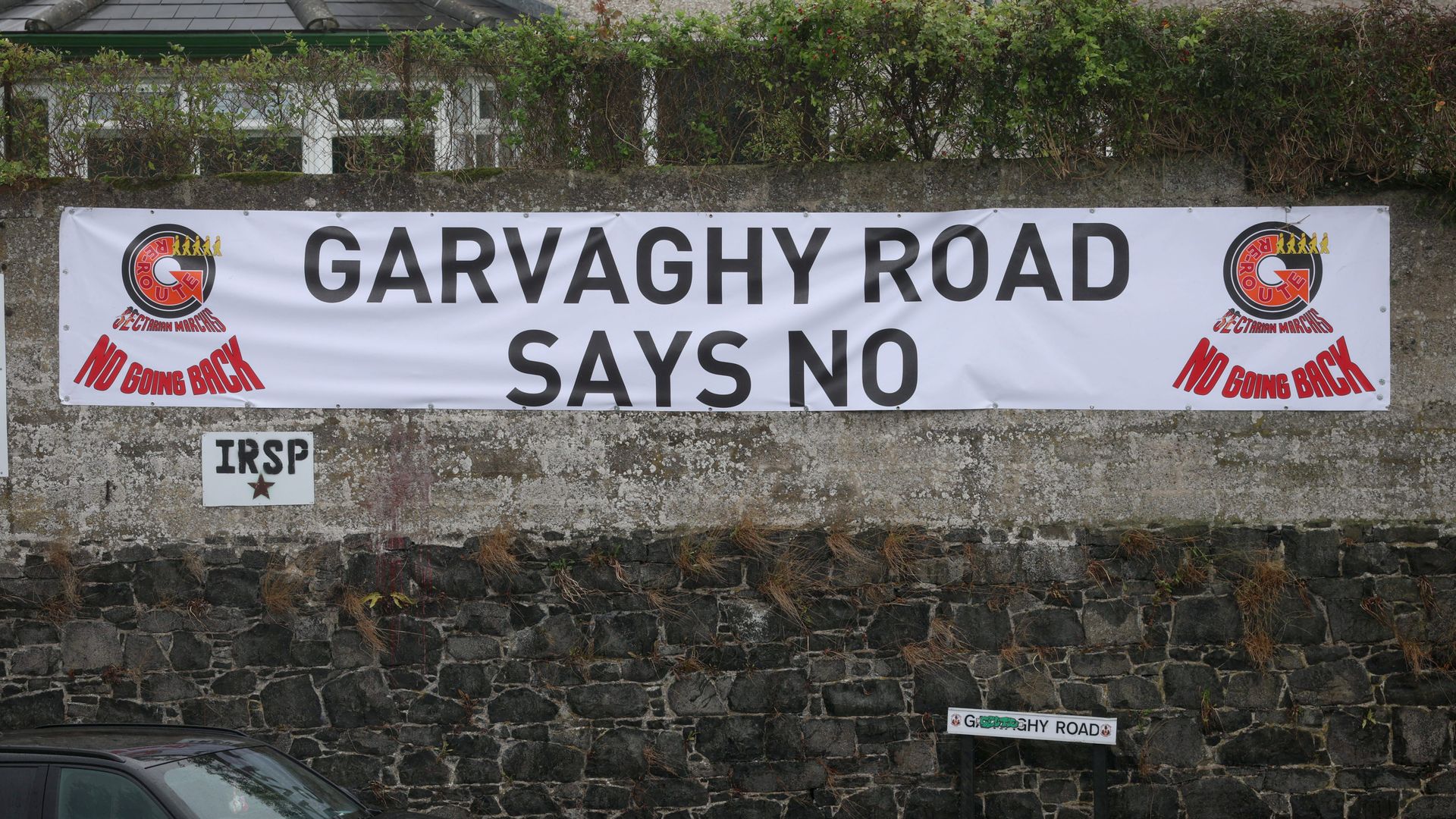
The High Court in Belfast ruled that the Parades Commission acted lawfully when it barred the Drumcree Orange Order parade from marching down the Garvaghy Road. That single legal determination closes the door on a fresh judicial review brought by Portadown District LOL No. 1, cementing a restriction that has stood continuously since 1998.
For anyone tracking civil liberties, public order law, and the fragile architecture of the Northern Ireland peace process, this judgment is far more than a routine administrative update. It is a definitive affirmation of how the British state balances competing human rights when historical tradition collides directly with community consent.
The Core Legal Battle Over Garvaghy Road
To understand why the court sided with the Parades Commission, you have to look at the exact statutory machinery created in the late 1990s. Before the Public Processions (Northern Ireland) Act 1998, decisions about contentious marches fell squarely on the Chief Constable of the Royal Ulster Constabulary. Police commanders were forced to make split-second public order calls under immense political pressure, often resulting in widespread street violence regardless of which way they turned.
Parliament stripped that responsibility from the police and handed it to an independent, quasi-judicial body. Under Section 8 of the 1998 Act, the Parades Commission is legally obligated to weigh five specific criteria before imposing restrictions on a procession.
- Public disorder or damage to property that may result from the procession.
- Disruption to the life of the community caused by the route or timing.
- Impact on relationships within the community, specifically looking at long-term sectarian tension.
- Failure to comply with the Code of Conduct by the organizers or participants.
- The desirability of allowing a procession that has traditionally walked a particular route.
In the Drumcree challenge, the Orange Order argued that the Commission had treated the ongoing prohibition as a permanent, default position rather than conducting a fresh, objective assessment each year. Their legal team contended that over a quarter-century of calm—or at least the absence of the mass riots seen in the late 1990s—meant the threat of severe disorder had fundamentally changed. They claimed the ongoing ban violated their rights to freedom of assembly and expression under Article 11 and Article 10 of the European Convention on Human Rights (ECHR).
The High Court rejected that framing entirely. The judge found that the Commission had not simply rubber-stamped historical decisions. Instead, the court confirmed that the statutory body actively reviewed current community tensions, police intelligence, and the complete absence of local dialogue before issuing its determination.
Why Tradition Lost to Community Impact
The friction at Drumcree has always centered on a short stretch of tarmac. Every July, members of the Portadown District Orange Lodge attend a church service at Drumcree Parish Church on the outskirts of the town. Historically, their return route took them down the Garvaghy Road, a predominantly nationalist and Catholic residential area.
To the Orange Order, walking the Garvaghy Road is an expression of religious liberty, cultural heritage, and a traditional right to use the Queen's highway. To the residents of the Garvaghy Road, having a loyalist band parade march through their neighborhood without local agreement is viewed as an act of triumphalism and intimidation.
Here is where the legal mechanics become critical. Under human rights law, the right to peaceful assembly under Article 11 is a qualified right, not an absolute one. The state can legally restrict a march if the restriction is prescribed by law, pursues a legitimate aim—such as the prevention of disorder or the protection of the rights and freedoms of others—and is proportionate to that aim.
During the height of the Drumcree standoff between 1995 and 2000, the area became a flashpoint that paralyzed Northern Ireland. Thousands of police officers and British soldiers were deployed to erect steel barricades, dig trenches, and string razor wire across fields to keep marchers and residents apart. Businesses burned. Roads across the province were blockaded. Lives were lost, including the horrific murder of the three Quinn brothers in Ballymoney in July 1998 during loyalist protests linked to the Drumcree standoff.
The High Court's ruling underscores a hard truth about Northern Ireland's post-conflict legal framework. Absence of active rioting does not equate to the presence of community reconciliation. The court recognized that the impact on community relationships—the third statutory criterion—remains just as legally potent as the immediate threat of physical violence. If forcing a parade down a contested road would shatter fragile local stability and ignite sectarian hostility, the Commission is well within its legal remit to reroute it.
The Stalemate of Dialogue and Engagement
A major pillar of the Parades Commission's procedural guidelines is local engagement. The Commission consistently emphasizes that the best way to resolve a contentious parade is through direct or mediated dialogue between the parade organizers and the local residents' coalition.
For decades, that dialogue has been practically nonexistent in Portadown. The Portadown District Lodge has historically maintained a policy of refusing to speak directly with the Garvaghy Road Residents' Coalition, objecting strongly to the leadership of the group and the political backgrounds of some of its representatives. Conversely, the residents' group has insisted that no parade can pass through the area without genuine, face-to-face engagement and local consent.
This deadlock leaves the Parades Commission as the sole arbiter. When the Orange Order goes to the High Court to overturn a determination, they are essentially asking the judiciary to do what they have refused to pursue through local negotiation.
British courts are notoriously reluctant to substitute their own judgment for that of a specialist statutory body created by Parliament. In a judicial review, a judge does not ask, "Would I have allowed this parade?" Instead, the judge asks, "Did the Parades Commission act illegally, irrationally, or with procedural unfairness?"
Because the Commission meticulously documented its reasoning, considered the human rights of both the marchers and the residents, and applied the exact criteria set out by Parliament, the legal challenge faced an uphill battle from the start.
What Critics of the Ruling Argue
While nationalist politicians and Garvaghy Road residents welcomed the High Court's decision as a vindication of common sense and the rule of law, unionist politicians and Orange Order leaders view the ongoing situation through a very different lens.
To understand the depth of unionist frustration, you have to look at the broader statistical picture of parading in Northern Ireland. Every year, thousands of parades take place across the region—the vast majority organized by the Loyal Orders—and well over 90 percent pass off without any restrictions or controversy whatsoever. Unionist critics argue that the Parades Commission operates with an inherent bias, penalizing peaceful, disciplined lodge members for the threat of violence posed by those who oppose them.
In legal circles, this is known as the "heckler's veto"—the idea that a group's fundamental right to assemble should not be stripped away simply because a rival group threatens to cause trouble if the assembly goes ahead. Orange Order representatives have argued for years that banning their return march rewards intransigence and strips law-abiding citizens of their civil rights.
Furthermore, critics point out that the Parades Commission itself was meant to be a transitional mechanism. Various political agreements over the last twenty years, including the Hillsborough Castle Agreement of 2010 and the Stormont House Agreement of 2014, included proposals to reform or replace the Commission with a new framework managed locally by the Northern Ireland Executive. Those reforms repeatedly stalled due to political collapses at Stormont, leaving the 1998 statutory body intact and holding final authority.
The Precedent for Contested Spaces Across the UK
The significance of the Drumcree ruling extends well beyond the boundaries of County Armagh. Across the United Kingdom, police forces and local authorities are grappling with how to manage high-tension protests, marches, and public assemblies in deeply polarized environments.
Whether it is managing competing demonstrations in central London or regulating contentious marches in Glasgow, authorities rely on the exact same proportionality test applied by the Belfast High Court. The ruling reinforces three clear principles for public order law across Britain.
- Historical precedent does not override modern impact. Simply because a group has walked a route for over a century does not grant them an eternal right to do so if the demographic and social reality of the neighborhood has fundamentally changed.
- Procedural rigor is bullet-proof. When statutory bodies clearly document how they weighed competing ECHR rights—specifically balancing Article 11 assembly rights against Article 8 rights to respect for private and family life—courts will almost always defer to their expertise.
- The "heckler's veto" argument has strict limits. While courts protect peaceful protesters from hostile crowds, they draw a hard line when an assembly takes place inside a residential enclave where the predictable outcome is severe, long-term community trauma and civil breakdown.
Where Portadown Goes From Here
Every July, a small group of Portadown Orangemen still walks from the town center to Drumcree Parish Church, holds a service, and walks up to the police barrier at the edge of the Garvaghy Road area to hand in a formal letter of protest before turning back. It is a quiet, ritualized echo of the massive confrontations that once dominated global headlines.
The High Court's refusal to overturn the Parades Commission's determination guarantees that this ritual will remain unchanged for the foreseeable future. Judicial reviews cannot solve a political and cultural impasse that is rooted in competing identities and unresolved history. Unless the Portadown District Lodge and the residents of the Garvaghy Road find a way to sit across a table and hammer out a local accommodation, the steel barriers will stay in place, and the courts will continue to uphold the line drawn in the road.