British researchers have successfully engineered a new vaccine candidate capable of neutralizing multiple strains of the Ebola virus at once, marking a significant technical achievement in laboratory settings. This development addresses a critical vulnerability in current biodefense, as existing vaccines largely target only the Zaire strain, leaving global health authorities defenseless against sudden mutations or outbreaks of the equally deadly Sudan and Bundibugyo variants. However, a laboratory breakthrough does not equal a public health victory. The celebration surrounding this announcement masks a deeper systemic crisis in global health logistics, commercial pharmaceutical manufacturing, and international funding mechanisms.
Science routinely solves the biological riddles of hemorrhagic fevers. The market routinely fails to deliver those solutions to the people dying from them.
To understand why this new British vaccine faces an uphill battle, one must look at the graveyard of previous medical breakthroughs. Over the last two decades, academic institutions have developed dozens of highly effective viral vectors and monoclonal antibody treatments. Most never leave the freezer. The transition from a successful phase-one clinical trial in Oxford or London to mass production inside a certified facility requires hundreds of millions of dollars. For diseases like Ebola, which primarily spark sporadic outbreaks in impoverished, conflict-prone regions of Sub-Saharan Africa, the traditional pharmaceutical business model collapses. There is no predictable customer base. No commercial market exists to guarantee a return on investment for multinational drug corporations.
Consequently, development relies entirely on government grants and philanthropic interventions. When an outbreak hits the headlines, funding surges. Governments panic, writing blank checks to purchase emergency stockpiles. But as soon as the transmission chains break and the media attention shifts elsewhere, that capital evaporates. This cyclical neglect leaves promising scientific discoveries stranded in regulatory limbo for years.
The technical specifications of the new British vaccine are genuinely impressive. By targeting highly conserved regions of the viral glycoprotein, the creators have managed to stimulate a broad immune response that shields animal models against both the Zaire and Sudan ebolaviruses. This solves a major tactical problem for field medics. During the early days of an outbreak, identifying the specific strain via genetic sequencing takes time that healthcare workers do not have. A multivalent vaccine allows for immediate, indiscriminate ring-vaccination campaigns, cutting off transmission lines before an epidemic spirals out of control.
Yet, the biological elegance of a vaccine matters very little if it cannot survive the physical journey to an isolation ward in the Democratic Republic of the Congo or Uganda.
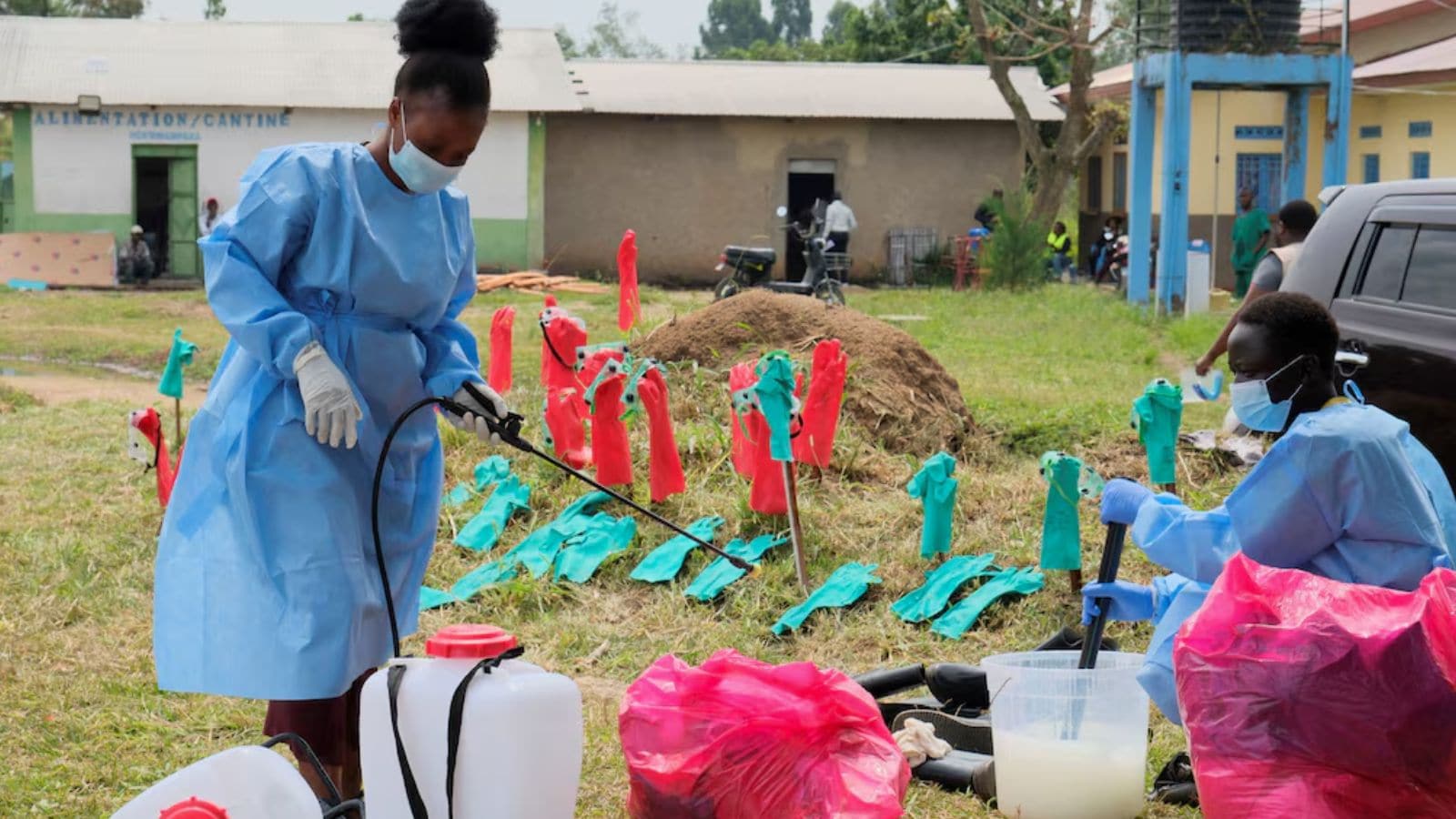
Distributing biological products in equatorial regions presents an extraordinary logistical challenge. Most viral-vector and mRNA platforms require an unbroken ultra-cold chain, meaning the vials must remain stored at temperatures as low as minus eighty degrees Celsius from the moment they leave the factory floor until minutes before injection. Maintaining this environment requires specialized freezers, constant electrical power, and specialized shipping containers. In rural provinces lacking paved roads, let alone reliable power grids, this requirement becomes an existential barrier. Generators fail. Fuel runs out. Solar-powered fridges break down under the intense heat. When a cold chain breaks, the proteins within the vaccine denature, turning a multi-million-dollar shipment of life-saving medicine into useless, clear liquid.
The researchers behind the new breakthrough claim they are working on a thermostable, freeze-dried formulation. This would allow the vaccine to remain viable at room temperature for months. While this represents the correct strategy, scaling a freeze-dried formulation from a few dozen experimental vials to millions of doses introduces massive manufacturing hurdles. Lyophilization requires specialized industrial machinery that few facilities possess, and those facilities are currently backlogged with orders for more profitable chronic disease medications.
This bottleneck highlights the severe imbalance in global manufacturing capacity. The Western institutions designing these interventions do not own the factories required to build them at scale. They must contract third-party manufacturers, competing directly with high-margin biological drugs designed for wealthy nations.
Public health officials frequently point to the international vaccine stockpile managed by the International Coordinating Group on Vaccine Provision as the solution to this distribution failure. This stockpile is intended to maintain a permanent reserve of half a million Ebola doses ready for deployment anywhere in the world within forty-eight hours. In practice, maintaining this inventory is an operational nightmare. Vaccines have expiration dates. If an outbreak does not occur within a specific window, millions of dollars worth of inventory must be destroyed and replenished at great expense.
Furthermore, the bureaucratic machinery behind these stockpiles moves slowly. Bureaucrats must review epidemiological data, approve requests from local ministries of health, and coordinate with international customs agencies before authorization is granted. In the context of a virus with an incubation period of just a few days and a mortality rate hovering near fifty percent, a delay of forty-eight hours can mean the difference between a contained cluster and a multi-provincial catastrophe.
Then comes the issue of localized trust and geopolitical instability. An effective vaccine is useless if the target population refuses to take it.
Recent history shows that the deployment of Western-funded medical interventions into active conflict zones often triggers deep-seated community resistance. During the 2018 to 2020 Ebola outbreak in the eastern provinces of the Democratic Republic of the Congo, health workers faced armed attacks, community suspicion, and widespread misinformation. Rumors spread that foreign doctors were introducing the virus to harvest organs or test experimental drugs on local populations. These rumors were fueled by decades of political marginalization and armed conflict, rendering top-down medical interventions highly suspect to the local population.
Overcoming this resistance requires months of community engagement, localized education, and collaboration with traditional leaders. It requires building deep infrastructure, not just dropping medical supplies from cargo planes. The current funding models for vaccine development rarely allocate sufficient resources for this ground-level anthropological work. They fund the test tube, not the trust.
Western governments tend to view biodefense through a narrow lens of domestic security. They invest heavily in countermeasures that protect their own borders from an imported case, neglecting the structural health systems of the nations where these viruses naturally reside. This strategy is fundamentally flawed. In an interconnected global economy, an uncontained outbreak anywhere threatens security everywhere. Air travel can transport a pathogen across continents in less time than it takes for symptoms to manifest.
The new British vaccine breakthrough is a triumph of laboratory isolation. It proves that our understanding of viral mechanics has reached an unprecedented peak. But unless international organizations completely overhaul the financial structures governing production, solve the dry-formulation manufacturing bottleneck, and invest heavily in the healthcare infrastructure of vulnerable nations, this discovery will remain just another entry in an academic journal.
The next major outbreak will not wait for global markets to become profitable.