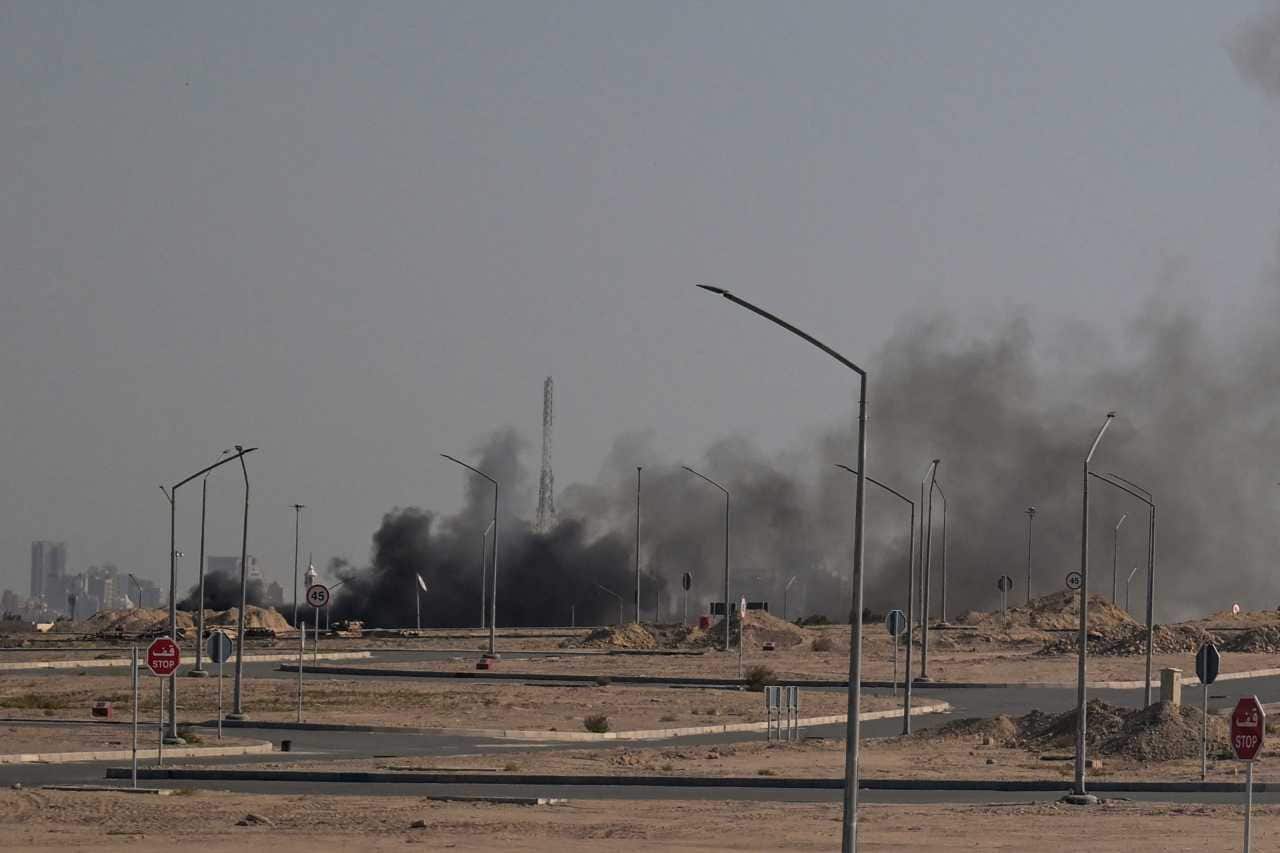
The Persian Gulf is on edge. Recent military exchanges, including Iranian strikes impacting Kuwaiti maritime zones and retaliatory US strikes near the Strait of Hormuz, have pushed the region to its most volatile state in years. While standard news feeds frame these events as sudden, isolated provocations, they are actually the calculated results of a shifting geopolitical chess board. The immediate threat to global energy corridors is real, but the true driver is a deeper, asymmetric struggle over regional leverage, sanctions evasion, and the redrawing of security alliances.
Understanding this crisis requires looking past the immediate explosions to the underlying strategic calculus of the actors involved.
The Strategy Behind Target Selection
The selection of Kuwait as a target for Iranian aggression surprises those who view the Gulf purely through the lens of US-Saudi rivalry. Kuwait has historically maintained a diplomatic tightrope, often acting as a mediator in regional disputes. However, this neutrality is precisely what makes it a vulnerable pawn in a broader signaling game.
By striking targets near Kuwait, Tehran sends a clear message to the smaller Gulf Cooperation Council (GCC) states. The message is simple: alignment with Western security frameworks offers no protection. Kuwait’s geography, hosting significant US military personnel at Camp Arifjan and Ali Al Salem Air Base, makes it an ideal theater for Iran to test Western red lines without directly triggering a full-scale war with a major military power like Saudi Arabia.
Furthermore, these actions exploit the domestic political vulnerabilities within Kuwait itself. The country has faced prolonged internal political friction between its appointed government and elected parliament. By introducing an external security shock, foreign actors can exacerbate these internal fractures, complicating Kuwait’s decision-making process regarding regional defense integration.
The Chokepoint Calculus at Hormuz
Further south, the US military response near the Strait of Hormuz addresses a different tactical challenge. The Strait is a narrow corridor through which roughly a fifth of the world's petroleum passes daily. It is not just a shipping lane; it is a economic choke point where physical geography dictates global market stability.
The US strikes near the Strait were designed to restore deterrence, yet the tactical reality on the water complicates this objective. Iran does not rely on a traditional blue-water navy to project power in these waters. Instead, Islamic Revolutionary Guard Corps Navy (IRGCN) operations utilize asymmetric warfare tactics.
- Fast Attack Craft: Small, heavily armed speedboats that can swarm larger commercial vessels or naval warships.
- Anti-Ship Missiles: Mobile, land-based batteries hidden along the rugged Iranian coastline that are difficult to target preemptively.
- Smart Mines: Low-tech, high-impact devices that can be deployed quickly from civilian vessels, rendering shipping lanes unusable without lengthy minesweeping operations.
Against these capabilities, heavy Western naval assets, such as aircraft carrier strike groups, face structural disadvantages in the confined, shallow waters of the Gulf. A billion-dollar destroyer faces an unfavorable economic and tactical trade-off when defending against a swarm of cheap, kamikaze drones or loitering munitions.
The Failure of Energy Market Insulation
For decades, the standard economic assumption held that any kinetic disruption in the Gulf would immediately send oil prices into a triple-digit tailspin. That certainty has eroded. Modern energy markets are more fragmented, and the mechanisms of supply and demand have fundamentally altered how the world reacts to these conflicts.
The muted initial reaction of global crude prices to the latest strikes reveals a structural shift. Increased production from non-OPEC+ sources, particularly the United States, Guyana, and Brazil, has created a temporary cushion. Additionally, a significant portion of the oil flowing through the Gulf is now destined for Asian markets, specifically China and India, rather than Western economies.
Global Oil Flow Architecture
| Region | Primary Destination | Risk Vulnerability |
|---|---|---|
| West African Crude | Europe / Atlantic Basin | Low |
| US Permian Basin | Domestic / Europe | Negligible |
| Persian Gulf Heavy | Asia Pacific | Critical |
This shift creates a strange paradox. While Western nations bear the financial and political burden of policing the Gulf's shipping lanes, Asian economies are the primary beneficiaries of that security. This imbalance strains the domestic political will within Washington to maintain an expensive, permanent forward military presence in the region.
Sanctions and the Shadow Fleet
To truly understand why these kinetic engagements are happening now, one must look at the financial underworld of the energy trade. Years of maximum-pressure sanctions have not halted Iranian oil exports. Instead, they have driven them into a sophisticated, unregulated parallel market.
The "shadow fleet"—a network of aging, uninsured tankers operating under flags of convenience—frequently uses the waters around the northern Gulf for ship-to-ship transfers. These vessels turn off their automatic identification system (AIS) transponders to mask the origin of their cargo.
Kuwaiti and Iraqi maritime borders are hotbeds for this activity. The recent friction is partly a result of these illicit economic operations rubbing against official maritime law enforcement. When an unauthorized transfer is intercepted or disrupted by regional authorities, the response from proxy networks is often kinetic, designed to force enforcement agencies to back off and allow the black-market trade to continue unhindered.
The Limits of Regional Air Defense Integration
In response to the persistent threat of missile and drone strikes, there has been a significant push to develop an integrated air and missile defense network across the GCC, anchored by American technology. The concept is flawless on paper: interlinked radar systems detecting threats early, allowing Patriot or THAAD batteries to intercept projectiles regardless of which country's airspace they cross.
The execution, however, remains flawed. Real-time data sharing requires a level of political trust that does not yet exist among the Gulf states. Historical rivalries and fears of sovereignty infringement prevent the seamless transfer of radar tracking data.
Without this integration, air defense remains a patchwork of national systems. A drone swarm launched from southern Iraq or southwestern Iran can exploit the gaps between these sovereign radars, flying low over coastal flats to hit targets before defense systems can calculate an interception vector.
The Proxy Doctrine Evolution
The nature of the forces carrying out these attacks has evolved. We are no longer dealing with loosely organized militias acting on vague instructions from handlers. The proxy forces operating in Iraq, Syria, and Yemen have achieved a high degree of technological self-sufficiency.
These groups now manufacture their own airframes and assemble guidance systems using commercially available dual-use electronics components. This level of decentralization means that even if a diplomatic breakthrough occurs directly with major regional powers, the local actors retain the capability—and sometimes the political motivation—to initiate independent strikes to protect their own local interests or revenue streams.
This reality complicates Western deterrence strategies. Retaliatory strikes against empty launch sites or localized command nodes do little to dismantle the distributed manufacturing networks spread across the region.
The Diplomatic Vacuum
Compounding the military escalation is a distinct lack of viable diplomatic channels. The old mechanisms of de-escalation are frayed or entirely defunct. Direct communication lines between key regional capitals are underutilized, replaced instead by public posturing and escalatory rhetoric.
International bodies offer little recourse. The UN Security Council remains gridlocked by broader geopolitical rivalries, rendering it incapable of enforcing maritime security mandates effectively. This leaves individual nations or ad-hoc coalitions to secure their own merchant shipping, leading to a militarization of commercial waters that increases the risk of a miscalculation or accidental engagement.
The assumption that economic self-interest would prevent major disruptions in the Gulf has proven false. Ideological objectives, domestic political survival, and the desire to alter the regional security architecture frequently override pure economic logic. The current stability is artificial, maintained only by the continuous deployment of high-end military hardware to counter low-cost, asymmetric threats.
Navigating this environment requires moving beyond reactive military strikes and addressing the structural vulnerabilities that allow these disruptions to occur. Security frameworks built on the realities of the late twentieth century are no longer sufficient to contain a decentralized, technologically advanced threat profile in a vital global choke point.