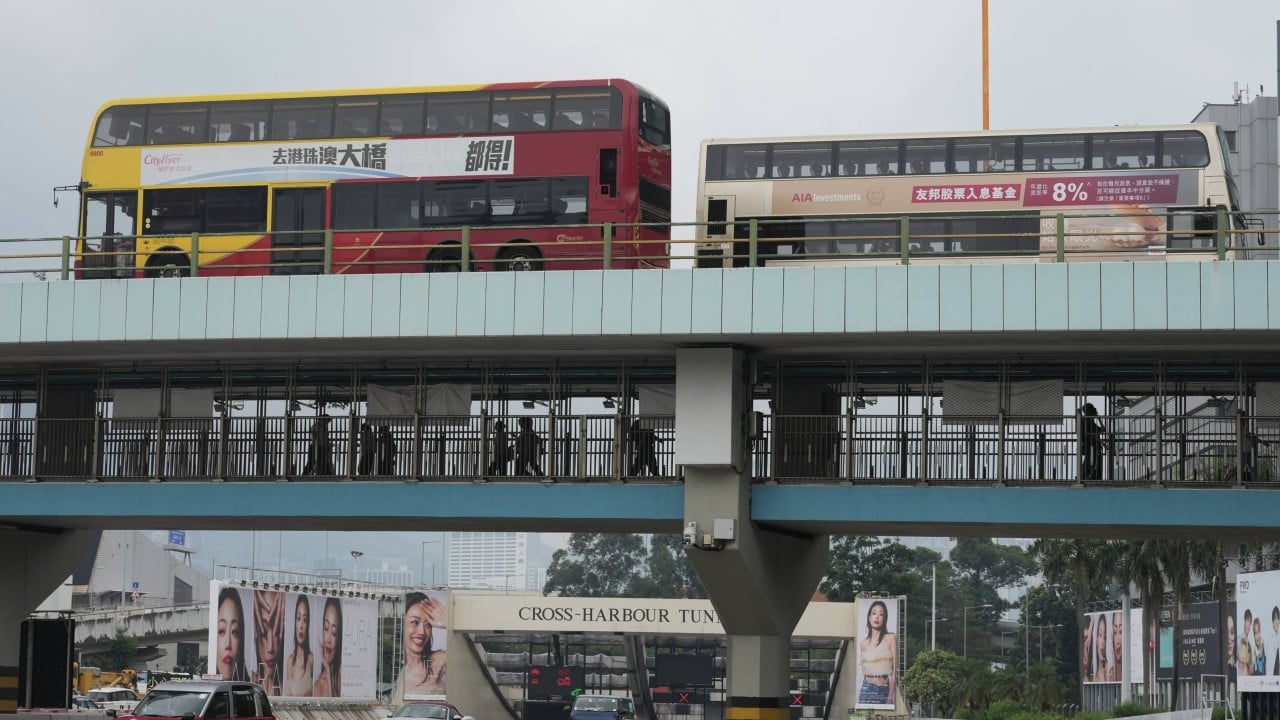
Coins. Clink. Drop.
In Hong Kong, that tiny metallic rhythm at the front of a double-decker bus has long sounded like the heartbeat of a city that never stops moving. Early risers from Tuen Mun and Tin Shui Wai climb aboard before sunrise, gripping warm coffee or folding newspapers, while evening commuters watch neon reflections smear across rain-slicked glass as the harbor lights flicker awake. For millions of residents, public buses are not an abstract policy debate or a line item in a transport ledger. They are the connective tissue of daily life, the quiet bargain that makes a dense, vertical metropolis livable on an ordinary paycheck.
Now that bargain is straining under the weight of a sharp fuel price surge and requests from bus operators for fare increases reaching up to 17.7 percent.
A headline like that is easy to skim and forget. To most people outside the immediate fray, a percentage point on a transit fare sounds dry, bureaucratic, and distant. Yet anyone who has ever stood at a crowded bus stop in Causeway Bay or Kwun Tong with a tight monthly budget knows that percentage points do not live on spreadsheets. They live in wallets. They show up when a parent decides whether to walk two extra stops instead of tapping an Octopus card, or when a shift worker calculates whether a morning commute still leaves enough room for groceries at the end of the month.
To understand why these numbers are landing with such force right now, we have to look past the headline and trace the pressures colliding on both sides of the farebox.
When Fuel Becomes a Gravity Well
Diesel is the lifeblood of a bus fleet. When global oil markets tighten and fuel prices climb, every kilometer a bus travels becomes more expensive almost overnight. Unlike a passenger who can occasionally skip a trip or choose a different route on a whim, a franchised bus operator runs fixed schedules in rain, heatwaves, and gridlock. Fuel is not optional. It is the baseline cost of keeping the wheels turning.
Think of fuel costs like gravity on a steep hill. When the slope is gentle, a fleet can coast along with steady maintenance, smart route planning, and predictable revenue. When fuel spikes sharply, the incline steepens abruptly, pulling harder on operating margins and forcing operators to ask how they will cover daily expenses without sliding backward.
Let us use a hypothetical example to see how a seemingly modest fare adjustment ripples through a household. Imagine a hypothetical resident—let us call her Mei-Ling—who works as a part-time retail assistant in Mong Kok and lives in an outer district. Suppose she takes two bus rides a day, five days a week, twenty-two days a month. If her typical bus fare sits around ten Hong Kong dollars per trip, she currently spends roughly 440 Hong Kong dollars a month on those rides. A 17.7 percent increase on a ten-dollar fare would push that single ride to roughly 11.77 Hong Kong dollars, adding nearly seventy-eight Hong Kong dollars a month to her commute—or close to nine hundred and thirty-six Hong Kong dollars over a year.
For someone earning a high salary in Central, an extra eighty dollars a month barely registers. For Mei-Ling, paying rent in a tight housing market and supporting aging parents, that same eighty dollars can mean skipping a weekend dim sum outing with family, delaying a dental checkup, or tightening an already stretched food budget.
Here is the honest truth, though, and it is one we should admit openly rather than brushing past: public transit economics in a city like Hong Kong are genuinely complicated and sometimes unsettling to examine up close. Bus companies argue they face real cost pressures—not only from surging fuel prices, but also from wages, vehicle maintenance, and shifting travel habits. At the same time, commuters look at higher fares and worry that their cost of living is climbing faster than their take-home pay. Neither side is operating in a vacuum, and pretending the math is simple does nobody any favors.
The Invisible Ledger of Daily Commutes
If you ride the upper deck of a bus heading through the Lion Rock Tunnel or along Nathan Road at rush hour, you see dozens of different lives sharing the same cabin. A university student with headphones half-off, reviewing notes. A delivery rider resting sore legs after a long shift. A grandmother carrying bags of fresh produce back from a wet market.
Each person on that bus has a slightly different tolerance for price shocks. For a retiree, a senior concessionary scheme may cushion part of the blow, though even small increments matter when fixed pensions and savings have to stretch across years. For a young worker starting out in an entry-level job, every recurring expense chips away at the ability to save for emergencies or independence. For a family with two school-age children, multiplying a fare hike by four people every morning and afternoon turns a minor adjustment into a noticeable monthly bill.
Consider what happens next when transport costs rise faster than wages: people adapt in quiet, often invisible ways.
Some commuters might switch to the MTR where routes overlap, crowding train platforms even further during peak hours. Others might walk longer distances in humid weather, trade direct rides for multi-leg transfers, or cut back on discretionary trips that keep local shops and neighborhood restaurants lively. A city's vitality depends on friction being low enough that people can move freely for work, school, care, and leisure. Raise the price of movement too steeply, and some of that everyday energy begins to stall.
That is why fare proposals in Hong Kong always spark intense debate. Public buses carry a massive share of daily trips across the territory, serving dense urban cores, hilly neighborhoods, industrial estates, and newer towns alike. When a bus route links a remote housing estate to a major transport hub, there is often no practical substitute. In those corridors, a fare increase is less like a market choice and more like a toll on basic mobility.
Why History Makes This Moment Feel Familiar
Longtime residents know this tension is not brand new. Over the decades, Hong Kong has weathered repeated waves of oil shocks, economic slowdowns, inflation spikes, and changing commuter patterns. Each time fuel prices jump or operating costs climb, the familiar tug-of-war returns: operators point to rising expenses and financial sustainability, while lawmakers, consumer advocates, and everyday riders scrutinize whether the proposed increase is fair, proportionate, and timed right.
That recurring cycle reveals a recognized behavioral pattern in urban life. When times are steady, commuters rarely think about how a bus fare formula works or how fuel hedging affects a fleet's balance sheet. People simply tap, sit, and get on with their day. The moment a sharp hike—especially one reaching as high as 17.7 percent—enters the conversation, trust becomes central. Riders want to know: Are operators cutting waste where they can? Are fuel savings passed back if oil prices later cool? Are relief measures or subsidies protecting the people who rely on buses the most?
In my own experience riding crowded city buses through pouring rain and sweltering August afternoons, the sharpest frustration is rarely just the money itself. It is the feeling of having no say over a cost you cannot easily avoid. You stand wedged near the doors, watching streetlights blur past the window, calculating small trade-offs in your head while trying to stay rested for the day ahead. When a necessary service gets more expensive, it feels personal—even when everyone knows diesel does not care about personal budgets.
Balancing Survival on the Road and Fairness at the Stop
To treat bus operators purely as villains or commuters purely as passive bystanders would flatten a story that deserves real nuance.
Running a modern bus fleet in a dense, high-cost city requires enormous capital and constant coordination. Buses need regular servicing, clean emissions controls, skilled drivers, and reliable schedules even when traffic slows to a crawl or passenger numbers fluctuate. When fuel prices surge, those daily operating costs bite hard. If an operator cannot cover basic costs over time, service quality eventually suffers—fewer buses, longer waits, older vehicles, or strained morale among staff.
Yet fairness cannot be measured only by an operator's balance sheet. Public transport is a public good in practice, even when delivered through commercial franchises. When fare hikes approach nearly eighteen percent at a time when households are already feeling squeezed by everyday expenses, the burden lands unevenly. A high earner absorbs it without changing a single habit; a lower-income worker feels it in their grocery bag.
Finding the right balance requires looking closely at every piece of the puzzle rather than reaching for blunt instruments. How much of the pressure comes from temporary fuel spikes versus long-term structural costs? Can fare adjustments be phased, moderated, or paired with targeted support so essential commuters are not hit all at once? How can transparency around costs and service performance be strong enough that residents feel respected rather than squeezed?
These questions do not have easy slogans attached to them. They require clear-eyed judgment, honest accounting, and a willingness to keep the human cost front and center while deciding how the system stays afloat.
What Stays With You After the Bus Pulls Away
Picture a rainy weekday evening in Hong Kong. Yellow and red taillights stretch down a wet avenue, reflecting off puddles along the curb. A double-decker bus slows at the stop, its pneumatic doors hissing open as a tired commuter steps down onto the pavement, pulls up a collar against the damp air, and walks the last few blocks home.
That short walk from the bus stop to the front door is where policy meets real life. Every coin dropped, every card tapped, every percentage point debated in a hearing room eventually comes down to whether getting through an ordinary day feels a little heavier or a little more manageable.
In a city built on grit, speed, and connection, keeping people moving affordably is more than a transit calculation. It is a measure of how well the city takes care of the people who keep it running.