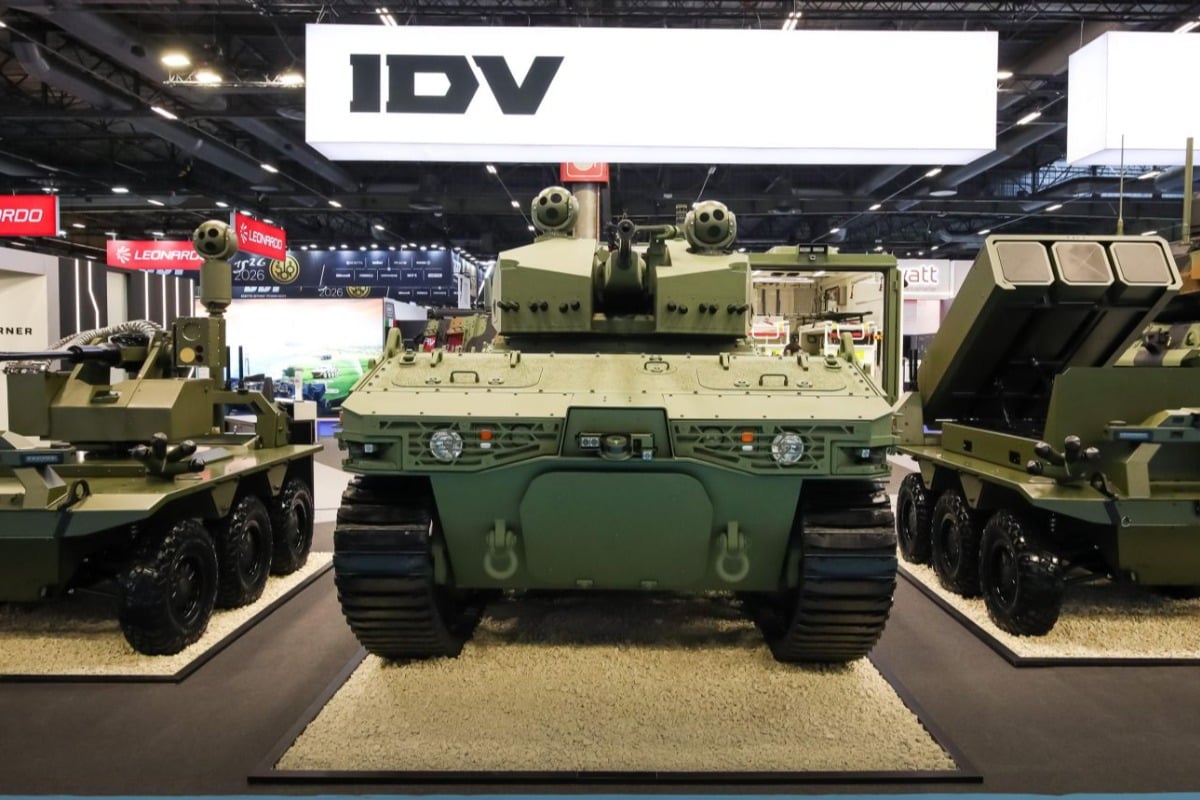
Walk around the Eurosatory defense exhibition in Paris this week and you will notice a massive shift in how militaries view the battlefield. For years, ground robotics meant small, fragile platforms used for bomb disposal or light reconnaissance. Engineers built them in low volumes, and commanders treated them as experimental novelties.
That era is over. Ukraine proved that autonomous systems are no longer optional. Building on this idea, you can find more in: Why the Future of AI and US Dominance Left Everyone Angry at the G7 Summit.
The biggest proof of this paradigm shift sits on the showroom floor at Eurosatory 2026. Iveco Defence Vehicles, now heavily backed by Italian defense giant Leonardo, just unveiled the CL2X. They call it a Hybrid Uncrewed Light Tank. It is a 16-ton tracked autonomous combat platform designed to roll into high-threat environments alongside crewed armor.
This isn't a prototype built by a tiny research lab. It is a heavily armed, mass-production-ready machine built to act as a robotic wingman for main battle tanks. Experts at Ars Technica have provided expertise on this trend.
The Reality of Manned-Unmanned Teaming
Militaries call this concept MUM-T, short for Manned-Unmanned Teaming. The logic is simple. You don't replace human soldiers; you shield them. A single crewed command vehicle sits safely back from the frontline, coordinating a small fleet of robotic tanks that take the brunt of the enemy's initial fire.
The CL2X is engineered specifically for this role. It features a gross vehicle weight of 16 tons and can carry a massive 5-ton payload. To put that into perspective, most existing uncrewed ground vehicles (UGVs) struggle to carry more than a few hundred kilograms of gear.
IDV didn't build this to just carry cargo boxes. The version on display in Paris mounts a Leonardo HITFIST 30 UL uncrewed turret. That brings a 30mm medium-caliber cannon directly to the robotic front line, allowing the platform to engage both legacy armored vehicles and emerging air threats on the move.
Inside the Hybrid Power Architecture
Heavy armor requires massive amounts of electrical power. Between advanced sensor suites, computer processing, and remote weapon stations, traditional diesel engines cannot keep up with the electrical load of modern combat tech.
The CL2X solves this with a series hybrid powertrain. A specialized range extender unit charges an onboard energy storage system with a capacity of up to 130 kWh. The electric drive setup delivers a tractive power of up to 500 kW.
On flat ground, the tank hits a maximum speed of 70 km/h and boasts a total operational range of 500 kilometers.
But the real tactical advantage is the acoustic signature. Because the vehicle pairs its hybrid electric drive with heavy-duty rubber tracks, it can switch off the internal combustion engine entirely. It can travel roughly 30 kilometers in complete silent mode. For an asset designed to sneak into scouting positions or set up an ambush, that silence is everything.
Operating in a Denied Battlespace
The most common criticism of large robotic platforms is their vulnerability to electronic warfare. If an enemy jams the GPS or drops the satellite link, a multi-million dollar asset can instantly turn into an expensive paperweight.
This is where the software architecture matters more than the steel chassis. IDV is using Eurosatory to showcase its MACE autonomy software and ATLAS navigation system. Developed in large part by the company’s UK-based robotics division, this navigation system doesn't rely on GPS.
Instead, it uses a mix of machine vision, advanced sensor suites, and edge computing to navigate when satellite signals are entirely blocked or actively jammed. The vehicle processes route planning locally, meaning it can keep moving toward a destination even if the primary command link drops completely.
The sensor setup relies on a mast-mounted Janus-D electro-optical suite. By raising the sensors on a mast, the CL2X can remain hidden behind a ridge line or a destroyed wall while still maintaining a clear line of sight to the target area.
Moving From Boutique Prototypes to Mass Production
The defense industry has a history of showing off flashy robotic concepts that never leave the factory floor. What makes the CL2X announcement different is the corporate muscle behind it.
Until recently, IDV Robotics operated with the mindset of a highly specialized research team. Leonardo’s acquisition of Iveco Defence Vehicles, which finalized in March, fundamentally changed the manufacturing equation. It handed the robotics team a parent company that routinely manufactures thousands of military vehicles a year.
This means the supply chain and manufacturing infrastructure are already in place to build these 16-ton platforms at scale. Western militaries are facing severe personnel shortages and tightening budgets. They cannot afford to wait another decade for autonomous armor.
Militaries looking to integrate these capabilities immediately don't even have to buy entirely new fleets. The same autonomous navigation and drive-by-wire technology running the CL2X is being packaged as a retrofit kit. IDV has already demonstrated that the system can be integrated into existing tactical trucks and light multirole vehicles that armies already own.
To adopt this technology effectively, defense acquisition teams must pivot away from buying isolated platforms. The next immediate step requires testing these heavy hybrid UGVs within existing mechanized infantry formations to establish clear protocols for data sharing and remote command authority under heavy electronic interference.