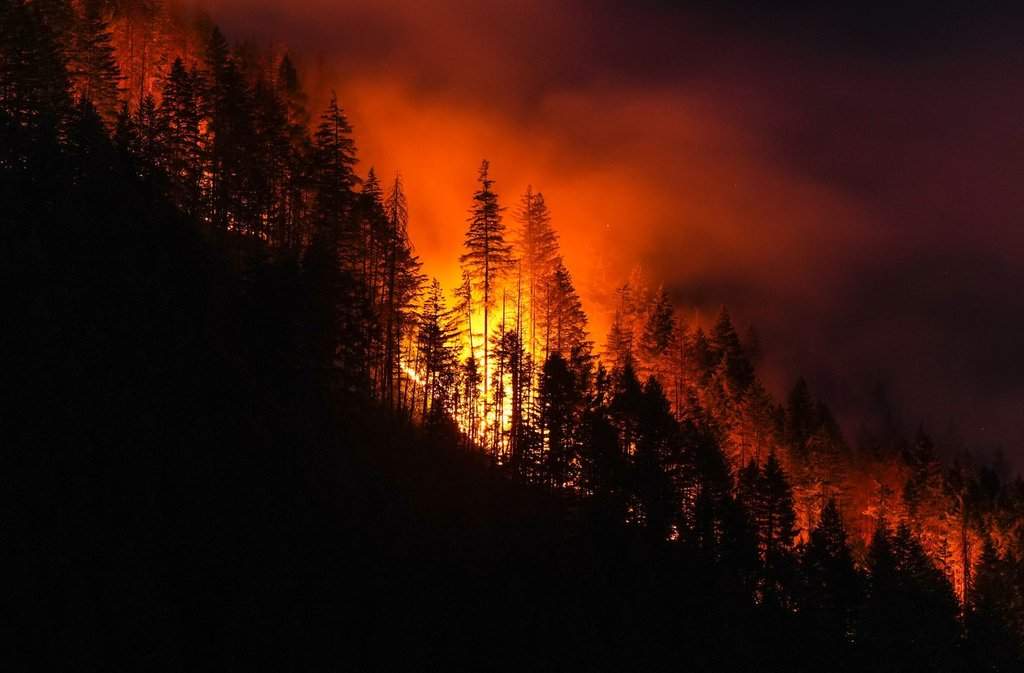
The air in the Fraser Canyon does not move like air anywhere else. It channels through the steep, rock-ribbed gorge like water through a fire hose, accelerating as it squeezes between the mountain walls. On a normal summer afternoon, this wind is a welcome relief from the baking heat of the British Columbia interior.
On a dry Tuesday in August, the wind is a threat.
It carries the smell first. Not the sweet, nostalgic scent of a campfire, but something acrid, heavy, and metallic. It is the smell of ancient cedar, dry pine needles, and the soil itself burning down to the bedrock.
For the people of Boston Bar, a tiny town clinging to the cliffs above the Fraser River, that smell is a ticking clock.
When the sky turns the color of a bruised peach, you do not wait for the official knock on the door. You look at your living room and begin the brutal arithmetic of the ten-minute packing list.
What stays? What goes?
The Chimney of the Fraser
To understand why a wildfire in Boston Bar is so terrifying, you have to understand the geography of the canyon. Consider a hypothetical resident named Donald. He is seventy-two, a retired rail worker who has spent forty years watching the freight trains snake along the rocky ledges across the river. Donald knows that the canyon acts like a giant chimney.
When a fire starts at the bottom of these steep slopes, the heat rises, pulling fresh oxygen up from the river basin. The fire creates its own weather. It draws the wind inward, feeding itself, climbing the near-vertical rock faces with a speed that defies logic.
In the dry forests of British Columbia, a spark from a passing train, a dry lightning strike, or a carelessly discarded cigarette can ignite a hillside in seconds. Once the flames take hold of the dense canopy, the fire climbs. It transitions from a ground fire—smoldering in the brush—to a crown fire, leaping from treetop to treetop.
When the BC Wildfire Service issues an evacuation alert, it means prepare.
When that alert upgrades to an evacuation order, it means the chimney is drafting. You have to leave. Now.
The recent evacuation order for the Boston Bar area did not come as a surprise to those who have watched the summers grow hotter and drier. Yet, the transition from "we might have to go" to "we are going" always strikes with the force of a physical blow.
The Brutal Arithmetic of Flight
Donald’s hands shake as he grabs a plastic storage bin.
In these moments, the brain does not think logically. It fixates on strange things. A half-empty bottle of expensive scotch. A pair of worn-out boots that fit just right. The framed black-and-white photograph of his wedding in 1974.
He leaves the television. He leaves the solid oak dining table his grandfather built. He grabs his dog, a golden retriever mix named Barnaby who is already panting from the thick, hot air, and throws a bag of kibble into the back of his pickup truck.
Outside, the sun is a dull, blood-red orb hanging in a twilight sky, though it is only three in the afternoon. The birds have stopped singing. The only sound is the low, rhythmic thrum of helicopters echoing off the canyon walls, carrying giant orange buckets of water to a fire that seems to swallow them without noticing.
This is the reality of the Boston Bar evacuation. It is not a grand, cinematic escape with explosions in the background. It is a quiet, hurried exodus of dusty pickup trucks, camper vans, and sedans, bumper-to-bumper on Highway 1, moving through a shroud of yellow smoke.
The highway itself is a lifeline and a trap. With the canyon walls on one side and a sheer drop to the rushing Fraser River on the other, there are only two ways out: north toward Lytton, or south toward Hope. If the fire jumps the road, you are cut off.
The Ghost of Lytton
Every resident driving out of Boston Bar carries a collective trauma.
Just a short drive up the highway lies Lytton. In 2021, a record-breaking heatwave pushed temperatures there to a staggering 49.6 degrees Celsius. The next day, a wildfire swept through the town in a matter of minutes, flattening homes, destroying lives, and leaving nothing but chimneys standing like gray headstones.
Nobody in the Fraser Canyon forgets Lytton.
When the smoke rolls into Boston Bar, the memory of that afternoon in 2021 rolls in with it. It is why people do not argue with the RCMP officers directing traffic. It is why they pack their lives into cardboard boxes and leave their homes behind with a quiet, devastating resignation.
The BC Wildfire Service crews work in conditions that resemble the surface of another planet. They wear heavy, flame-retardant yellow jackets in forty-degree heat, carrying heavy pumps and hoses up slopes so steep they have to scramble on hands and knees. They cut fire guards—wide swathes of cleared forest meant to starve the advancing flames of fuel.
But against a wind-driven canyon fire, even the best fire guards can fail. Embers, carried by the intense updrafts, can fly hundreds of meters through the air, crossing rivers and highways to spark new blazes behind the front lines.
It is a game of chess played against a monster that has no rules.
The Waiting Room of the Displaced
In the evacuation centers set up in safer towns like Chilliwack or Hope, the atmosphere is a strange mix of adrenaline and profound exhaustion.
People sit on green cots in gymnasium halls, staring at their phones, refreshing the BC Wildfire Service active wildfire map. They swap rumors.
"I heard the fire reached the old mill."
"Someone said the wind shifted south."
"Did they save the bridge?"
The uncertainty is a slow, agonizing burn of its own. It is the realization that your entire existence—your mortgage, your garden, your memories—is currently reduced to a red dot on a digital map, surrounded by a shading of orange that represents the active fire perimeter.
We live in an age where we expect control. We have weather satellites, predictive computer models, and massive water bombers that scoop thousands of liters of water from nearby lakes in a single pass.
But when the Fraser Canyon burns, you realize how small we really are. The ancient geology of the canyon, carved over millennia by water and ice, still dictates the terms of survival.
The Return to the Soil
Eventually, the wind will die down. The rains, sparse as they are in the summer dry season, will eventually come. The evacuation orders will be downgraded to alerts, and the roadblocks on Highway 1 will be lifted.
But the people who return to Boston Bar will not return to the same place they left.
They will drive back through a charred, black corridor where green forests once stood. The air will smell of soot for months. The hillsides, stripped of the roots that held the soil together, will pose a threat of landslides when the autumn rains arrive.
Yet, they will go back.
They go back because the canyon is in their blood. The rugged beauty that makes the area so dangerous is the very thing that draws people to it. It is a place for those who prefer the sound of the river to the hum of traffic, who value independence, and who know their neighbors by name.
As Donald drives south, watching the smoke fill his rearview mirror, he doesn’t know if his house will be there next week. He only knows the road ahead, the weight of his dog’s head on his lap, and the absolute certainty that as long as the canyon stands, people will find a way to live in it.


