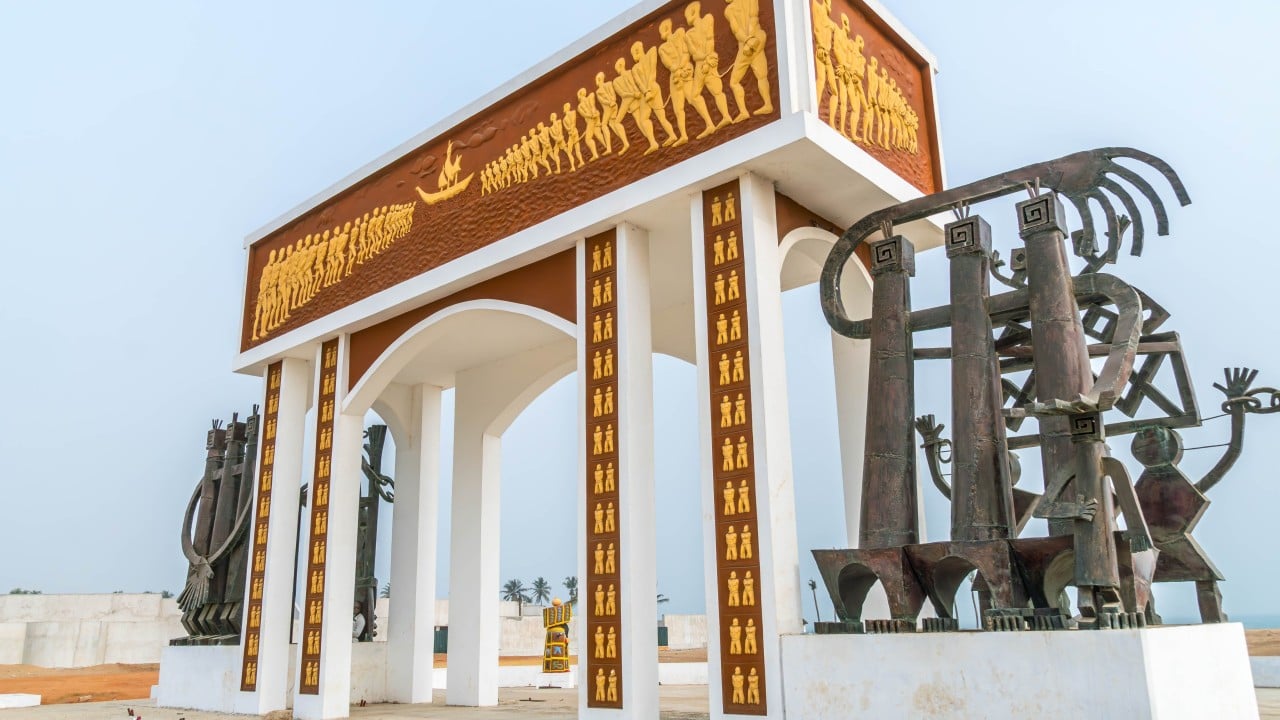
The air in Bagamoyo smells of salt, rotting mangrove roots, and the faint, sweet scent of roasting cassava from the street stalls nearby. For centuries, this stretch of the Tanzanian coast was defined by what left it. Ivory. Spices. Enslaved human beings. The very name Bagamoyo comes from a Swahili phrase meaning crush my heart, a bleak nod to the old reality that once you stepped onto a ship here, you never saw home again.
Today, the concrete is moving in.
A multi-billion-dollar port project, heavily backed by Chinese investment, is slowly transforming this quiet, historical town into a massive logistical hub. It is a story told frequently in financial columns through numbers: TEUs (twenty-foot equivalent units), debt-to-GDP ratios, and maritime choke points. But if you stand on the shoreline where the dhows still bob against the horizon, the reality feels entirely different. It feels like a massive, slow-motion negotiation between the past and a very loud future.
Consider a local fisherman, let us call him Juma. For thirty years, his world has been dictated by the tides and the migratory patterns of kingfish. Now, he watches giant dredging vessels scoop up the seabed, reshaping the underwater topography to accommodate container ships that dwarf his entire village. Juma does not think about geopolitical influence. He thinks about how the deep-water vibrations scare the fish further out into the open ocean, past where his wooden boat can safely travel.
Yet, down the road, a young woman named Asha sees something else entirely. She is learning Mandarin. She watches the construction of new hotels, roads, and a planned waterfront promenade designed to turn parts of this historic region into a gleaming tourist destination. To Asha, the cold concrete is a ladder. It is a way out of subsistence living, a chance to speak to the world without ever leaving her province.
This is the friction of modern development. One person’s loss of heritage is another’s threshold of opportunity. The grand strategy of nations always hits the ground as a local conversation about rent, fish prices, and the changing color of the water.
The View from the Island
Thousands of miles away, across the Indian Ocean, another group of people is navigating a massive shift in their sense of place.
In Hong Kong, the classrooms of the city’s universities used to be defined by a specific kind of frenetic energy. Students argued in the corridors, debated political theory over cheap milk tea, and looked outward toward global financial capitals for their futures. Now, the silence in those same corridors is heavy.
Let us look at a student we will call Justin. Two years ago, Justin’s plan was simple: graduate, secure an internship at a British or American investment bank, and perhaps move to London or New York. That was the classic Hong Kong dream. The city was the ultimate bridge, a unique friction-free zone where East met West with profit and efficiency.
But bridges can buckle under the weight of global tension.
With the tightening of national security laws and the changing political climate, Justin and his peers are quietly recalculating. The Western firms are scaling back or moving their regional headquarters to Singapore. The old path is crumbling. Instead of looking west across the ocean, Justin is being guided to look north across the Shenzhen River.
The mainland is calling. The Chinese government is pouring resources into the Greater Bay Area initiative, trying to integrate Hong Kong seamlessly into a massive economic tech hub alongside Shenzhen and Guangzhou. For a young graduate, the choice is dizzying. To stay and adapt means embracing a different cultural and political reality than the one they were promised as children. To leave means abandoning the unique identity of a city that feels like it is slipping away.
Justin’s笔记本 (notebook) is filled with conflicting pros and cons lists. On one side, the staggering tech budgets of Shenzhen firms. On the other, the quiet, unspoken requirement to self-censor. It is a heavy burden for a twenty-one-year-old to carry. The grand narrative of global superpowers reshaping borders is, for Justin, an exhausting nightly headache about whether he can still speak his mind at dinner.
The Invisible Threads
It is easy to treat the transformation of a Tanzanian port and the quiet anxiety of a Hong Kong student as completely separate news items. They belong in different sections of a newspaper. They involve different languages, climates, and economies.
But they are bound by the exact same underlying force.
We live in an era where the centers of gravity are shifting. For the last two centuries, the rules of global commerce, education, and travel were largely written by the West. Success meant conforming to those rules. Now, new authors are taking the pen.
When a Chinese state-owned enterprise rebuilds a port in Africa, it does not just bring cranes and asphalt. It brings a new ecosystem. It brings Chinese restaurants, Chinese television networks, and Chinese language schools. The local population adapts because they must. The economic gravity is too strong to ignore.
Similarly, when Hong Kong students rethink their relationship with the mainland, they are acknowledging that the old Western-facing world order is no longer the sole guarantor of prosperity in Asia. The economic center of mass has moved.
This reality can be deeply uncomfortable. It forces us to confront our biases about progress, freedom, and identity. We want to believe that history moves in a straight line toward open markets and liberal ideals. The reality on the ground in Bagamoyo and Hong Kong suggests something far more complex: a world where economic survival often requires trading a piece of traditional independence for a seat at the new table.
The Quiet Transition
Change rarely happens with a sudden explosion. It happens in the quiet choices made by ordinary people every single day.
It happens when Juma decides to sell his boat and take a job as a security guard at the new port terminal, trading the open sea for a steady paycheck and a blue uniform. It happens when Asha stays up until midnight practicing tones in a language that her grandparents had never heard spoken aloud. It happens when Justin hits "submit" on a job application for a state-backed artificial intelligence firm in Guangdong, pushing down the vague sense of unease that sits in the back of his throat.
The large cargo ships continue to arrive in the deep waters off the coast of East Africa, their massive hulls painted in bright corporate reds and blues. They drop anchor in places where the water used to be shallow enough for children to wade. The wakes they leave behind ripple outward, washing over the ancient sand, erasing old footprints to make room for the heavy, indelible marks of the new world.