Concrete holds heat long after the Texas sun drops behind the skyline. On November 11, 2020, just before noon, the asphalt on Interstate 35E in Dallas wasn't baking yet, though the tension humming inside a white sedan certainly was. Melvin Noble, known across the South as the raspy-voiced, deeply melodic rapper MO3, was driving northbound near Clarendon Drive. He had survived a shooting in the back of his head less than a year earlier. He knew the weight of paranoia. He knew what it meant to check your rearview mirror until your neck ached.
Then, a dark sedan pulled up behind him. If you liked this article, you should look at: this related article.
Shots rang out. MO3 crashed his car into the concrete barrier, threw open his door, and ran. Imagine that sprint for a second—the blinding terror of midday traffic blurring past, the thunder of heavy footsteps closing the distance behind you, the sudden, sickening realization that your legs cannot outrun lead. A masked gunman chased him down on the open highway in front of dozens of frozen commuters and fired multiple rounds into his back.
He died at twenty-eight. For another perspective on this story, refer to the recent coverage from Reuters.
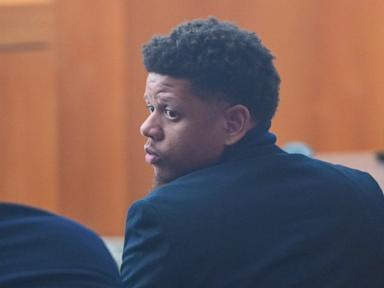
For years, the street whispers in Oak Cliff pointed in one direction, though rumors cannot convict a man in a Dallas County courtroom. Prosecutors had to build a bridge from whispers to hard digital proof. And when a jury finally convicted rapper Yella Beezy—born Markies Conway—of capital murder for hiring the hitman who ended MO3’s life, the verdict landed like a thunderclap across the music industry.
The Architecture of a Rivalry
To understand how two men from the same Dallas soil ended up locked in a fatal orbit, you have to understand the geography of local fame. Oak Cliff is a proud, fiercely protective neighborhood south of the Trinity River. It breeds talent with an edge. Both Markies Conway and Melvin Noble came up through its concrete veins, carrying the heavy expectations of blocks that rarely hand out second chances.
Early on, their paths looked parallel. Yella Beezy broke through with "That's On Me," a smooth, infectious anthem that turned him into a hometown hero and a national fixture. MO3 carved out a different lane, blending raw street testimony with a church-choir vibrato that made grown men weep in their cars. In a healthy industry, two stars rising from the same zip code double the spotlight. They bring money back to the neighborhood. They build empires side by side.
Instead, ego entered the room.
When you grow up fighting for scraps, another man's plate always looks too full. Diss tracks began flying. Social media posts carried thinly veiled threats, each insult carefully calibrated to sting in front of thousands of watching fans. In hip-hop, beef is often treated like theater—a marketing tool to juice streaming numbers before a tour. Outsiders laugh at the memes. Algorithms reward the hostility.
Inside the pressure cooker of Dallas street politics, however, words don't stay on screens.
Think of a rivalry like a dry brush fire in August. At first, it’s just smoke—a few sharp lyrics, an unfollowed account, a tense stare across a VIP section. Everyone assumes someone will bring water before it reaches the house. Nobody realizes the wind has already shifted until the roof collapses.
When Fame Becomes a Trap
I have spent years watching talented young men confuse respect with fear. When you hand a twenty-something kid a suitcase full of cash and tell him he is a king, you also hand him an invisible target. Every slight feels like an existential threat. If you let an insult slide on Instagram, you worry your core audience will think you’re soft. If you retaliate, you step onto an escalator that only moves upward toward disaster.
Yella Beezy had everything a kid from Oak Cliff could dream of. He had chart-topping records, high-profile collaborations, and the kind of charismatic grin that lit up every room he walked into. He didn't need to prove he was tough. His bank account already proved he had won.
Yet prosecutors laid out a chilling timeline showing how fame failed to quiet the insecurity. According to court testimony and federal-style digital tracking, Conway didn't pull the trigger on I-35E. He didn't have to. When you have money, violence becomes a service you outsource.
The prosecution’s case rested on the cold, unblinking memory of cell towers and financial records. Kewon Dontrell White, the gunman who sprinted across that Dallas highway in broad daylight, didn't wake up one morning and randomly decide to end Melvin Noble's life. He was hired. He was paid. And through a web of phone calls, text messages, and intermediary connections, investigators traced the contract directly back to Yella Beezy.
The Invisible Collateral
When headlines announce a conviction in a high-profile murder trial, the public usually treats it like the final buzzer of a sporting event. Guilty. Case closed. Next story.
That neatness is a lie.
Walk into the homes left behind when a murder-for-hire plot plays out, and you find wreckage that never makes the evening news. MO3 left behind three children who now know their father’s voice only through Spotify playlists and YouTube tributes. His mother had to sit in a sterile courtroom, listening to lawyers dissect the exact trajectory of the bullets that tore through her son’s spine on a Wednesday afternoon.
On the other side of the aisle sits Markies Conway’s family. His children will grow up visiting their father through thick plexiglass or watching him age on a pixelated prison video call. His mother watched her son trade a multi-million-dollar recording career for a concrete cell and a state-issued ID number.
Consider a hypothetical young artist sitting in a bedroom studio in Dallas tonight, staring at a beat on his laptop. Let's call him Marcus. Marcus sees the headlines about Yella Beezy and MO3. For years, Marcus has been told by the internet that clout requires conflict—that you have to pick a side, diss a rival, and posture like a boss to get signed. Looking at the wreckage of two of his city's biggest stars, Marcus finally sees the math for what it is. The labels move on to the next trending artist within forty-eight hours. The blogs monetize the tragedy with banner ads. The fans argue in the comments for a week and then go back to their day jobs.
Only the families stay buried under the rubble.
How the Digital Trail Closed In
There is an old street myth that hiring someone else insulates you from the law. People watch too many gangster movies and convince themselves that if their fingerprints aren't on the steel, their hands are clean.
Modern law enforcement operates on a completely different frequency. You cannot outrun your own metadata.
During the trial, prosecutors peeled back the layers of the conspiracy with surgical precision. They showed how communication spikes before and after a hit create a fingerprint far more reliable than ink on paper. Even when suspects use burner phones or speak in coded slang, human habits betray them. People call their mothers. They check their primary accounts. They move money through predictable channels.
White, the triggerman, was arrested weeks after the shooting and later pleaded guilty to federal gun charges in connection with the case, receiving a nine-year prison sentence before facing state murder charges. Once the shooter was in custody, the clock began ticking louder for the man who funded the operation. In March 2025, a Dallas County grand jury indicted Yella Beezy for capital murder, alleging he remunerated White to carry out the killing.
By the time the jury deliberated, the glamorous facade of hip-hop royalty had completely evaporated. There were no designer chains in the defense chair. No entourage. Just a man waiting to hear whether the rest of his natural life belonged to the State of Texas.
The Real Cost of "Keeping It Real"
Why does this keep happening? Why do men who have successfully escaped the poverty and danger of their upbringing reach back into the fire just to burn their rivals?
Part of the answer lies in trauma we never bother to name. When you survive years of scarcity and street violence, your nervous system stays locked in survival mode long after your bank account hits seven figures. A mansion in the suburbs doesn't automatically rewire a brain trained to treat every stranger as an adversary. You bring the war with you into the studio, onto the tour bus, and into the boardroom.
Another part lies in the audience. We bear some of the blame, even if we hate admitting it. Every time we click on a video titled "Rapper X Threatens Rapper Y," we feed the machine. We turn real human animus into entertainment. We cheer for the escalation, forgetting that real bullets don't bounce off real skin.
I remember driving down I-35E past the Clarendon Drive exit months after MO3 was killed. Traffic was moving at seventy miles an hour, commuters sipping iced coffee, listening to morning radio, completely oblivious to the patch of shoulder where a young father took his final breaths. It struck me how quickly a city absorbs a tragedy. The skid marks fade. The flowers taped to the guardrail wilt and blow into the drainage ditch. Life rushes forward without pausing.
Except for the people trapped inside the consequences.
Markies Conway’s conviction closes one of the darkest chapters in Dallas music history, yet it offers no true victory. Justice in a murder case isn't a happy ending; it is merely an accounting. It is the state tallying up the damage and locking the door behind the person responsible.
Two of the brightest voices to ever emerge from Oak Cliff are now silenced—one in a cemetery, the other behind razor wire. All over pride. All over territory neither man actually owned.
Tonight, somewhere in Dallas, the traffic on I-35E will slow to a crawl as brake lights flare red against the darkening sky, thousands of headlights sweeping over the exact stretch of concrete where two lives ended for nothing at all.