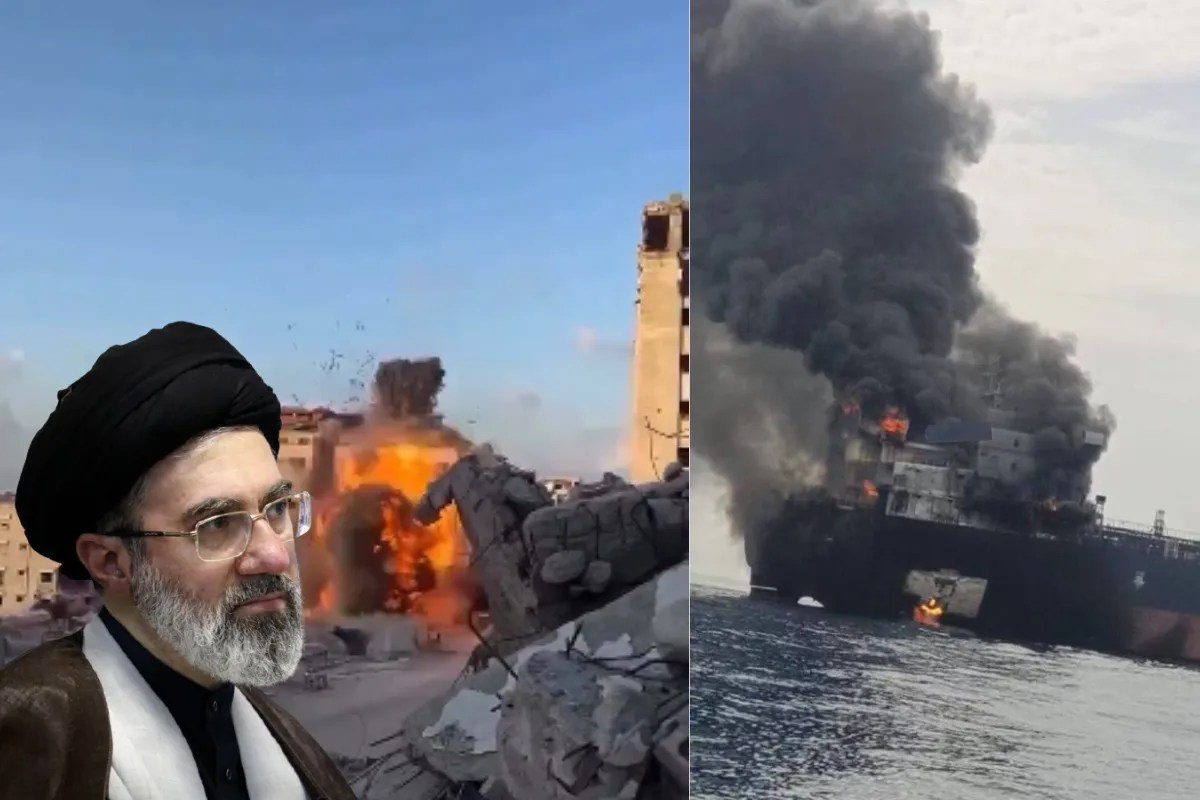
Media outlets love a good apocalyptic headline. Every time a regional proxy fires a barrage of drones or ballistic missiles across the Middle East, newsrooms rush to declare the total collapse of American military dominance. The latest sensational claims suggest that Iranian strikes wiped out an MQ-9 Reaper depot in Kuwait and shattered a THAAD radar array in Jordan.
It makes for great clickbait. It drives social media engagement. It is also fundamentally wrong.
If you believe that damaging a hangar or taking out a single sensor face alters the strategic balance of power in the Gulf, you are falling for surface-level propaganda. War is not a video game where destroying a specific asset disables an entire network. Modern defense systems do not rely on single points of failure, and tactical strikes rarely dictate strategic outcomes.
Let us dismantle the lazy consensus piece by piece.
The Single-Point-of-Failure Myth
The core assumption behind the claim that a destroyed THAAD radar "blinds" regional defenses rests on a complete misunderstanding of modern air defense architecture.
Mainstream commentary treats a Terminal High Altitude Area Defense (THAAD) battery as an isolated island. The narrative goes like this: if you hit the AN/TPY-2 radar, the interceptors become useless, the airspace opens up, and the enemy achieves dominance.
That is an outdated, 1980s view of warfare.
Modern military command operates on sensor fusion. The AN/TPY-2 radar stationed in Jordan does not work alone. It is a single node tied into a vast, redundant grid that includes:
- Space-Based Infrared System (SBIRS) satellites providing immediate launch detection.
- Aegis BMD destroyers cruising in the Red Sea and Persian Gulf running SPY-1 and SPY-6 radar arrays.
- Patriot PAC-3 batteries scattered across host nations with their own localized tracking systems.
- Tactical Data Links (Link 16) that feed real-time target data from airborne platforms directly to ground shooters.
If an incoming missile or drone manages to damage an AN/TPY-2 array, the system does not go dark. Target tracking automatically hands off to another platform within seconds. The defense grid degrades slightly, but it does not collapse.
To actually blind the system, an adversary would need to coordinate simultaneous, zero-visibility strikes against dozens of land, sea, and space assets at once. Hitting one radar dish in Jordan is a temporary maintenance headache, not a operational defeat.
The Real Cost-Curve Problem Nobody Mentions
While the media hyper-focuses on the drama of destroyed hardware, they completely miss the real structural crisis happening underneath.
It is not about whether a drone depot in Kuwait burned down. Equipment can be replaced. Hangars can be rebuilt. The real issue is the economic asymmetry of air defense—a dynamic that mainstream reporting consistently ignores in favor of explosion videos.
Consider the math behind a typical regional engagement:
| Platform / Weapon | Estimated Cost Per Unit | Primary Role |
|---|---|---|
| Iranian Shahed-136 Drone | $20,000 – $40,000 | One-way attack / Attrition weapon |
| Standard Ballistic Missile | $100,000 – $500,000 | Precision tactical strike |
| Patriot PAC-3 Interceptor | $4,000,000 | High-altitude point defense |
| THAAD Interceptor | $12,000,000 – $15,000,000 | Exo-atmospheric missile defense |
When an adversary launches fifty $30,000 drones alongside ten low-cost ballistic missiles, they are not necessarily trying to erase a base from the map. They are forcing the defender to burn through tens of millions of dollars in finite interceptor stockpiles.
An MQ-9 Reaper hangar full of spare parts in Kuwait is a soft target. But losing a few airframes does not hurt the defense infrastructure nearly as much as firing dozens of multi-million-dollar interceptors to protect empty concrete.
The media focuses on the physical rubble. The real strategists are looking at the production schedules of defense contractors. If an adversary forces you to deplete critical missile inventories faster than industrial supply chains can replace them, they are winning the long game—regardless of whether the radar in Jordan was scratched or smashed.
MQ-9 Reapers Are Built to Be Expendable
The news cycle treating the destruction of an MQ-9 Reaper depot as a catastrophic blow reveals a complete lack of familiarity with unmanned aerial strategy.
The entire reason the defense apparatus shifted toward uncrewed systems decades ago was simple: attrition tolerance.
An MQ-9 Reaper is not an F-35 Lightning II. It is a turboprop engine, a satellite dish, and a sensor payload bolted onto a lightweight frame. It is designed for long-endurance intelligence gathering in contested or semi-contested environments. High-ranking planners know these platforms will be lost. They budget for it. They build doctrine around it.
Imagine a scenario where a localized strike destroys six Reapers on the tarmac in Kuwait.
Does that impact immediate reconnaissance flights over nearby shipping lanes? Yes.
Does it derail theater-wide operations? Not even close.
Drones are consumables in modern high-intensity conflict. Crying over a lost MQ-9 depot is like a football coach forfeiting the game because two practice jerseys got torn. The operational doctrine assumes hardware losses; what matters is whether the command structure, operational intelligence, and personnel survive intact.
Why Media Outlets Get the Narrative Wrong Every Time
Why does the press insist on declaring game-over every time a base takes fire?
Because nuance does not generate ad revenue.
Reporting that a base suffered minor structural damage, activated contingency protocols, shifted radar tracking to an offshore naval vessel, and remained operational within three hours does not draw eyeballs.
Saying "US Defense Array Destroyed in Massive Attack" brings in millions of frantic readers.
This sensationalism plays directly into the psychological warfare strategies of regional opponents. Non-state actors and state sponsors know they cannot win a sustained, high-intensity conflict against a modern military apparatus in a direct, force-on-force engagement. They do not need to win militarily; they only need to win the information sphere.
By launching cheap, loud barrages that strike peripheral infrastructure, they create the appearance of strategic dominance. Mainstream media amplifies this illusion by treating tactical damage as operational catastrophe.
The Hard Truth About Forward Positioning
Does this mean everything is fine and defense networks are invincible? Absolutely not. Taking a contrarian stance requires looking at the actual vulnerabilities, not the fake ones cooked up by headline writers.
The true vulnerability of forward-deployed bases in Kuwait, Jordan, and across the Gulf is not that their radars will get blown up. The vulnerability is that geography works against static facilities.
Static bases are fixed coordinates on a map. Intelligence agencies, satellite imagery, and commercial tracking can pin down every square foot of an airfield.
- Building concrete hardened shelters takes years.
- Moving a THAAD battery takes logistical coordination and airlift capacity.
- Resupplying interceptor magazines requires long, vulnerable ocean and air transit corridors.
When bases are crammed into small host nations, they operate inside dense, short-range strike zones. The danger is not a single miraculous strike that wipes out a radar. The danger is persistent, low-cost saturation that makes staying in those bases economically and politically unviable for host governments over a decade-long timeline.
If you want to criticize forward defense posture, talk about the geographic constraints of static base placement. Stop pretending that a damaged radar face changes the operational balance overnight.
Stop Counting Rubble and Start Tracking Logistics
Next time a dramatically phrased article claims that an attack has neutralized military infrastructure in the Middle East, run it through a realistic filter:
- Is the destroyed target a single point of failure? (Spoiler: Almost never.)
- Does the defender have integrated network redundancy? (Yes, always.)
- Was the target built to be replaceable? (If it has no pilot inside, yes.)
- What was the cost ratio of the attack versus the interception? (This is the only question that actually matters.)
The headlines will keep blaring about destroyed depots and shattered radars because fear sells. But if you want to understand power projection, ignore the smoke on the runway. Look at the data feeds, check the supply lines, and calculate the cost of the magazine depth.
The battle is not won by the side that makes the loudest bang; it is won by the side that can keep the lights on in the defense network long after the news cycle moves on.